Looking for the strongest permanent magnet on the market? N52 magnets are the answer. These high-performance neodymium magnets deliver exceptional magnetic force in a compact size, making them the top choice for engineers, manufacturers, and hobbyists who demand the best.
What Are N52 Magnets?
N52 magnets are the highest commercially available grade of neodymium magnets. The “N” stands for neodymium, and “52” refers to the maximum energy product of 52 Megagauss-Oersteds (MGOe) — the measure of how much magnetic energy the magnet can store per unit volume.
Like all neodymium magnets, they are made from an alloy of neodymium, iron, and boron (NdFeB). What sets this grade apart is the extremely high purity of the neodymium used and the precise control of the manufacturing process, which pushes the energy product to its theoretical maximum.
These magnets are used in applications where space is limited but maximum magnetic force is essential. Common uses include electric motors, medical devices, sensors, magnetic couplings, loudspeakers, and high-performance industrial machinery. If a task requires the strongest possible pull force in the smallest possible package, this grade is the go-to solution.
One important trade-off is temperature sensitivity. Standard units of this grade begin to lose their magnetism permanently above 60–80°C, which is lower than many lower-grade neodymium magnets. Always verify the operating temperature of your application before specifying them.
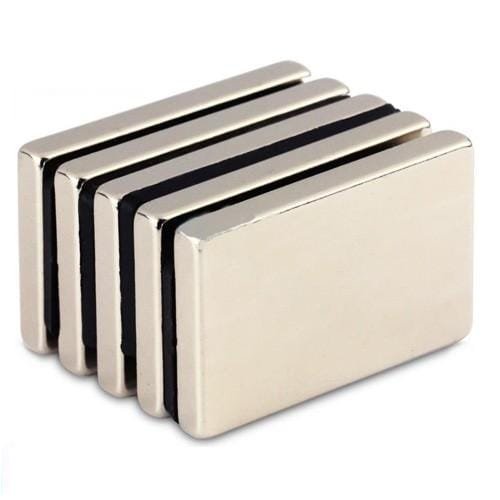
4 Key Specifications of N52 Magnets
Understanding the technical specifications helps you use these magnets correctly and safely. Here are the four most important ones:
1. Maximum Energy Product (BHmax)
The defining specification of any neodymium magnet is its energy product. For N52 magnets, this value reaches 52 MGOe (414 kJ/m³) — the highest of any sintered neodymium grade currently in production. This directly translates to the strongest pull force per unit volume available in a permanent magnet.
2. Remanence (Br)
Remanence measures the magnetic flux density that remains in the magnet after the external magnetizing field is removed. For N52 grade, remanence is approximately 1.44–1.48 Tesla (14,400–14,800 Gauss). This high remanence is what gives these magnets their impressive surface field strength.
3. Coercivity (Hci)
Coercivity measures resistance to demagnetization. N52 grade has a coercivity of approximately ≥955 kA/m (12 kOe). While this is adequate for most room-temperature applications, it is lower than high-coercivity grades (such as N52SH), meaning standard N52 can be demagnetized more easily by heat or opposing magnetic fields.
4. Maximum Operating Temperature
Standard grade N52 is rated for a maximum continuous operating temperature of 60°C (140°F). Exposure above this limit causes irreversible loss of magnetic strength. For applications involving heat, a higher-temperature grade such as N52M (80°C) or N52H (120°C) should be specified instead.
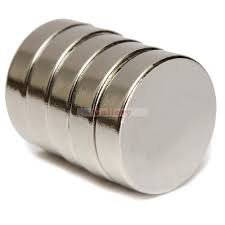
5 Differences Between N52 and N35 Magnets
Both are neodymium magnets, but they perform very differently. Here is a direct comparison:
| Specification | N52 Magnets | N35 Magnets |
|---|---|---|
| Max Energy Product | 52 MGOe (414 kJ/m³) | 35 MGOe (279 kJ/m³) |
| Remanence (Br) | 1.44–1.48 Tesla | 1.17–1.22 Tesla |
| Coercivity (Hci) | ≥955 kA/m | ≥955 kA/m |
| Max Operating Temp | 60°C (140°F) | 80°C (176°F) |
| Relative Cost | Higher | Lower |
Key takeaways from the comparison:
- Strength: N52 is approximately 48% stronger in energy product than N35, meaning you can use a smaller N52 magnet to achieve the same pull force as a larger N35.
- Temperature tolerance: N35 handles slightly higher operating temperatures, making it more suitable for warm environments.
- Cost: The N52 grade costs more due to higher-purity neodymium and tighter manufacturing tolerances. N35 is the budget-friendly choice for less demanding applications.
- Best use for N52: Space-constrained applications needing maximum force — motors, sensors, precision instruments.
- Best use for N35: General-purpose applications, educational projects, holding fixtures, and cost-sensitive production runs.
Important Notices When Using N52 Magnets
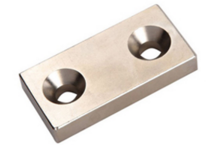
N52 magnets are extraordinarily powerful for their size. This makes them extremely useful — and potentially dangerous if mishandled. Keep these warnings in mind at all times:
Snap force is severe. Two large neodymium magnets at this grade can accelerate toward each other with enough force to shatter the magnets or crush fingers. Always separate and handle them one at a time using non-magnetic spacers. Wear gloves and eye protection when handling magnets larger than 20 mm.
Keep away from children. Small neodymium magnets are a serious swallowing hazard. Multiple magnets swallowed separately can attract through intestinal walls and cause life-threatening internal injuries. These are not toys.
Avoid heat sources. Exceeding 60°C will permanently reduce magnetic strength. Keep them away from ovens, motors running under load, and direct sunlight in hot climates.
Protect electronics and medical devices. The strong magnetic field can erase credit cards, damage hard drives, and interfere with pacemakers. Maintain a safe distance from all sensitive electronics and medical implants.
Prevent corrosion. Most neodymium magnets of this grade have a nickel-copper-nickel coating. If the coating is scratched or chipped, the underlying alloy corrodes rapidly. Avoid saltwater, acids, and abrasive contact.
Do not drill or grind. Machining neodymium magnets produces fine metallic dust that is both flammable and toxic. Never attempt to modify a magnet without proper industrial equipment and ventilation.
Frequently Asked Questions About N52 Magnets
Q1: Are N52 magnets safe to use at home?
Yes, smaller ones (under 10 mm) are commonly used in DIY projects, woodworking, and home organization and are safe when handled responsibly. However, larger sizes require serious caution. Always keep them away from children, pacemakers, and electronic devices, and never allow two large magnets to snap together freely.
Q2: How long do these magnets keep their magnetic strength?
Under normal conditions — room temperature, no physical shock, no opposing magnetic fields — this grade loses less than 1% of its magnetic strength over 100 years. The biggest threats to longevity are heat above 60°C, strong opposing fields, and physical impact. Stored correctly, they are effectively permanent.
Q3: What coatings are available for these magnets?
The standard coating is nickel-copper-nickel (Ni-Cu-Ni), which gives a shiny silver finish and good corrosion resistance for indoor use. Other options include zinc (matte grey, budget-friendly), epoxy (black, better moisture resistance), gold (for medical and food-contact applications), and chrome. Choose your coating based on the environment where the magnet will be used.
Conclusion
N52 magnets represent the pinnacle of commercially available permanent magnet technology. With the highest energy product, outstanding remanence, and a compact form factor, they outperform every other neodymium grade in raw magnetic strength. Understanding their four key specifications, how they compare to N35, and how to handle them safely ensures you get the best performance and longest service life from these remarkable magnets.
7 Powerful Facts About Rare Earth Neodymium Magnets
7 Powerful Facts About Ring Neodymium Magnet You Should Know