If you’ve ever wondered what makes modern technology so compact and efficient, the answer often lies in rare earth neodymium magnets. These tiny but incredibly strong magnets are used in everything from electric cars to earbuds — and understanding them can open your eyes to a whole new world of materials science.
What Are Rare Earth Neodymium Magnets?
Rare earth neodymium magnets — also called NdFeB magnets — are a type of permanent magnet made from an alloy of neodymium, iron, and boron. They belong to the rare earth magnet family, which are known for producing exceptionally strong magnetic fields relative to their size.
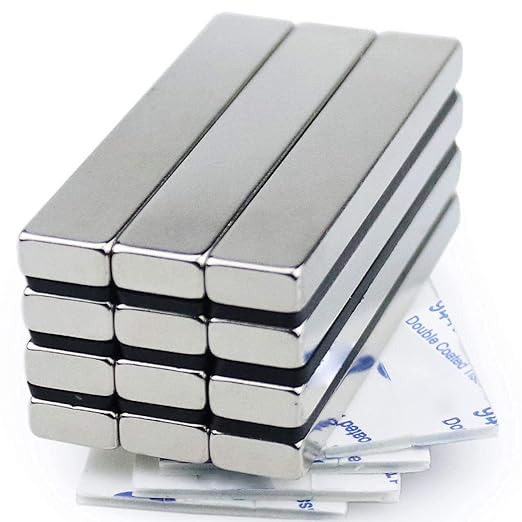
Neodymium is a chemical element (atomic number 60) found in the rare earth group of the periodic table. Despite the name, neodymium is not actually that rare in the Earth’s crust — it’s just difficult and expensive to extract and refine. That’s what makes rare earth neodymium magnets a premium material in industrial and consumer applications.
These magnets were first developed in 1982 by General Motors and Sumitomo Special Metals. Since then, they have become the strongest type of permanent magnet commercially available. A small rare earth neodymium magnet can hold objects many times its own weight, which is why they are the preferred choice for engineers and manufacturers worldwide.
Rare earth neodymium magnets come in two main manufacturing forms: sintered (pressed powder) and bonded (mixed with a polymer). Sintered neodymium magnets are more powerful and are the most widely used form in high-performance applications.
3 Key Specifications of Rare Earth Neodymium Magnets
Understanding the technical specifications of rare earth neodymium magnets helps you choose the right magnet for your application. Here are the three most important specs to know:
1. Maximum Energy Product (BHmax)
This is the most critical specification of any rare earth neodymium magnet. It measures the maximum magnetic energy stored in the magnet per unit volume, expressed in Megagauss-Oersteds (MGOe) or kilojoules per cubic meter (kJ/m³).
- Standard neodymium grades range from N35 to N52
- The number after “N” represents the energy product (e.g., N52 = 52 MGOe)
- Higher grades mean stronger magnetic force in the same physical size
- N52 is currently the strongest commercially available grade of rare earth neodymium magnets
2. Coercivity (Hci)
Coercivity measures how resistant a rare earth neodymium magnet is to being demagnetized by an external magnetic field or heat. It is measured in kOe (kilo-Oersteds) or kA/m.
- Standard grades (N-series): lower coercivity, best for room-temperature use
- High-coercivity grades (SH, UH, EH, AH suffixes): better for high-temperature environments
- Example: N35SH works up to 150°C, while N35AH can withstand up to 230°C
3. Maximum Operating Temperature
Standard rare earth neodymium magnets begin to lose their magnetic properties above 80°C (176°F). This is a critical limitation compared to other magnet types.
| Grade Suffix | Max Operating Temp |
|---|---|
| N (standard) | 80°C |
| M | 100°C |
| H | 120°C |
| SH | 150°C |
| UH | 180°C |
| EH | 200°C |
| AH | 230°C |
Always match the grade of your rare earth neodymium magnet to the expected operating temperature of your application to avoid performance loss.
How to Produce Rare Earth Neodymium Magnets (Step by Step)
The production of rare earth neodymium magnets is a complex, multi-stage industrial process. Here’s a simplified breakdown of how they are made:
Step 1 — Raw Material Extraction Neodymium ore is mined primarily in China, which accounts for over 80% of global production. The ore is refined through a chemical separation process to isolate pure neodymium oxide, which is then converted into neodymium metal.
Step 2 — Alloy Preparation Neodymium, iron, and boron are melted together in precise ratios inside a vacuum induction furnace. The standard composition for rare earth neodymium magnets is approximately Nd₂Fe₁₄B — roughly 32% neodymium, 64% iron, and 1% boron, with small additions of other elements like dysprosium or praseodymium to improve performance.
Step 3 — Milling Into Fine Powder The cooled alloy ingot is crushed and then ground into a very fine powder using a jet mill. Particle size is tightly controlled — typically around 3–5 microns — because smaller, more uniform particles create better-aligned crystals and stronger rare earth neodymium magnets.
Step 4 — Pressing and Aligning The fine powder is pressed into molds while an external magnetic field is applied. This field aligns all the magnetic particles in the same direction, which is what gives rare earth neodymium magnets their powerful directional magnetic force. This step can be done with dry or wet pressing methods.
Step 5 — Sintering The pressed compact is heated in a vacuum sintering furnace at around 1000–1100°C. This fuses the powder particles together into a dense, solid magnet body. Sintering is what gives rare earth neodymium magnets their durability and high magnetic energy density.
Step 6 — Machining and Cutting After sintering, the magnet block is machined to its final shape and dimensions using diamond-tipped cutting tools. Because sintered rare earth neodymium magnets are brittle, this step requires precision and care to avoid cracking or chipping.
Step 7 — Magnetization The finished magnet blank is placed inside a strong magnetizing coil and exposed to a powerful pulse of electric current. This aligns all the magnetic domains into a single direction, turning the blank into a fully functional rare earth neodymium magnet.
Step 8 — Surface Coating Because neodymium iron boron alloy corrodes easily, rare earth neodymium magnets are coated to protect them. The most common coatings are:
- Nickel-copper-nickel (Ni-Cu-Ni) — the most popular choice
- Zinc
- Epoxy
- Gold (for medical and specialty applications)
Important Notices When Using Rare Earth Neodymium Magnets
Working with rare earth neodymium magnets requires care and respect. Their extraordinary strength makes them hazardous if handled improperly. Keep these important warnings in mind:
Handle with caution — they snap together violently. Two magnets can accelerate toward each other from several centimeters away and snap together with enough force to shatter the magnets or crush fingers between them. Always handle large magnets with gloves and keep them in separate containers.
Keep away from children. Small magnets can be swallowed by children. Multiple magnets swallowed separately can attract through intestinal walls and cause serious internal injuries. These magnets are not toys.
Protect from heat. Exposing a standard magnet to temperatures above 80°C will cause permanent loss of magnetism. Never place them near ovens, motors, or other heat sources unless you are using a high-temperature grade.
Keep away from electronic devices and credit cards. The strong magnetic field of rare earth neodymium magnets can erase credit cards, damage hard drives, disrupt pacemakers, and interfere with sensitive electronic equipment. Maintain a safe distance from all such devices.
Avoid corrosive environments. Despite their coating, rare earth neodymium magnets can corrode if the coating is scratched or chipped. Avoid exposure to salt water, acids, or high humidity without additional protection.
Drilling and grinding create flammable dust. If you need to machine rare earth neodymium magnets, do so with proper ventilation. The fine metallic dust produced is flammable and can ignite spontaneously. Never grind them dry.
Frequently Asked Questions About Rare Earth Neodymium Magnets
Q1: What is the difference between rare earth neodymium magnets and regular ferrite magnets?
Rare earth neodymium magnets are significantly stronger than ferrite (ceramic) magnets. A neodymium magnet can be up to 10 times stronger than a ferrite magnet of the same size. Ferrite magnets are cheaper, more corrosion-resistant, and better for high-temperature environments above 250°C, but they cannot match the magnetic force density of neodymium magnets. For applications where space and weight matter — like EV motors, headphones, or MRI machines — neodymium is always the preferred choice.
Q2: Will rare earth neodymium magnets lose their magnetism over time?
Under normal conditions, rare earth neodymium magnets lose less than 1% of their magnetic strength over 100 years. However, they can lose magnetism quickly if exposed to temperatures above their rated maximum, to strong opposing magnetic fields, or to physical shock and vibration. Proper storage — keeping them away from heat, other magnets, and physical impact — ensures your neodymium magnets last virtually a lifetime.
Q3: What are the most common uses of rare earth neodymium magnets?
Rare earth neodymium magnets are used in an enormous range of industries and products, including:
- Electric vehicles (EVs): Motors in EVs rely on large quantities of rare earth neodymium magnets for power and efficiency.
- Consumer electronics: Speakers, headphones, hard disk drives, and smartphone vibration motors all use them.
- Medical equipment: MRI machines, hearing aids, and surgical tools depend on rare earth neodymium magnets.
- Wind turbines: Direct-drive wind generators use them to convert rotational force into electricity efficiently.
- Industrial machinery: Magnetic separators, holding fixtures, and actuators use rare earth neodymium magnets for reliable, compact performance.
Conclusion
Rare earth neodymium magnets are one of the most important materials in modern technology. Their unmatched magnetic strength in a compact size makes them essential in everything from EVs and wind turbines to medical devices and everyday electronics. By understanding their key specifications — energy product, coercivity, and temperature limits — as well as how they are made and how to handle them safely, you can make smart, informed decisions when selecting and using them. Whether you’re an engineer, hobbyist, or simply curious, rare earth neodymium magnets are a fascinating and powerful material well worth knowing.
7 Things You Must Know About Strong Neodymium Magnets
7 Powerful Facts About Ring Neodymium Magnet You Should Know