Introduction
If you’ve ever wondered what powers the world’s most powerful small magnets, the answer is strong neodymium magnets. These tiny but mighty magnets are used in everyday products — from earbuds to electric cars.
What Are Strong Neodymium Magnets?
Strong neodymium magnets are a type of rare-earth magnet made from an alloy of neodymium, iron, and boron (NdFeB). They are the strongest type of permanent magnet available today.
Unlike traditional ceramic or ferrite magnets, these powerful magnets can hold many times their own weight. A magnet the size of a coin can lift several kilograms. This makes them extremely useful in industries where space is limited but holding power is critical.
They were first developed in the 1980s and have since become a standard component in modern technology. Today, you’ll find them in motors, speakers, medical devices, and much more.
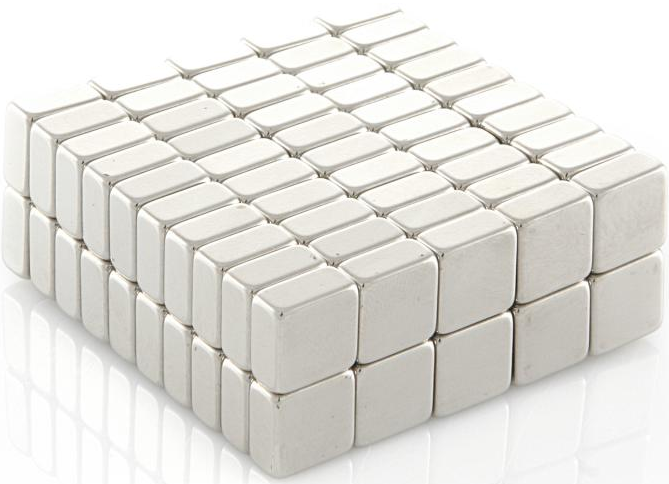
3 Key Specifications of Strong Neodymium Magnets
Understanding the specs of these magnets helps you choose the right one for your needs. Here are the three most important:
1. Grade (N-Rating) The grade tells you how strong the magnet is. Common grades range from N35 to N52. The higher the number, the stronger the magnetic force. N52 is the strongest commercially available grade.
2. Maximum Operating Temperature Standard strong neodymium magnets can operate up to 80°C (176°F). High-temperature variants (such as SH or UH grades) can handle up to 230°C (446°F). Exceeding the rated temperature causes permanent loss of magnetism.
3. Pull Force (Holding Strength) Pull force is measured in kilograms or pounds and tells you how much weight the magnet can hold against a flat steel surface. A small 20mm disc magnet can have a pull force of over 6 kg. Industrial-grade versions can reach hundreds of kilograms of pull force.
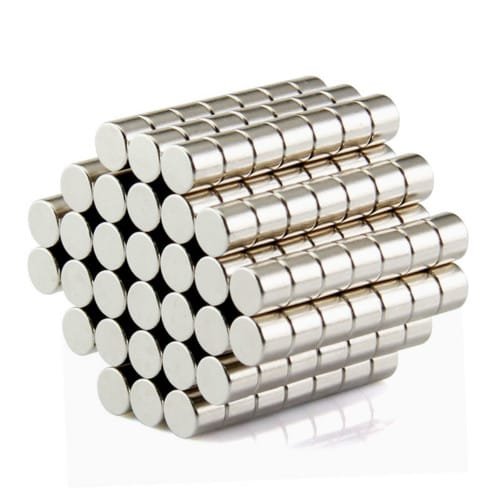
Manufacturing Process of Strong Neodymium Magnets
The production process is precise and multi-step. Here is how it works, step by step:
Step 1: Raw Material Preparation Neodymium, iron, and boron are sourced and measured in exact proportions. The quality of these raw materials directly impacts the final magnet strength.
Step 2: Melting and Alloying The materials are melted together in a vacuum furnace at extremely high temperatures. This creates a uniform NdFeB alloy ingot. Vacuum conditions prevent oxidation, which would weaken the magnet.
Step 3: Milling into Powder The alloy is broken down into a fine powder using a hydrogen decrepitation process followed by jet milling. Smaller, more uniform particles lead to stronger results.
Step 4: Pressing and Shaping The powder is pressed into a mold using a strong magnetic field. This step aligns all the magnetic particles in the same direction — a key factor in producing powerful permanent magnets.
Step 5: Sintering The pressed shapes are heated in a sintering furnace. This fuses the particles together into a solid, dense block without melting them.
Step 6: Machining Since sintered magnets are brittle, they are cut and ground to precise dimensions using diamond tools. Shapes include discs, blocks, rings, and custom forms.
Step 7: Magnetizing The shaped pieces are placed in a powerful magnetic coil and exposed to a strong pulse of electricity. This activates the material’s full magnetic strength.
Step 8: Coating To prevent corrosion, strong neodymium magnets are coated with nickel, zinc, epoxy, or gold. Nickel plating is the most common and gives them their shiny silver appearance.
Applications of Strong Neodymium Magnets
These magnets are used across a wide range of industries. Here are some of the most common applications:
- Electric Motors and Generators: Found in electric vehicles (EVs), wind turbines, and industrial motors. Their high power-to-size ratio makes them ideal for efficient energy conversion.
- Consumer Electronics: Speakers, headphones, hard disk drives, and smartphone vibration motors all rely on powerful rare-earth magnets to function.
- Medical Devices: MRI machines use large magnetic fields, and many surgical tools, hearing aids, and dental equipment use compact high-strength magnets.
- Industrial Lifting and Clamping: Factories use magnetic lifters and clamps to move heavy steel parts safely and efficiently.
- DIY and Craft Projects: Hobbyists use these magnets for closures, displays, science experiments, and creative builds due to their compact size and strong grip.
- Jewelry and Accessories: Magnetic clasps in bracelets, bags, and clothing use small powerful magnets for secure, easy-open fastening.

Notices while using strong neodymium magnets
When magnets are heated, their magnetic strength weakens. This happens because heat causes atoms within the material to vibrate more intensely, disrupting the alignment of magnetic domains — tiny regions where atomic magnetic fields point in the same direction. As temperature rises, these domains become increasingly disordered, reducing overall magnetism.
Every magnetic material has a specific Curie temperature — the point at which it completely loses its permanent magnetism. For iron, this is around 770°C. Beyond this threshold, the material becomes paramagnetic, meaning it only weakly responds to external magnetic fields.
Conversely, cooling a magnet generally strengthens it, as atomic motion slows and magnetic domains align more consistently.
Frequently Asked Questions (FAQ)
Q1: Are strong neodymium magnets safe to handle?
Yes, but caution is required. Small ones are generally safe, but larger versions can snap together with great force and pinch skin or break fingers. Always keep them away from children, pacemakers, and electronic devices. Handle with gloves when working with large sizes of strong neodymium magnets.
Q2: Can these magnets lose their magnetism over time?
Yes, but very slowly under normal conditions. These magnets have a demagnetization rate of less than 1% per 10 years at room temperature. However, heat, strong opposing magnetic fields, and physical impact can cause faster demagnetization. Staying within the rated operating temperature is essential.
Q3: What is the difference between N35 and N52 grades?
The number refers to the Maximum Energy Product, measured in MGOe (Mega-Gauss-Oersteds). N52 produces a stronger magnetic field than N35 with the same volume. N52 is best when you need maximum strength in a small space, while N35 is more affordable and sufficient for everyday use.
Conclusion
Strong neodymium magnets are a remarkable piece of modern engineering. From their precise manufacturing process to their wide range of real-world uses, they continue to drive innovation across industries. Whether you’re an engineer, a hobbyist, or simply curious, these magnets offer unmatched power in a compact form. Choose the right grade, handle them safely, and they’ll serve you reliably for years.