Budgeting for magnetic components requires understanding what drives costs. The round magnet price depends on material type, diameter, thickness, grade, and quantity. This guide explains these factors and how to make informed purchasing decisions.
What is Round Magnet
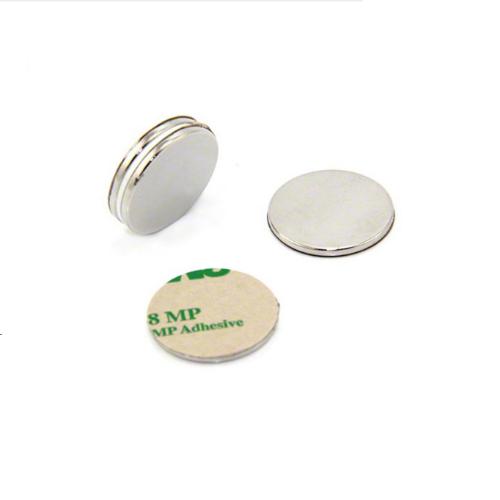
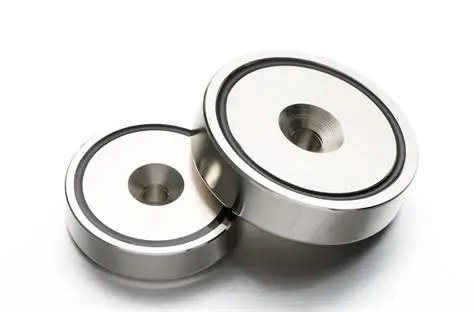
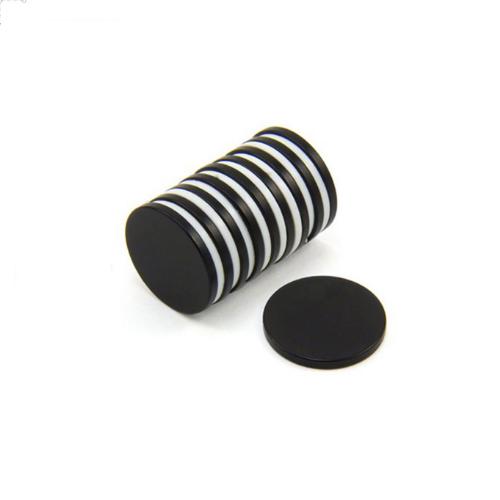
A round magnet is a flat, circular permanent magnet shaped like a disc or coin. The diameter exceeds the thickness, creating a wide flat surface for maximum contact with target surfaces. Round magnets come in various types including solid discs, rings with center holes, and countersunk versions for screw mounting. They are made from neodymium for maximum strength, ferrite for economy, or samarium cobalt for high-temperature applications.
The magnetic field concentrates on the two flat circular faces. One face is the north pole, and the other is the south pole. This simple field pattern makes round magnets ideal for holding, mounting, crafting, and sensing applications. They range from tiny 3-millimeter discs to large 100-millimeter versions. When evaluating the round magnet price, understanding material type and specifications is essential for making smart purchasing decisions.
Related: Material Factors That Influence Round Magnet Price
The choice of material is the single largest factor affecting the round magnet price. Each material offers different balances of performance and cost.
Neodymium round magnets command the highest price among common materials. They contain rare earth elements that are expensive to extract and process. Despite the premium, neodymium often proves most economical for applications requiring maximum strength in minimum space. The round magnet price for neodymium varies by grade. N35 offers the most economical option, while N52 commands a significant premium.
Ferrite round magnets offer the lowest cost per unit volume. These ceramic magnets cost roughly one-tenth to one-twentieth of equivalent neodymium versions. The raw materials are abundant and inexpensive. Manufacturing processes are mature and efficient. However, ferrite produces much weaker magnetic fields. A larger ferrite magnet is needed to match a smaller neodymium version. For cost-sensitive applications where size is not critical, the low round magnet price of ferrite is attractive.
Samarium cobalt round magnets exceed even neodymium in cost. The raw materials, particularly cobalt, are expensive and subject to market volatility. Production volumes are lower. The round magnet price reflects these specialized requirements. These magnets serve aerospace and high-temperature applications where performance justifies the premium.
Alnico round magnets occupy a middle price range. They offer excellent temperature stability but lower strength. The round magnet price falls between ferrite and neodymium levels.
Related: Size and Grade Factors That Affect Round Magnet Price
Beyond material type, dimensions and grade significantly impact the final round magnet price. Understanding these factors helps you optimize purchasing decisions.
Diameter directly affects material usage. Larger round magnets contain more material and cost more. The round magnet price increases roughly with the square of the diameter because area grows quadratically. A 20-millimeter magnet costs about four times a 10-millimeter magnet of the same material and thickness.
Thickness also impacts cost. Thicker round magnets contain more material. However, very thin magnets may carry premium pricing due to handling complexity and fragility during production. The most economical thickness range balances material cost against manufacturability.
Grade selection affects the round magnet price for neodymium products. N35 provides good strength at economical pricing. N42 offers a balance of strength and durability. N52 delivers maximum power but commands a premium. The price increases roughly 10 to 20 percent per grade step. A larger N35 round magnet often achieves the same holding force as a smaller N52 at lower overall cost.
Quantity significantly impacts unit pricing. Prototype quantities carry the highest per-unit round magnet price. Pricing becomes competitive at 1,000 pieces and improves substantially at 10,000 pieces. Standard sizes offer better pricing at lower quantities because suppliers stock them regularly.
Coating requirements add expense. Standard nickel plating is the most economical finish for round magnets. Epoxy coating adds moderate cost for moisture resistance. Gold plating and specialized finishes increase the round magnet price substantially. Choose the coating level that matches your environmental conditions.
Related: How to Compare Round Magnet Price Across Different Suppliers
Comparing prices from different suppliers requires careful analysis. The lowest round magnet price does not always represent the best value.
Request detailed specifications with every quote. The magnet price should include exact material grade, dimensions, tolerances, coating type, and magnetization direction. Compare these specifications across suppliers. A lower price may reflect a lower grade or thinner coating rather than genuine savings.
Verify grade authenticity when comparing round magnet price quotes. Some suppliers mislabel lower grades as premium N52 to charge higher prices. Request material test reports showing actual remanence and energy product values. If one quote seems significantly lower than others, suspect misrepresentation.
Consider total cost of ownership beyond the round magnet price. Shipping costs add significantly for heavy magnetic products. Import duties apply to international purchases. Quality failures create expensive problems downstream. A slightly higher price from a reliable supplier often costs less overall than dealing with quality issues.
Request samples before committing to large orders. Test round magnets in your actual application. Measure pull force and verify dimensions. Sample testing reveals quality differences that price quotes cannot communicate.
Build long-term relationships with trusted suppliers. Regular customers receive better round magnet price through volume discounts and priority service. Suppliers invest in understanding your applications and suggest cost-saving improvements over time.
Hidden Costs That Affect the Final Round Magnet Price
The quoted magnet price often does not reflect the total amount you will actually pay. Several hidden costs can significantly increase your final expense if you fail to account for them upfront.
Shipping costs are frequently overlooked during initial budgeting. Round magnets are dense and surprisingly heavy for their size. Freight charges can add 10 to 30 percent to the round magnet price, especially for international orders. Air freight is particularly expensive because strong magnetic fields require special shielding and packaging to comply with aviation safety regulations. Ocean freight is more economical but adds weeks to delivery timelines.
Import duties and customs fees apply when purchasing from overseas suppliers. Many countries impose tariffs on rare earth magnets imported from China. These duties can add 5 to 25 percent to the round magnet price depending on your location and current trade policies. Customs brokerage fees add further expense. Always consult with a customs broker to understand the complete import cost before placing an international order.
Packaging requirements add costs for certain applications. Round magnets that must be separated with plastic spacers to prevent chipping require specialized packaging. Automated assembly lines may need magnets arranged in specific orientations rather than bulk packaging. These packaging solutions add to the round magnet price but improve downstream production efficiency.
Inventory carrying costs matter for large orders. Buying in bulk reduces unit pricing but ties up working capital in inventory. Storage space, insurance, and the risk of damage or loss all add to the true round magnet price. Calculate whether volume discounts justify these carrying costs for your specific situation.
Quality failures create expensive problems beyond the initial purchase. Low-cost round magnets that fail in service cause warranty claims, product returns, and brand reputation damage. The cost of replacing failed magnets in assembled products far exceeds any savings from choosing cheaper options. Investing in quality verification upfront protects against these hidden costs. When comparing magnet price quotes from different suppliers, always consider the total landed cost rather than the base unit price alone.
How Manufacturing Tolerances Impact Round Magnet Price
Manufacturing tolerances play a significant but often overlooked role in determining the magnet price. The precision required for your application directly affects production complexity and cost.
Standard as-pressed tolerances represent the most economical option. Round magnets produced with this tolerance level have dimensional variations of plus or minus 0.1 millimeters or more. This precision level suits general holding applications, craft projects, and non-critical mounting where exact dimensions matter less. The round magnet price at this tolerance level remains at its lowest because production requires minimal additional processing.
Ground or machined tolerances increase cost substantially. When your application demands precise diameters or thicknesses, manufacturers must perform secondary grinding operations. This machining adds processing time, equipment wear, and inspection requirements. The round magnet price rises 15 to 30 percent for ground tolerances compared to as-pressed versions. Applications like motor components, sensor housings, and precision instruments often require this level of accuracy.
Tight thickness control presents particular challenges for round magnets. During sintering, magnets shrink non-uniformly. Achieving consistent thickness across the entire surface requires careful process control and often post-sinter grinding. The round magnet price reflects this additional effort. Applications requiring uniform air gaps, such as magnetic couplings and precision sensors, demand this tight control.
Concentricity requirements add further cost. When the outer diameter must be perfectly centered with an inner hole or feature, specialized grinding operations are necessary. This concentricity is critical for rotating assemblies where imbalance causes vibration. The round magnet price increases significantly for tight concentricity specifications.
Inspection requirements scale with tolerance precision. Tighter tolerances demand more frequent measurement and documentation. Coordinate measuring machine inspection adds cost for every production batch. Statistical process control tracking requires ongoing data collection and analysis. These quality assurance activities contribute to the round magnet price.
Before specifying tight tolerances, ask whether your application genuinely requires that precision level. Over-specifying tolerances wastes money without improving function. Discuss your actual needs with the supplier to find the optimal balance between precision and cost.
FAQ: Your Round Magnet Price Questions Answered
1. Why does the round magnet price vary so much between suppliers?
Price variation stems from several factors. Material grade authenticity is a major concern. Some suppliers substitute lower grades while charging premium prices. Manufacturing efficiency affects production cost. Geographic location influences labor and energy costs. Quality control investment varies between suppliers. The lowest round magnet price may indicate corners cut somewhere.
2. How can I verify I am getting the correct grade for the round magnet price I pay?
Request material test reports showing actual remanence and maximum energy product values. Genuine N52 neodymium has remanence of approximately 1.43 to 1.48 Tesla. Measure pull force against a clean steel plate and compare with theoretical calculations. Independent laboratory testing provides definitive verification for critical applications.
3. What quantity gives the most competitive round magnet price?
Prototype quantities of 10 to 100 pieces carry the highest per-unit cost. Pricing becomes competitive at 1,000 pieces and improves significantly at 10,000 pieces. Custom sizes requiring new tooling have higher minimum order quantities. Standard stock round magnets offer competitive pricing at lower quantities.
Conclusion
Understanding what drives the round magnet price empowers you to make smarter purchasing decisions. Material type, diameter, thickness, grade, coating, and quantity all play important roles. By defining requirements clearly and comparing quotes carefully, you can secure competitive pricing without compromising quality. The round magnet price reflects complex factors, but informed buyers navigate these effectively to achieve the best value for their magnetic component needs.