A name badge that twists sideways or falls off mid-conversation is worse than no badge at all. Name badge magnets solve the problem that pins and clips create, but only when you pick the right strength and design. This guide explains how they work and how to buy them properly.
What Are Name Badge Magnets
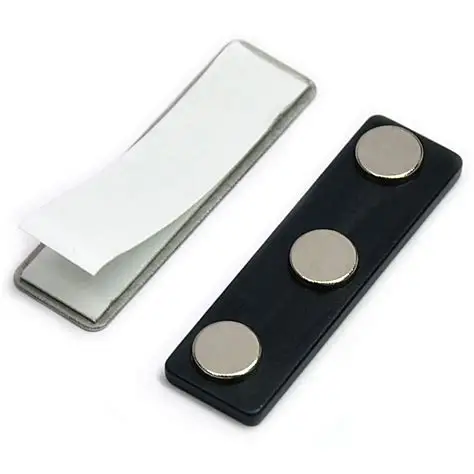
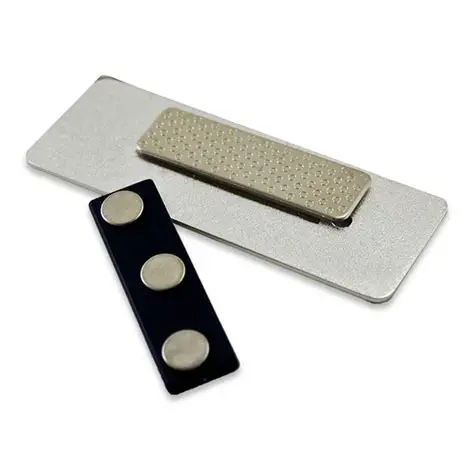
Name badge magnets are a fastening system that holds a badge to clothing without pins, clips, or adhesive. Two components work together. A magnet or steel plate attaches to the back of the badge. A matching magnetic backer sits underneath the fabric. The two pieces clamp through the material and hold the badge in place.
Most systems use neodymium magnets because they deliver strong holding force in a very thin profile. The backer is usually a small disc, sometimes housed in a plastic or metal shell. The badge side may carry a steel plate or a second magnet. Together they form a magnetic sandwich that grips the shirt without puncturing it.
This design matters for anyone who wears professional clothing. Pins leave holes. Clips snag on fabric and bend out of shape. Adhesive backing fails after a few washes. A well-made magnetic fastener avoids all three problems.
Why Magnetic Fastening Works Better Than Pins
The appeal is practical rather than technical.
Pins damage fabric. Every time you pierce a shirt or blouse, you create a permanent hole. On expensive suits and uniforms, that adds up. Magnetic fasteners leave no marks at all.
Clips distort. A metal clip bends over time and eventually loses its grip. Magnetic fasteners do not rely on mechanical spring tension, so there is nothing to fatigue.
Adhesive fails. Sticky backing works for a while, then peels off in heat or after cleaning. Magnets hold consistently for years.
Placement is flexible. You can move a magnetic badge slightly to adjust its position without leaving a trace. That is impossible with pins.
Removal is quick. Staff can take badges off at the end of a shift in one motion, without fumbling with clasps.
How Magnet Strength Affects Performance
The main specification of Name Badge Magnets is holding force, usually listed in grams or pounds. This is where buyers run into trouble.
Manufacturer ratings assume ideal conditions. A magnet rated to hold 500 grams is tested against a thin, smooth steel plate with nothing in between. Real clothing is not a steel plate. Fabric thickness, weave, and layering all reduce the effective force.
A standard shirt adds one layer of fabric. A blouse with an undershirt adds two. A suit jacket adds more. Each layer increases the distance between the magnet and the backer, and magnetic force falls quickly with distance.
The hook also matters less here than in hanging applications, because the load is light and the badge sits flat against the body. The main risk is not the badge falling off but the badge rotating or sliding.
A practical rule is to choose a magnet rated for at least two to three times the weight of the badge and any attached items, then confirm it holds through your thickest garment.
The Rotation Problem and How to Solve It
Name Badge magnets that spin out of alignment are the most common complaint about name badge magnets. The fix is mechanical, not magnetic.
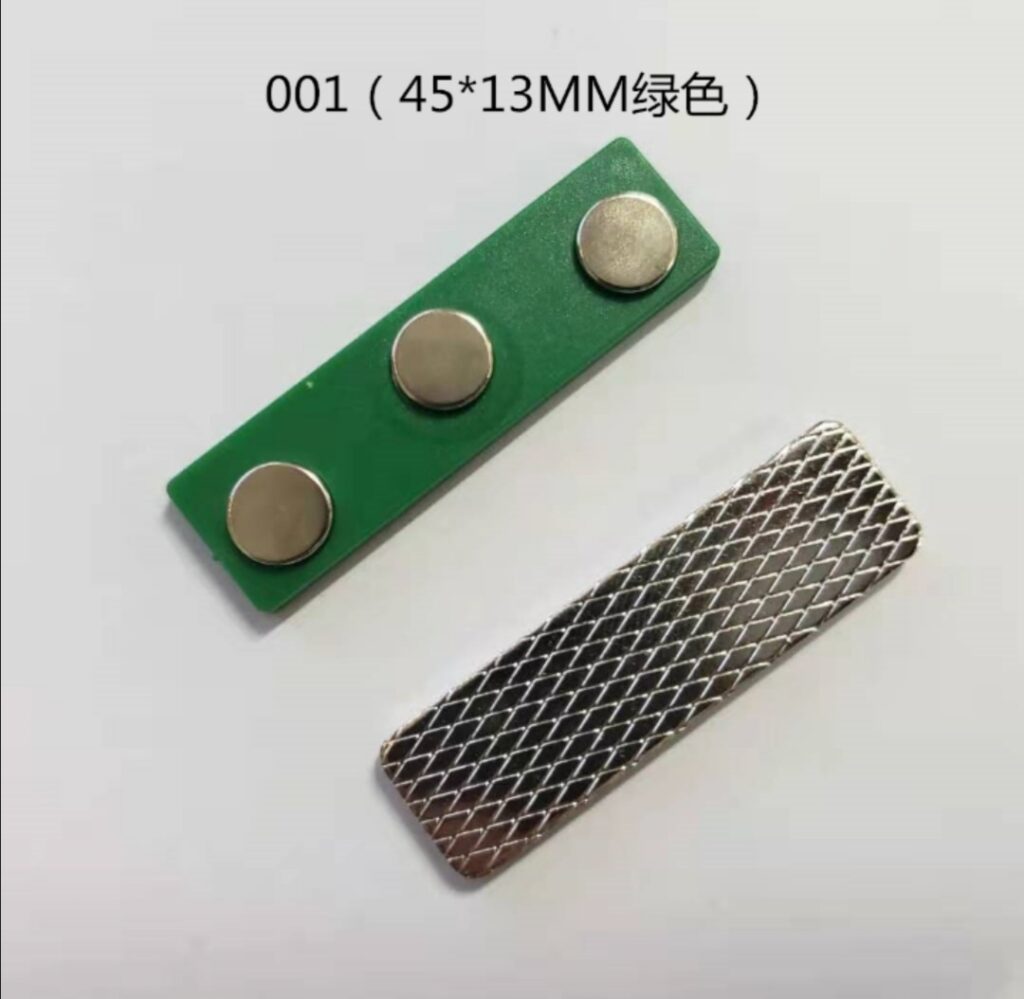
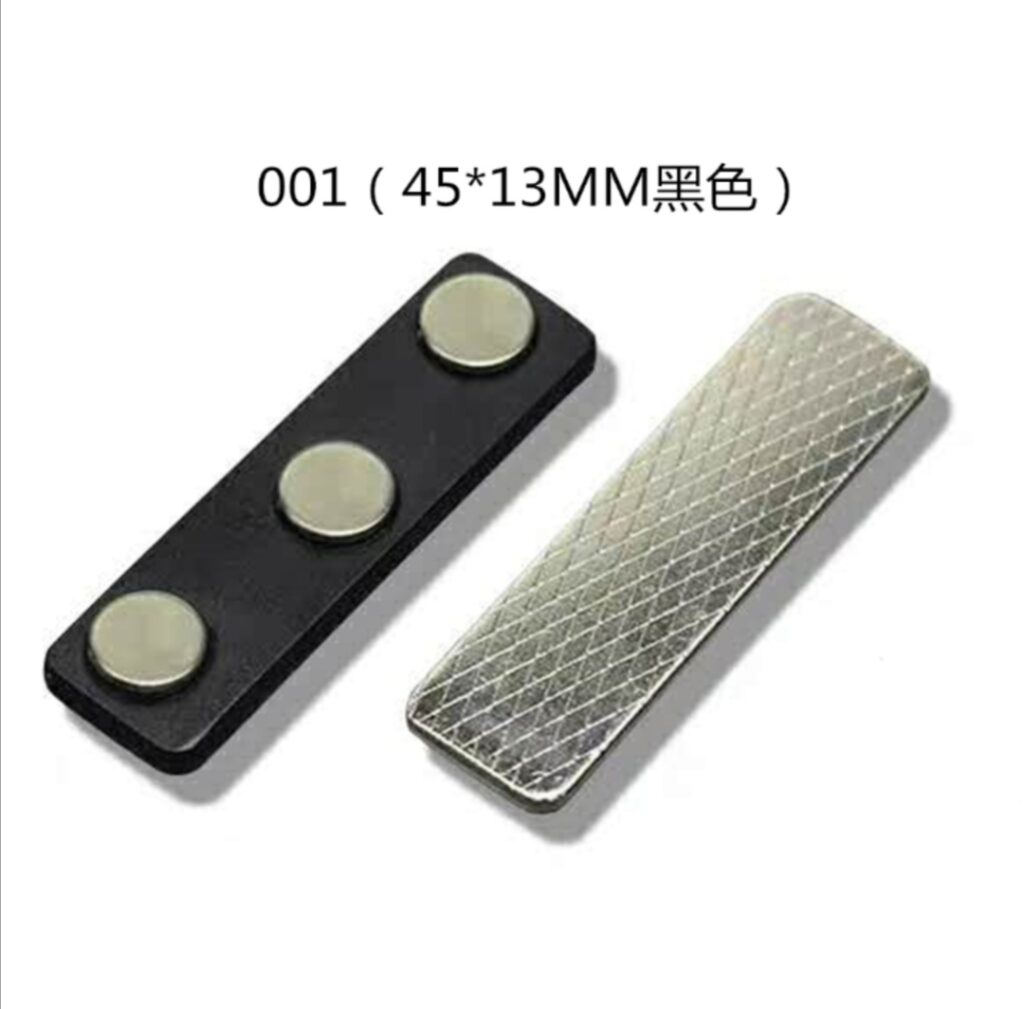
Some backers use a single round magnet, which allows the badge to rotate freely. Others use two or three small magnets spaced apart, which prevents rotation because the badge cannot pivot without lifting both.
Rubberized or textured backers also reduce spinning by increasing friction against the fabric. The grip comes from the surface, not the magnet itself.
Alignment features help too. A backer with a slight recess or a locating pin that fits into a matching hole on the badge side locks the position. Once set, the badge stays straight all day.
If you are buying for a team and rotation is a problem, look for dual-magnet or multi-magnet systems rather than single-disc designs.
Materials and Finishes of Name Badge Magnets
The visible side of the badge affects how professional it looks.
Brushed aluminum is lightweight and modern. It accepts laser engraving, which creates permanent text that will not fade. Polished brass and gold-tone finishes suit traditional environments. Stainless steel offers durability and a clean appearance.
Printed badges with full-color digital printing allow logos and photo IDs, but the print layer can wear over time. A protective laminate or epoxy dome extends the life of printed badges considerably.
The magnetic backer itself is usually plastic or metal. Metal backers last longer but cost more. Plastic backers are lighter and cheaper but can crack if dropped.
For healthcare and food service, choose smooth, non-porous surfaces that can be wiped down with disinfectant. Fabric-backed badges trap bacteria and are a poor choice in clinical settings.
Common Applications of Name Badge Magnets
Name badge magnets appear in more places than most people realize.
Corporate offices use them for staff identification during meetings, client visits, and daily work. The clean appearance complements business attire.
Retail and hospitality rely on badges so customers can identify staff quickly. Magnetic fastening protects uniforms from damage.
Healthcare facilities use them for doctors, nurses, and administrative staff. Smooth, cleanable surfaces support infection control.
Trade shows and conferences use badges for exhibitors and attendees. Reusable magnetic systems reduce waste compared to disposable sticker badges.
Educational institutions use them for faculty and visiting staff. Temporary lecturers can be equipped quickly without maintaining pin-back inventories.
How to Choose the Right System of Name Badge Magnets
A few decisions determine whether your badge program works smoothly.
Start with the thickest garment your team wears. Test a sample backer through that fabric. If it holds securely, it will hold on everything thinner.
Decide between a single-magnet and a multi-magnet design. Multi-magnet systems cost more but prevent rotation, which is worth it for customer-facing roles.
Choose the badge material based on environment. Metal for durability and engraving. Laminate for full-color printing. Avoid fabric in clinical settings.
Confirm the backer material. Metal backers last longer. Plastic backers are lighter and cheaper but less durable.
Ask about replacement backers. Backers get lost more often than badges. A supplier who sells them separately saves you from reordering entire badge sets.
Request samples before a bulk order. Wear them for a full shift and get feedback from staff on comfort, security, and appearance.
How to Test Name Badge Magnets Before Ordering for Your Team
Ordering name badge magnets for a whole team without testing is a gamble. A fastener that feels secure in a catalog photo can spin sideways on a silk blouse or slip off a lab coat within an hour. A short testing process prevents an expensive mistake.
Start by collecting the actual garments your team wears. Do not test on a single dress shirt and assume it represents everything. Gather the thickest jacket, the thinnest blouse, a polo shirt, and any uniform pieces with collars or reinforced plackets. Fabric thickness and weave affect magnetic holding force more than most buyers expect.
Test the sample badge through each garment for a full shift. Have a small group of staff wear it during normal duties rather than a quick trial. Movement matters. Bending, reaching, and turning reveal whether the fastener holds or rotates. A badge that stays straight during a desk task may swing out of alignment during physical work.
Ask specific questions. Did the badge rotate? Did it slide downward? Was it comfortable against the skin? Could the wearer remove it easily without help? Did any fabric bunch or pucker under the magnet? These answers reveal problems that a product listing never mentions.
Test the removal process as well. A fastener that requires serious force may be difficult for staff to remove at the end of a shift, and pulling hard against fabric can stretch or damage it. Test removal with the garment on and off the body.
Check the backer for sharp edges or rough surfaces that could irritate skin during a long shift. Comfort matters as much as holding power, especially for staff who wear the badge daily.
Finally, test replacement backers. Backers get lost. Confirm the supplier sells them separately and that the price makes sense. Then request a small batch of the winning design and run a longer trial before placing a full team order.
FAQ: Your Name Badge Magnets Questions Answered
1. Will name badge magnets damage clothing?
No. That is the main advantage over pins and clips. The magnetic fastener clamps through the fabric without puncturing it, so there are no holes, snags, or adhesive residue. Delicate fabrics like silk and fine wool benefit most from magnetic fastening.
2. Are name badge magnets safe for people with pacemakers?
The magnets used in badge fasteners are small and worn on the chest. The field strength is modest, but anyone with a pacemaker or implanted defibrillator should keep a reasonable distance and consult their physician. As a precaution, offer pin-back or clip-back alternatives for staff with implanted medical devices.
3. How do I clean name badge magnets?
Remove the magnetic backer before cleaning the badge. Wipe metal badges with a soft cloth and mild soap, then dry immediately. Avoid abrasive cleaners that scratch the surface. Clean the backer with a dry cloth and ensure it is fully dry before reattaching to clothing.
Conclusion
Name badge magnets solve a real problem for anyone who wears professional clothing daily. They protect fabric, hold securely, and look clean. Getting the right system means matching magnet strength to your thickest garment, choosing a multi-magnet design if rotation is a concern, and selecting materials that suit your environment. Test samples before committing to a team order. Done properly, magnetic fastening becomes one of those small details that makes a workplace feel more professional.