Walk into any modern device and you will likely find neodymium rare earth magnets doing quiet, essential work. From phone speakers to electric car motors, these magnets have reshaped what is possible in product design. This guide explains what they are, how grades work, and how to specify them correctly.
What Are Neodymium Rare Earth Magnets
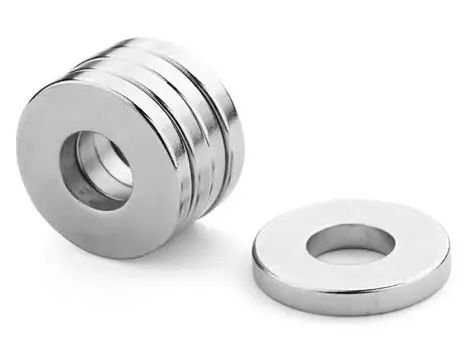
Neodymium rare earth magnets are permanent magnets made from an alloy of neodymium, iron, and boron. Neodymium belongs to the lanthanide series on the periodic table, which is where the “rare earth” label comes from. Despite the name, neodymium is not especially rare in the earth’s crust. It is simply difficult to extract and separate from other elements, which is what drives the cost.
These magnets are the strongest permanent magnets commercially available. A neodymium magnet the size of a coin can lift dozens of times its own weight. That strength comes from the crystal structure of the alloy, which aligns magnetic domains in a way that produces an exceptionally dense magnetic field. Introduced in the 1980s, they quickly replaced ferrite and alnico in applications where size and weight mattered.
Why They Are Called Rare Earth Magnets
The term causes confusion, so it is worth clearing up.
Rare earth elements are a group of seventeen metallic elements, including the lanthanides plus scandium and yttrium. They are chemically similar and tend to occur together in mineral deposits. Separating them into pure elements is complex and energy-intensive, which is why they command premium prices.
Neodymium is one of these elements. Samarium, another rare earth, appears in samarium cobalt magnets, the other major rare earth magnet family. So “rare earth magnet” is really a category that includes both neodymium and samarium cobalt types.
The supply chain is heavily concentrated. China produces over 80 percent of global rare earth oxides and dominates downstream magnet manufacturing. That concentration influences pricing, availability, and geopolitical discussions around supply security.
Understanding the Grade System
Neodymium rare earth magnets are graded from N35 to N52. The number represents the maximum energy product in Mega-Gauss-Oersteds, which measures how much magnetic energy the material stores per unit of volume.
N35 sits at the economical end. N42 and N45 cover most industrial applications. N48 and N50 serve demanding work. N52 sits at the top of the commercial range.
Higher grades deliver more flux from the same physical size. That lets engineers shrink the magnet or increase performance. But higher grades are also more brittle, more sensitive to heat, and more expensive. The price difference between N35 and N52 can reach 50 percent for identical dimensions.
In many real designs, a slightly larger lower-grade magnet matches a smaller high-grade magnet at lower cost and with better durability. Grade should be chosen to fit the application, not to chase the biggest number on the datasheet.

Temperature Ratings and Coercivity
This is the specification buyers overlook most often, and it causes the most failures.
Grade describes strength at room temperature. Coercivity describes resistance to demagnetization under heat or opposing magnetic fields. Two magnets with the same grade can behave very differently at 150 degrees Celsius depending on coercivity.
Temperature suffixes indicate the maximum operating limit. Standard N grades reach 80 degrees Celsius. M reaches 100. H reaches 120. SH reaches 150. UH reaches 180. EH reaches 200. Each step adds dysprosium or terbium, which raises intrinsic coercivity and cost.
Above the rated maximum, some magnetic domains flip and do not recover. This irreversible loss is permanent. Push far enough past the limit, and the magnet loses a large share of its strength with no way back.
For neodymium rare earth magnets used in motors, generators, or sealed enclosures, the suffix matters more than the grade number. Always specify both together, such as N42SH, and request demagnetization curves at your operating temperature.
Common Shapes and Their Uses
Different geometries suit different applications.
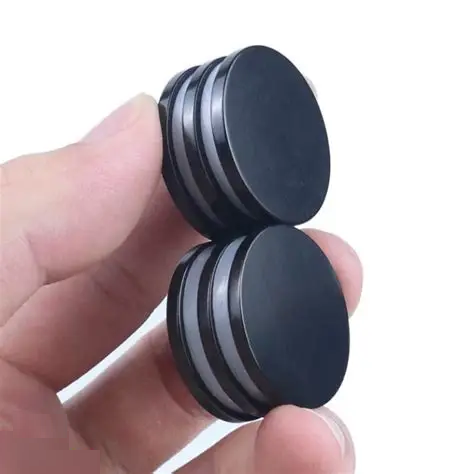
Discs concentrate the field on two flat faces, which makes them ideal for holding and mounting. They are the most common shape.
Blocks provide straight edges and flat faces, which improves shear resistance and makes alignment easier. They suit jigs, fixtures, and sensor assemblies.
Rings have a central hole for screws, shafts, or threaded rods. They appear in speakers, sensors, and magnetic couplings.
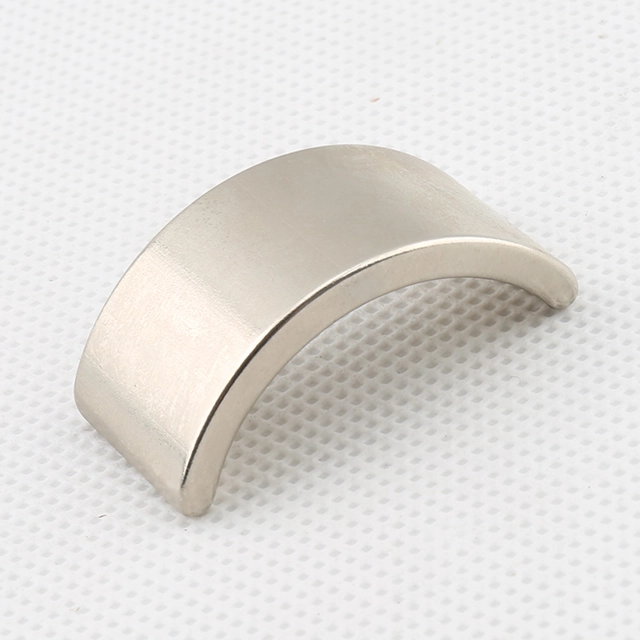
Arc segments follow a curved surface and maintain a uniform air gap in motors and generators.
Spheres roll and self-align, creating unique field patterns. They are used in demonstrations and some mechanical designs, but they carry serious swallowing hazards.
Where Neodymium Rare Earth Magnets Are Used
The applications of neodymium rare earth magnets are almost endless once you start looking.
Electric vehicle traction motors rely on high-grade neodymium magnets with SH or UH ratings. Wind turbine generators use large volumes in direct-drive designs that eliminate gearboxes.
Consumer electronics use tiny magnets in speakers, vibration motors, camera autofocus, and wireless charging alignment.
Medical devices use magnets with biocompatible coatings in surgical instruments and implantable components.
Industrial automation uses them in servo motors, magnetic couplings, and workholding fixtures. Magnetic separators remove ferrous contamination from food and plastic processing lines.
Household products use them in cabinet catches, tool holders, and magnetic fasteners.

How to Specify and Verify
Getting the right magnet means covering several details together.
State the grade and temperature suffix. Provide the demagnetization curve at operating temperature. Specify dimensions with tolerances, and clarify whether they are before or after coating. Confirm magnetization direction with a diagram. Note the coating type and thickness. Include the maximum operating temperature the magnet will see.
Then verify. Request material test reports showing actual remanence and energy product values. Measure pull force on your real surface with your real load. Test at operating temperature if the application runs warm. For critical work, send samples to an independent laboratory for hysteresisgraph testing.
How Rare Earth Supply Chains Affect Neodymium Magnet Availability
The performance of neodymium rare earth magnets is impressive, but their supply chain is fragile in ways buyers should understand. Availability and pricing depend on a small number of producers and a complex separation process that few countries have mastered.
China dominates the industry, producing over 80 percent of global rare earth oxides and an even larger share of finished neodymium magnets. This concentration exists because rare earth separation is difficult, energy-intensive, and environmentally demanding. Building new capacity takes years and significant capital. When Chinese export policies shift, global prices respond within weeks.
Dysprosium and terbium, the heavy rare earths used in high-temperature grades, are scarcer still. Their markets are smaller, which makes them more vulnerable to disruption. A supply tightening in these elements raises the cost of SH, UH, and EH grade neodymium rare earth magnets far more than it affects standard grades.
Several countries are now investing in alternative supply. Australia, the United States, and parts of Europe are developing mining and processing capacity. Recycling is also growing. End-of-life magnets from motors and hard drives contain recoverable neodymium, and several companies now extract it commercially. This secondary supply remains small but helps stabilize prices over time.
For buyers, the practical response is diversification. Qualify suppliers in more than one region. Build buffer inventory of critical grades. Track rare earth index prices rather than reacting only to quotes. Design products to tolerate modest grade variation where possible. Neodymium rare earth magnets will remain available, but the path from mine to finished component involves risks worth planning around.
FAQ: Your Neodymium Rare Earth Magnets Questions Answered
1. Are neodymium rare earth magnets dangerous?
They can be. Large magnets cause serious pinch injuries if fingers get caught between them. Small magnets are a severe swallowing hazard, especially for children. Two or more swallowed magnets can attract through intestinal walls and cause life-threatening injuries. Keep them away from pacemakers and store them securely.
2. How long do neodymium rare earth magnets last?
Under normal indoor conditions, they lose less than 1 percent of their strength per decade. Properly stored and protected from heat and moisture, they outlast the products they are installed in. Heat, corrosion, and physical damage are the main causes of premature loss.
3. Why do neodymium rare earth magnets need a coating?
The base alloy corrodes quickly in air and moisture. Coatings like nickel, epoxy, and parylene seal the surface and prevent oxidation. A damaged coating creates a corrosion site, so handle magnets carefully to preserve the protective layer.
Conclusion
Neodymium rare earth magnets deliver the strongest magnetic field available in a compact package, which is why they appear in everything from earbuds to wind turbines. Getting the right one means understanding grade, coercivity, temperature rating, shape, coating, and magnetization direction together. Verify with test data and samples before committing to production. Do that, and you get the full benefit of the strongest permanent magnet material on the market.