Neodymium magnet N35 sits at the entry point of the rare earth magnet family, yet it still outperforms almost every other magnet type on the market. Understanding what N35 can and cannot do helps you decide whether to spend more on a higher grade. This guide covers the specifications, real-world limits, and common mistakes.
What Is Neodymium Magnet N35
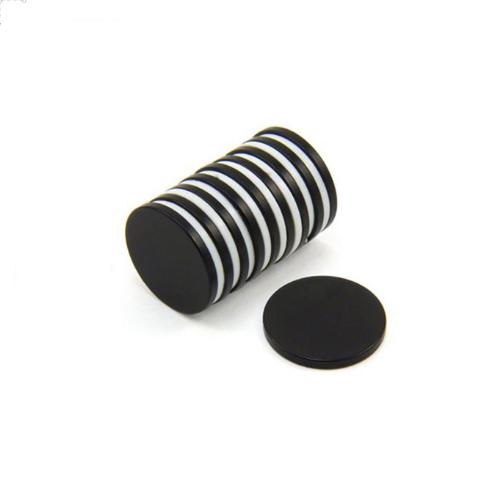
Neodymium magnet N35 is a permanent magnet made from an alloy of neodymium, iron, and boron, with a maximum energy product of 35 Mega-Gauss-Oersteds. The “N” stands for neodymium. The “35” is the grade number, which indicates how much magnetic energy the material stores per unit of volume.
It is the lowest grade in the standard commercial neodymium range, which runs from N35 up to N52. That does not make it weak. A neodymium magnet N35 is still roughly ten times stronger than a ferrite magnet of the same size. It is simply the most economical option within the neodymium family.
Because it sits at the bottom of the range, N35 is also the most affordable neodymium grade. That combination of high strength and lower cost makes it the default choice for a huge range of applications, from craft magnets to industrial fixtures.
How N35 Compares to Higher Grades
The main difference between N35 and grades like N42 or N52 is magnetic output per unit of volume. A higher grade produces more flux from the same physical size.
Roughly speaking, N42 delivers about 20 percent more magnetic energy than N35, and N52 delivers about 48 percent more. That sounds significant, and in space-constrained designs it is. If your assembly has a fixed envelope and you need maximum holding force, a higher grade wins.
But there is a catch that buyers often miss. Magnetic force falls off quickly with distance. If you have room to make the magnet slightly larger or thicker, a bigger neodymium magnet N35 can match a smaller N42 or N52 at lower cost. In many applications, the space constraint is not actually as tight as the designer assumes.
Higher grades also come with penalties. They are more brittle, more sensitive to heat, and more expensive. For applications where the magnet is handled frequently or exposed to vibration, the durability advantage of a lower grade matters.
Magnetic and Physical Specifications
Understanding the technical values helps you specify correctly.
Remanence for N35 typically falls around 1.17 to 1.22 Tesla. Coercivity depends on the temperature suffix. A standard N35 has intrinsic coercivity around 12 kOe. An N35SH raises that to roughly 20 kOe, which extends the operating temperature from 80 degrees Celsius to 150 degrees Celsius.
Density sits around 7.5 grams per cubic centimeter for a fully sintered part. Density below that figure suggests incomplete sintering, which reduces both strength and corrosion resistance.
Hardness is high, and the material is brittle. Neodymium magnet N35 resists deformation but cracks under impact. Edges chip if the magnet is dropped or allowed to snap against steel.
Maximum operating temperature is 80 degrees Celsius for standard N35. Above that point, irreversible loss begins. The M, H, SH, UH, and EH suffixes raise the limit to 100, 120, 150, 180, and 200 degrees Celsius respectively.
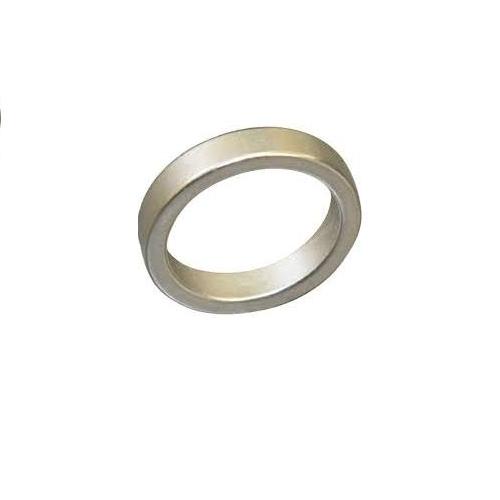
How Temperature Limits Affect Neodymium Magnet N35 Selection
Temperature is the specification that catches most buyers off guard with neodymium magnet N35. The grade number tells you how strong the magnet is at room temperature. It says nothing about how the magnet behaves when it gets hot.
A standard neodymium magnet N35 is rated for continuous operation up to 80 degrees Celsius. Below that point, performance drops slightly as temperature rises, but the loss reverses completely when the magnet cools. This is called reversible loss, and it is predictable. The reversible temperature coefficient for neodymium is roughly minus 0.11 percent per degree Celsius, meaning a magnet at 70 degrees Celsius is about 8 percent weaker than at room temperature.
Above 80 degrees Celsius, the behavior changes. Some magnetic domains flip and do not flip back on cooling. This is irreversible loss, and it is permanent. Push far enough past the limit, and the magnet loses a substantial share of its strength with no way to recover it.
The solution is the temperature suffix. M grade raises the limit to 100 degrees Celsius. H reaches 120. SH reaches 150. UH reaches 180. EH reaches 200. Each step adds dysprosium or terbium to raise intrinsic coercivity, and each step increases cost.
The trap is measuring the wrong temperature. Engineers often check the outside of an enclosure and assume the magnet sees the same conditions. In motors, sensors, and sealed assemblies, the internal temperature can run 30 to 50 degrees higher than the exterior. Build in at least 20 degrees of margin above your measured worst case.
When ordering neodymium magnet N35 for any warm environment, specify the suffix explicitly. Writing “N35” alone leaves the temperature rating undefined, and the supplier may ship a standard grade that fails in service.
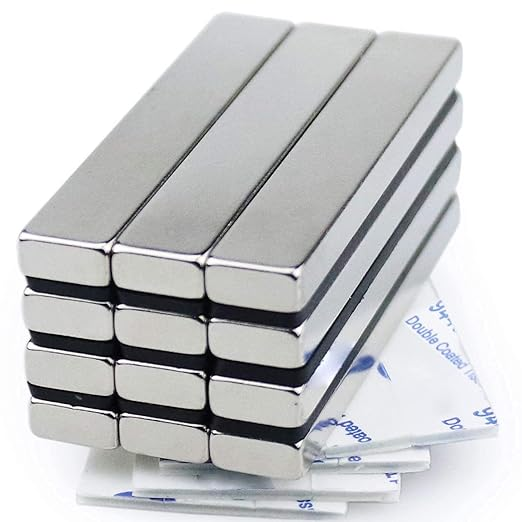
Where N35 Works Well
Neodymium magnet N35 fits a wide range of applications where strength matters but maximum performance is not required.
Craft and hobby projects use N35 discs and blocks for closures, displays, and organizers. The strength is more than adequate for lightweight objects, and the cost keeps projects affordable.
Cabinet catches and door latches work well with N35 pot magnets. A pot magnet concentrates the field onto one face, which roughly doubles the holding force compared to a bare magnet of the same size.
Retail signage and displays rely on N35 magnets for changeable graphics. The holding force is sufficient for lightweight panels, and the lower grade tolerates frequent handling better than brittle high-grade alternatives.
Industrial fixtures and jigs use N35 magnets for workholding where the load is modest. Larger N35 magnets often replace smaller high-grade ones, providing the same force with better durability.
Sensors and switches use N35 in reed switch actuators, position sensors, and magnetic targets. The consistent field is more important than raw strength in these applications.
Where Neodymium Magnet N35 Falls Short
There are situations where N35 is the wrong choice.
High-temperature environments require a temperature-rated grade. A standard neodymium magnet N35 used inside a motor running at 120 degrees Celsius will lose strength permanently. An N35SH or N35UH would be needed instead.
Very compact designs may demand a higher grade. If the available space is fixed and the required force is high, N35 may not deliver enough flux no matter how it is arranged.
High-vibration applications can cause chipping in any neodymium grade, but higher grades are more brittle. Ironically, N35 sometimes performs better here, provided the force requirement is met.
Applications requiring maximum pull force in minimum volume, such as precision motors and high-performance speakers, typically specify N48 or above.
Common Mistakes When Buying N35
A few recurring errors cause most problems.
Assuming N35 is weak is the first. It is the lowest neodymium grade, not a weak magnet. Buyers who switch to ferrite to save money often find they need a magnet five times larger to match the same holding force.
Ignoring the temperature suffix is the second. Standard N35 and N35SH carry very different prices and very different thermal limits. Specifying only “N35” leaves the temperature rating undefined.
Skipping the coating decision is the third. Bare neodymium corrodes quickly. Nickel plating suits indoor use, but epoxy is needed for outdoor or humid environments.
Ordering without testing is the fourth. Pull force ratings assume ideal contact with thick, clean steel. A magnet rated for 10 kilograms may hold only 3 kilograms on a painted surface.
How Sizing Affects Neodymium Magnet N35 Holding Force
Buyers often focus on grade when they should be looking at dimensions. A neodymium magnet N35 sized correctly will outperform a smaller high-grade magnet in many real applications, and it will cost less.
Holding force scales with the surface area in contact with the target. Doubling the diameter of a disc magnet roughly quadruples its pull force, because area increases with the square of the radius. That is a far bigger jump than the 20 to 40 percent gain you get by moving up one or two grades.
Thickness plays a different role. Adding thickness increases the magnetic field strength at the surface, but with diminishing returns. Past a certain point, extra thickness contributes little to the external field because the material deep inside the magnet is too far from the target to matter. A thin, wide neodymium magnet N35 frequently outperforms a thick, narrow one of the same volume.
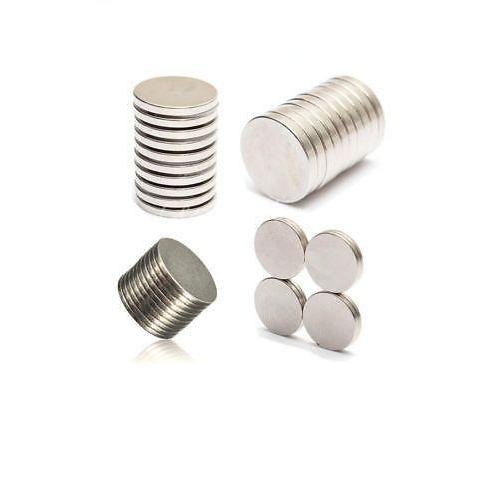
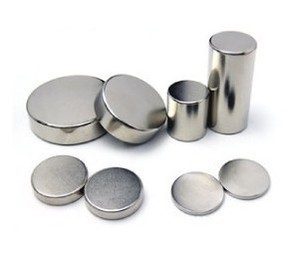
Shape matters as well. Discs concentrate the field on two flat faces, which suits holding against flat steel. Bar magnets spread the field along their length and resist sliding better. Ring magnets distribute force around a circumference. Pot magnets, where a neodymium magnet N35 sits inside a steel cup, roughly double the holding force by redirecting flux onto a single face.
The practical lesson is to size the magnet for the load before choosing a grade. Calculate the required contact area, then select the grade that fits your space and budget. In many cases, a larger neodymium magnet N35 delivers the force you need at a lower cost than a smaller premium grade, with better durability as a bonus.
How to Verify What You Receive
Verification protects your investment.
Request a material test report showing measured remanence, coercivity, and energy product. Confirm the values fall within the published range for N35.
Measure the dimensions on a sample. Confirm whether the quoted size is before or after coating, since coating adds thickness.
Test pull force against a clean steel plate and compare with the specification. If the result falls far short, the grade may be mislabeled.
Check the coating for uniformity and adhesion. Chips or blisters indicate quality problems that will worsen in service.
FAQ: Your Neodymium Magnet N35 Questions Answered
1. Is N35 strong enough for most applications?
Yes. Neodymium magnet N35 is roughly ten times stronger than ferrite of the same size and handles most craft, household, and light industrial tasks without difficulty. It falls short only in high-temperature environments, very tight spaces, or applications demanding maximum force.
2. What is the difference between N35 and N35SH?
Both share the same grade number, meaning the same nominal energy product at room temperature. The SH suffix indicates higher coercivity, which raises the maximum operating temperature from 80 degrees Celsius to 150 degrees Celsius. N35SH costs more because it contains dysprosium.
3. Can N35 magnets be used outdoors?
Yes, with the right coating. Bare neodymium corrodes quickly in moisture. Epoxy or rubber coatings provide the durability needed for outdoor use. Also confirm the temperature rating, since direct sun on dark surfaces can push temperatures well above ambient.
Conclusion
Neodymium magnet N35 delivers impressive strength at the lowest cost within the neodymium family. It handles the majority of everyday and industrial applications without difficulty. The key is understanding its limits. Choose a higher grade only when space or force requirements demand it. Specify the temperature suffix alongside the grade. Protect the magnet with an appropriate coating. Verify what you receive with test data and samples. Do that, and N35 becomes one of the most cost-effective magnetic solutions available.
How to Understand the Great Round Magnet with Hole Price Before You Buy