Small magnets are easy to lose and surprisingly hard to handle. Micro neodymium magnets pack serious magnetic force into a package the size of a grain of rice, and that combination creates unique challenges. This guide explains what they are, where they are used, and how to work with them safely.
What Are Micro Neodymium Magnets
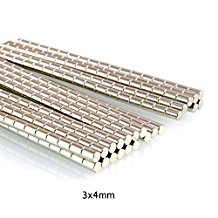
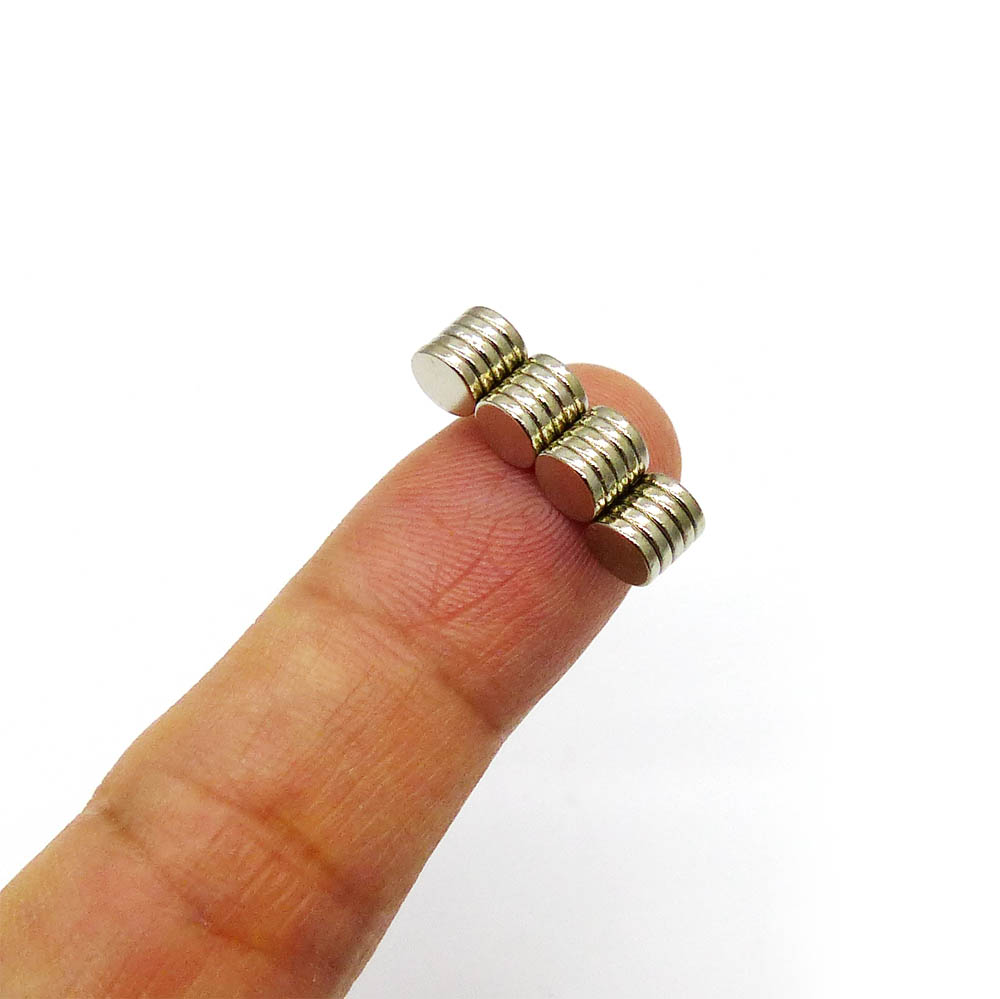
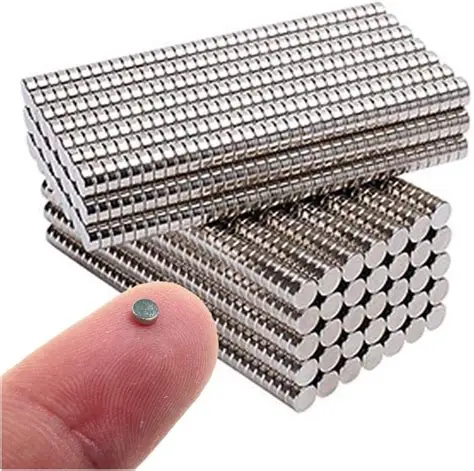
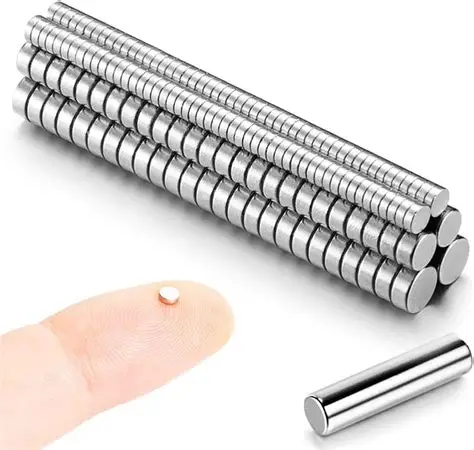
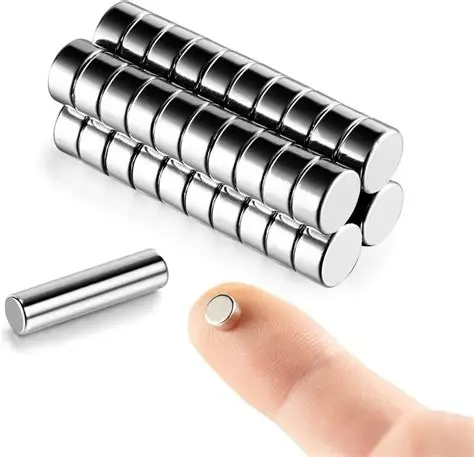
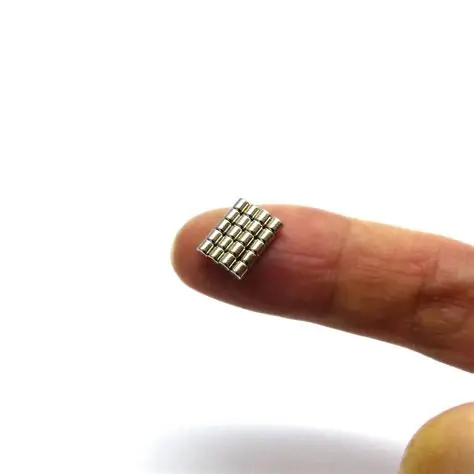
Micro neodymium magnets are neodymium-iron-boron magnets with dimensions measured in millimeters, often just a few millimeters across. Typical sizes range from 1 millimeter to 5 millimeters in diameter or length. At that scale, they are barely visible on a workbench but still capable of holding many times their own weight.
They are made the same way as larger neodymium magnets, through powder pressing, sintering, grinding, and coating. The difference is in the tooling and handling. Producing micro neodymium magnets requires precision dies and careful process control, because small dimensional errors represent a large percentage of the total size. The result is a magnet that fits into spaces no conventional magnet can reach.
Why Small Size Creates Big Challenges
Working with micro neodymium magnets is harder than working with larger ones for a few reasons that are not obvious until you try.
They are difficult to separate. Two micro magnets stuck together require fine tools to split apart, and fingers are too large for the job. Tweezers help, but the magnets often jump to the tweezers instead of staying put. Non-magnetic ceramic tweezers solve this problem.
They are easy to lose. A 2-millimeter magnet dropped on a carpet or workshop floor is essentially gone unless you have a strong retrieval magnet. Counting them in and out of storage is the only reliable way to track inventory.
They are fragile at the edges. Small magnets chip easily because the coating is thin and the material is brittle. Handling with metal tools increases the risk. Plastic or ceramic tools are safer.
They are a serious swallowing hazard. Because they are small, they are easy to ingest accidentally, especially by children. Two or more swallowed magnets can attract each other through intestinal walls and cause severe internal injury. This is a medical emergency requiring surgery.
Grades and Specifications for Micro Magnets
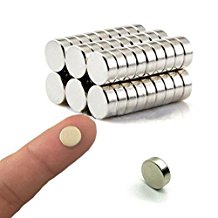
Micro neodymium magnets are available in the same grade range as larger magnets, from N35 up to N52. Higher grades deliver more force in the same tiny volume, which matters greatly at this scale. A micro magnet with a low grade may not produce enough force for its intended function.
Temperature ratings follow the same suffix system. M, H, SH, UH, and EH raise the maximum operating temperature from 80 degrees Celsius up to 200 degrees Celsius. For small magnets used inside electronics or motors, the temperature rating often matters more than the grade itself.
Coating options are more limited at small sizes. Nickel plating is standard. Epoxy and parylene coatings are available but add proportionally more thickness, which can affect fit in tight assemblies. Confirm coating thickness when specifying micro magnets for precision work.
Tolerances are another consideration. As-pressed micro magnets hold tolerances that represent a larger percentage of the total dimension than they would on a large magnet. If your assembly requires a press fit, expect to pay more for ground dimensions.
Where Micro Neodymium Magnets Are Used
Their small size opens applications that larger magnets cannot serve.
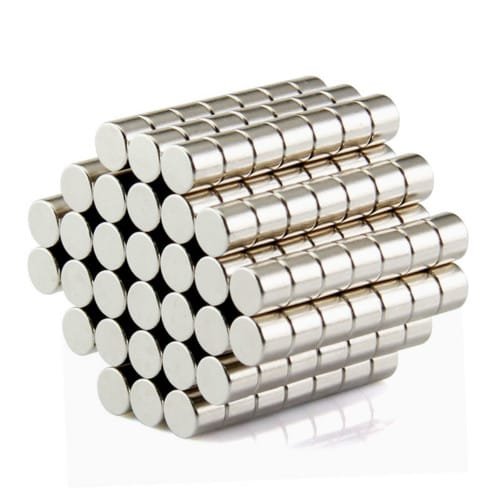
Consumer electronics use micro neodymium magnets in earbud drivers, smartphone speakers, and camera autofocus mechanisms. Space inside these devices is measured in fractions of a millimeter, so magnetic force per unit volume is critical.
Medical devices use tiny magnets in surgical instruments, implantable components, and drug delivery systems. Biocompatible coatings like parylene and gold are common in these applications.
Sensors and switches rely on micro magnets for reed switches, hall effect sensors, and magnetic encoders. The small size allows precise field placement close to the sensing element.
Model making and miniatures use micro magnets for removable parts, hidden closures, and articulated joints. The force is strong enough to hold small components securely without visible hardware.
Jewelry and fashion use micro magnets for clasps, interchangeable components, and magnetic closures in bags and accessories. The small size keeps the hardware discreet.

Handling and Storage Best Practices
A few habits make working with micro neodymium magnets far easier.
Use ceramic or plastic tweezers rather than steel. Steel tools attract the magnet and make positioning difficult.
Work over a tray with a raised lip. If a magnet slips, it stays in the tray instead of disappearing under a workbench.
Store micro magnets in compartmented containers with individual slots. Loose micro magnets in a bag clump together and become nearly impossible to separate.
Keep a strong retrieval magnet on hand for recovering dropped pieces. A large neodymium pot magnet sweeps the floor effectively.
Count magnets when removing them from storage and again when returning them. This habit prevents lost inventory and reduces the risk of stray magnets ending up somewhere dangerous.
Keep all micro neodymium magnets away from children and pets. Store containers on high shelves or in locked drawers.
How to Specify Tolerances for Micro Neodymium Magnets
Tolerances behave differently at small scale. A variation of 0.05 millimeters is negligible on a 50-millimeter magnet, but on a 2-millimeter micro neodymium magnet it represents 2.5 percent of the total dimension. That difference determines whether the part fits or fails.
As-pressed micro magnets typically hold tolerances of plus or minus 0.05 millimeters. That may sound tight, but for a magnet intended to press into a 2-millimeter bore, it is not tight enough. The bore itself carries its own tolerance, and the two must combine to produce a reliable fit. If both parts are at the loose end of their ranges, the magnet will be too small to hold. If both are at the tight end, it may crack during insertion.
Grinding brings micro neodymium magnets into tighter bands, often plus or minus 0.01 millimeters. The cost increase is proportionally larger than for big magnets because handling and fixturing small parts takes more labor per piece. Expect a 20 to 40 percent price premium over as-pressed dimensions.
Coating thickness complicates the picture. Nickel plating adds roughly 0.02 to 0.05 millimeters. Epoxy adds 0.1 to 0.3 millimeters, which is enormous relative to a 2-millimeter part. Always confirm whether quoted dimensions are before or after coating, and specify which surfaces are critical.
Concentricity matters when a micro magnet sits inside a rotating assembly. If the outer diameter is not centered on the bore, imbalance appears even at small scale.
The practical rule is to tolerance only what matters. Identify the functional surfaces, hold those tightly, and relax everything else. Over-tolerancing micro neodymium magnets drives up cost without improving performance.
Safety Risks for Micro Neodymium Magnets
Micro neodymium magnets look harmless because of their size, which is exactly what makes them dangerous. The risks are different from those of large magnets, and they are easy to underestimate.
The most serious hazard is swallowing. Small magnets are easily ingested by accident, particularly by young children who put things in their mouths. A single swallowed magnet may pass through without incident. Two or more are a different story. They can attract each other across loops of intestine, trapping tissue between them and cutting off blood supply. The result is perforation, necrosis, and potentially fatal infection. This requires emergency surgery and cannot wait. If you suspect a child or pet has swallowed magnets, go to a hospital immediately and tell the medical team that magnets are involved.
Pinch injuries are less dramatic but more frequent. Two micro magnets snapping together generate enough force to pinch skin, and the small contact area concentrates pressure. Fingertips are the usual casualty. Use a plastic shim to separate stuck magnets rather than your fingers.
Chipping is a third risk. Micro magnets have thin coatings and brittle edges. Dropping them or letting them snap together can produce tiny sharp fragments that lodge in skin or get into eyes. Safety glasses are worth wearing when handling batches.
Storage discipline prevents most accidents. Keep micro magnets in sealed compartmented containers. Store them on high shelves away from children. Count them when removing and returning them to storage so a stray magnet never ends up on the floor or in a workspace where food is prepared.
Finally, keep micro neodymium magnets away from pacemakers and other implanted medical devices. The field is small but the distance is short, and the risk is not worth taking.
Assembly Tips for Tiny Magnets
Getting micro magnets into position takes technique.
Apply the magnet to adhesive using a plastic pick rather than fingers. This gives better control and keeps the magnet clean.
Place the magnet into a recessed pocket rather than a flat surface. The pocket locates the magnet precisely and reduces the chance of shifting during assembly.
Use a fixture to hold parts in alignment while adhesive cures. Small magnets can pull themselves out of position before the glue sets.
Test polarity before assembly. Micro magnets are difficult to reorient once bonded, and reversing one magnet in an array ruins the magnetic pattern.
Consider using a thin steel backing plate behind the magnet. The plate concentrates the field and increases holding force without adding magnet volume.
Common Mistakes When Buying Micro Neodymium Magnets
Most problems with micro neodymium magnets trace back to purchasing decisions rather than the magnets themselves. Avoiding these mistakes saves time, money, and frustration.
The first mistake is ordering by grade alone. Buyers see N52 and assume it is the best choice. At micro scale, a higher grade offers limited absolute force gain because the volume is so small. A slightly larger magnet at a lower grade often delivers more usable holding power at lower cost and with better durability. Match the grade to the space available, not to the biggest number on the listing.
The second mistake is ignoring coating thickness. On a 2-millimeter magnet, a 0.2-millimeter epoxy coating represents 10 percent of the diameter. If you specify a 2-millimeter part and receive a coated piece measuring 2.2 millimeters, it may not fit your assembly. Always clarify whether quoted dimensions are before or after coating.
The third mistake is ordering without samples. Micro neodymium magnets vary more between suppliers than larger magnets because handling and process control are harder. A sample batch reveals actual dimensions, coating quality, and magnetic strength before you commit to a production run.
The fourth mistake is buying loose magnets in bulk bags. Bulk packaging is cheaper, but the magnets arrive clumped together, often with chipped edges. Compartmented or tray packaging costs slightly more and protects the parts.
The fifth mistake is underestimating the safety hazard. Buyers sometimes treat micro magnets as craft supplies. They are not. Store them securely, keep them away from children, and handle them with non-magnetic tools. A small magnet swallowed by a child is a medical emergency.
FAQ: Your Micro Neodymium Magnets Questions Answered
1. How strong are micro neodymium magnets compared to larger ones?
Force depends on volume, not just grade. A 2-millimeter disc produces far less total force than a 20-millimeter disc of the same grade. However, per unit of volume, micro neodymium magnets are just as powerful. They are used where space is the limiting factor, not where maximum force is needed.
2. Can micro neodymium magnets be used in medical devices?
Yes, with appropriate coatings. Parylene and gold plating provide biocompatible surfaces. Material traceability and documented sterilization compatibility are required for medical applications. Work with a supplier experienced in medical-grade magnet production.
3. What is the best way to separate micro magnets that are stuck together?
Slide them apart rather than pulling. Use a thin plastic shim or a non-magnetic blade to work between the magnets. Applying a slight twisting motion helps break the magnetic bond. Never use your fingers to pry them apart, as the force can cause the magnets to snap together and pinch skin.
Conclusion
Micro neodymium magnets open design possibilities that larger magnets cannot match, but they demand a different approach to handling, storage, and assembly. Use non-magnetic tools, work over a tray, store them in compartments, and count them diligently. Verify grade, coating thickness, and tolerances before ordering. Treat them as the serious safety hazard they are, especially around children. Done right, these tiny magnets become reliable components in products where every millimeter counts.