Introduction
If you need a small but incredibly powerful magnet, disc neodymium magnets are one of the best options available. They are compact, versatile, and used across dozens of industries. This guide explains everything a beginner needs to know before buying or using them.
What Are Disc Neodymium Magnets?
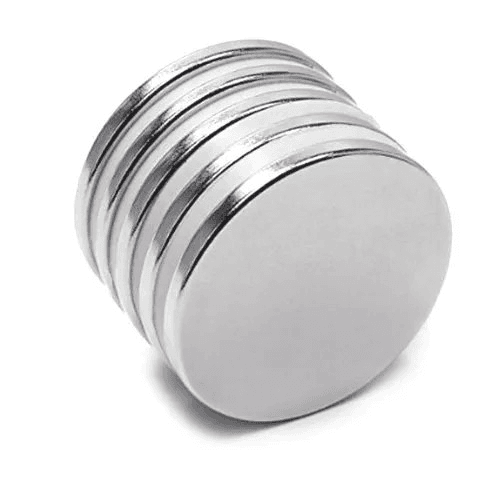
Disc neodymium magnets are flat, circular permanent magnets made from an alloy of neodymium, iron, and boron (NdFeB). The disc shape means the diameter is larger than the thickness, giving them a thin, coin-like appearance. They are part of the rare-earth magnet family and are widely regarded as the strongest type of permanent magnet available today.
Unlike bar or ring magnets, the disc form has magnetic poles on its two flat faces — one face is the north pole and the other is the south pole. This makes them easy to stack, attach to surfaces, and integrate into compact devices.
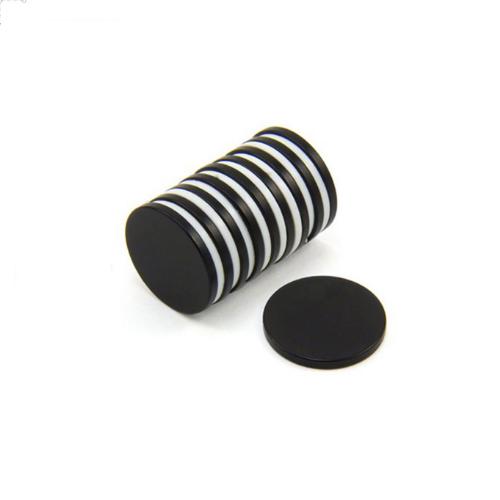
They come in a huge range of sizes, from tiny 3mm discs used in electronics to large 50mm versions used in industrial equipment. Most are coated with a layer of nickel, zinc, or epoxy to prevent corrosion, since the raw NdFeB material rusts quickly when exposed to air or moisture.
3 Key Specifications
Before purchasing disc neodymium magnets, always check these three critical specifications to make sure you get the right product.
1. Grade (N-Rating) The grade tells you how strong the magnet is. Common grades range from N35 to N52. The higher the number, the stronger the magnetic field it produces. For most everyday uses such as crafts, mounting, or small electronics, N35 to N42 is sufficient. For demanding applications like motors or scientific instruments, N48 to N52 is preferred. Higher grades also tend to be more brittle, so handle them with extra care.
2. Dimensions (Diameter × Thickness) Disc neodymium magnets are measured by diameter and thickness, written as D × T (for example, 20mm × 3mm). The diameter controls how wide the contact surface is, while the thickness affects the depth of the magnetic field. A thicker disc generally produces a stronger pull force in the direction perpendicular to its flat face. Always match dimensions to your specific use case.
3. Maximum Operating Temperature Standard NdFeB magnets start losing strength at around 80°C (176°F). If your application involves heat — such as motors, lighting fixtures, or outdoor equipment — choose a high-temperature grade. Grades marked “M,” “H,” “SH,” “UH,” or “EH” can withstand temperatures ranging from 100°C up to 200°C. Using a standard grade in a hot environment will permanently reduce its magnetic performance.
How to Produce Disc Neodymium Magnets
Manufacturing the disc neodymium magnets is a precise, multi-step industrial process. Here is a simplified step-by-step overview.
Step 1: Raw Material Preparation Neodymium, iron, and boron are sourced and weighed in exact proportions. The typical ratio is approximately 32% neodymium, 64% iron, and 1% boron, with small amounts of other elements added to improve performance or temperature resistance.
Step 2: Melting and Alloy Formation The raw materials are melted together in a vacuum induction furnace at extremely high temperatures. The molten alloy is then rapidly cooled using a strip-casting technique, producing thin flakes of NdFeB alloy with a consistent crystalline structure.
Step 3: Milling into Powder The alloy flakes are crushed and ground into a very fine powder using a process called jet milling. Particle size is carefully controlled because it directly affects the magnetic strength of the final product. This step is done in an inert atmosphere to prevent oxidation.
Step 4: Pressing and Alignment The fine powder is placed into a mold and pressed under high pressure while a strong magnetic field is applied. The field aligns all the magnetic particles in the same direction, which is what gives the final magnet its powerful, oriented magnetic field.
Step 5: Sintering The pressed powder compact is heated in a vacuum furnace to just below its melting point. This sintering process fuses the particles together into a dense, solid block without melting them completely. The result is a strong, rigid magnetic blank.
Step 6: Cutting and Shaping The sintered block is cut into disc shapes using diamond-tipped saws or wire EDM machines. This is done with high precision to meet exact dimensional tolerances.
Step 7: Magnetizing At this stage, the shaped discs are not yet fully magnetized. They are placed inside a powerful magnetizing coil that sends a brief, intense pulse of current through the material, locking in the full magnetic field.
Step 8: Coating and Quality Control Finally, each disc receives a protective coating — usually nickel, zinc, or epoxy — to guard against corrosion. Finished pieces are inspected for dimensions, pull force, and surface quality before shipping.
5 Applications
1. Electronics and Sensors Disc neodymium magnets are widely used inside smartphones, laptops, and wearable devices. They act as components in reed switches, Hall-effect sensors, and magnetic connectors. Their compact disc form fits neatly into slim electronic housings without adding significant weight.
2. Medical Devices Hospitals and clinics use disc neodymium magnets in hearing aids, surgical clamps, and dental equipment. Their strong, reliable field in a small footprint allows medical device engineers to reduce product size while maintaining performance.
3. DIY and Crafts Hobbyists and makers use them for mounting artwork, building models, creating magnetic closures on bags, and organizing workshops. The flat disc shape is easy to glue onto surfaces and provides a strong, clean hold.
4. Industrial Holding and Clamping Factories use them in jigs, fixtures, and magnetic chucks to hold metal workpieces in place during machining. A small disc can exert a surprisingly large pull force, making it useful wherever a reliable, tool-free grip is needed.
5. Education and Science Schools and research labs use them in physics experiments, demonstrating magnetic fields, levitation, and electromagnetic induction. Their consistent performance and wide availability make them a practical choice for educational settings.
FAQ
Q1: What is the difference between disc and ring neodymium magnets?
A disc magnet is completely solid and flat, with poles on each flat face. A ring magnet has a hole through its center, like a washer. The hole allows ring magnets to be mounted on bolts or shafts, while disc neodymium magnets are better suited for surface mounting or stacking. Both are made from the same NdFeB material and offer similar strength for their size.
Q2: How should I safely separate two disc neodymium magnets that are stuck together?
Never try to pull them apart face-to-face — the force can be surprisingly strong and may cause injury. Instead, slide one magnet sideways off the other using a firm, controlled motion. For larger or stronger pieces, use a non-magnetic wedge or spacer to help separate them. Always wear eye protection, as chipping or cracking is possible.
Q3: Can disc neodymium magnets be used outdoors?
Yes, but only if they have a suitable protective coating. A standard nickel coating offers moderate moisture resistance and works well in sheltered outdoor conditions. For prolonged exposure to rain, humidity, or salt air, an epoxy-coated version provides much better protection. Without proper coating, the raw NdFeB material will corrode and weaken quickly.
Conclusion
Disc neodymium magnets pack extraordinary magnetic power into a simple, flat shape that works across countless applications. Whether you are building electronics, organizing a workspace, or designing industrial equipment, understanding their grade, dimensions, and temperature limits helps you choose the right product every time. Handle them with care, store them properly, and they will deliver reliable performance for years to come.