A round magnet with hole price can vary by a factor of five between suppliers. Understanding what drives the round magnet with hole price helps you avoid overpaying or buying a magnet that fails. This guide breaks down the cost factors and shows you how to compare quotes properly.
What Is a Round Magnet with Hole
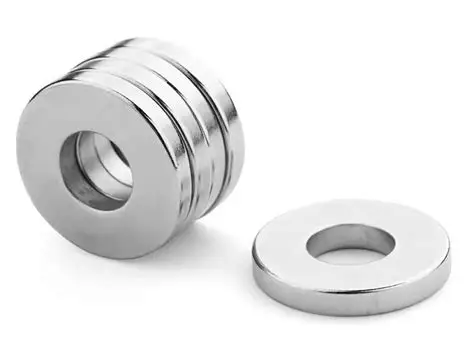
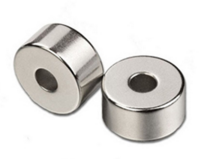
A round magnet with a hole is a disc-shaped permanent magnet with a circular opening through its center. The hole allows a screw, bolt, or threaded rod to pass through, which combines mechanical fastening with magnetic holding. This design is far more secure than relying on magnetism alone.
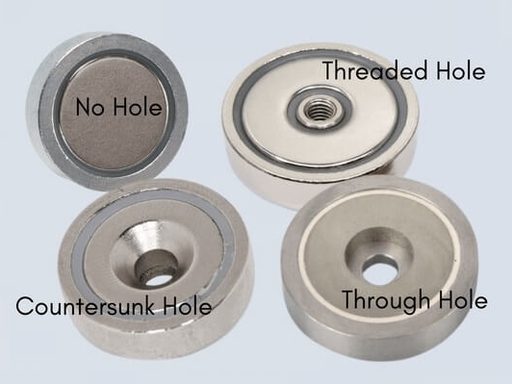
Most of these magnets are made from neodymium-iron-boron, the strongest permanent magnet material available. Ferrite versions exist too, offering lower strength at a much lower price. The hole can be a straight bore or a countersunk recess that accepts a flat-head screw. Countersunk versions let the screw head sit flush with or below the magnetic face, which maintains full contact with the target surface. That detail matters more than most buyers realize, and it affects the round magnet with hole price.
Material Type Drives Most of the Cost
The material is the single largest factor in pricing. Neodymium magnets contain rare earth elements that are expensive to mine, separate, and process. A neodymium round magnet with a hole typically costs five to twenty times more than a ferrite version of the same dimensions.
Neodymium grades also matter. N35 is the most economical grade. N42 costs more. N52 sits at the top and can carry a 30 to 50 percent premium over N35. High-temperature grades with suffixes like H, SH, or UH add dysprosium or terbium, and those heavy rare earth elements push the round magnet with hole price up sharply. An SH grade magnet can cost twice as much as a standard N grade of the same size.
Ferrite is the budget option. It resists corrosion without coating, handles higher temperatures, and costs a fraction of neodymium. The trade-off is strength. To match a small neodymium magnet, you need a much larger ferrite piece. Whether that trade-off makes sense depends on your space constraints.
Samarium cobalt sits at the top of the price range. It offers excellent temperature stability and corrosion resistance, which is why aerospace and defense buyers accept the premium. For most everyday applications, it is overkill.
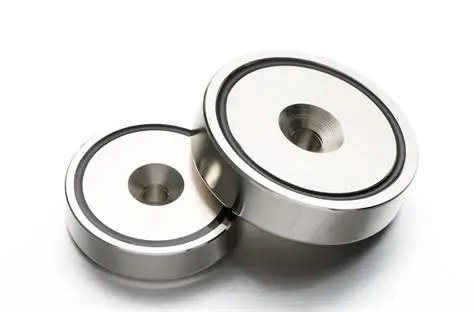
Size, Hole Diameter, and Countersink Add Cost
Bigger magnets use more material, so they cost more. The relationship is not linear because the hole removes material from the center. A large diameter with a large hole may cost less than a solid disc of the same outer size, but the mechanical benefit usually justifies the expense.
Hole diameter affects tooling complexity. Standard hole sizes matched to common screw sizes are cheaper because manufacturers produce them in volume. Custom hole diameters require dedicated tooling, which adds setup cost that gets spread across your order. Small orders absorb that cost poorly, so the round magnet with hole price per unit can be surprisingly high for a custom hole on a low quantity.
Countersinking adds a machining step. The conical recess must be cut at the correct angle, usually 90 degrees, to match standard flat-head screws. This operation adds cost but prevents the screw head from sitting proud of the magnet face. If you skip the countersink and use a flat-head screw anyway, the head lifts the magnet off the target surface and kills holding force.
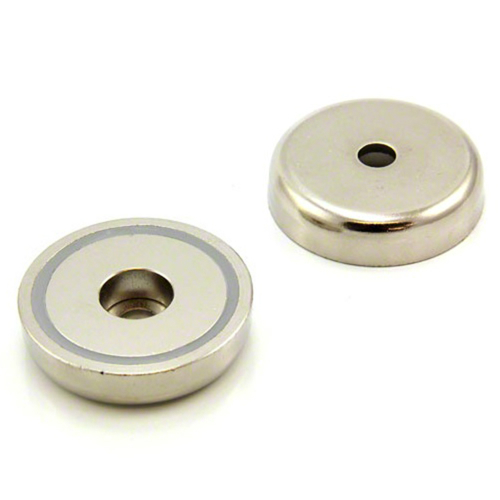
How Quantity Changes the Price
Order quantity is the second biggest factor after material. Tooling and setup costs are fixed. When you order ten pieces, those costs spread across ten units. When you order ten thousand, they nearly disappear into the per-unit price.
Most suppliers publish tiered pricing. A typical structure might be one price for 1 to 99 pieces, a lower price for 100 to 999, a lower price again for 1,000 to 4,999, and the best pricing above 5,000. The gap between the smallest and largest tier is often 40 to 60 percent.
This is why a small prototype order can look shockingly expensive when you compare it to a bulk listing online. You are not being overcharged. You are paying for setup on a small run, and that is a normal part of the round magnet with hole price.
If you need samples before committing, ask whether the supplier credits prototype costs toward a future production order. Some do. That softens the round magnet with hole price on the first order and rewards you for continuing the relationship.
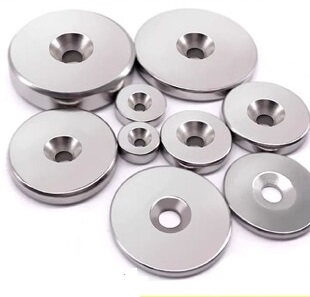
Coating Selection and Its Impact on Price
Bare neodymium corrodes quickly. In humid air, surface oxidation starts within days. In contact with moisture, a bare magnet can crumble within weeks. Every neodymium round magnet with a hole needs a coating, and the coating choice affects price.
Nickel-copper-nickel plating is standard and the most economical. It gives a bright silver finish and adequate protection for indoor use. Epoxy coating costs more but seals the magnet completely against moisture and salt spray, making it the right choice for outdoor and marine applications. Gold plating serves electronic and medical applications where conductivity and biocompatibility matter. Parylene coating is the premium option, applied through vapor deposition and used for medical implants and high-reliability electronics.
The price difference between nickel and epoxy is usually moderate. The jump to gold or parylene is significant. Choose based on your actual environment rather than defaulting to the most expensive option, because every coating upgrade adds to the round magnet with hole price.
Tolerance and Machining Costs
As-pressed magnets hold looser tolerances. Grinding brings dimensions into tighter bands and adds cost. If your round magnet with a hole needs to press-fit into a bore, or if the hole must align precisely with a mating part, you need ground tolerances. Expect a 15 to 30 percent price increase over as-pressed parts.
Concentricity matters when the hole must be perfectly centered relative to the outer diameter. This is critical in rotating assemblies where imbalance causes vibration. Achieving tight concentricity requires specialized fixturing, and the round magnet with hole price reflects that effort.
Inspection requirements scale with precision. Tighter tolerances mean more frequent measurement, more documentation, and more labor. Coordinate measuring machine inspection adds cost per batch. Statistical process control tracking adds ongoing overhead.
Market Forces That Move the Price
Rare earth prices fluctuate. China produces over 80 percent of global supply, so its export policies and production quotas directly affect the round magnet with hole price worldwide. When dysprosium prices spike, high-temperature grades get more expensive. When neodymium prices fall, standard grades get cheaper.
Currency exchange rates affect international purchases. Most rare earth magnets are priced in US dollars. If your local currency weakens against the dollar, your landed cost rises even if the quoted price does not change.
Shipping costs are easy to overlook. Magnets are dense and heavy. Freight can add 10 to 30 percent to the total, especially for air shipments where magnetic shielding requirements apply. Ocean freight is cheaper but slower. Always compare landed cost rather than unit price when evaluating the round magnet with hole price.
How to Compare Quotes Properly
Comparing quotes from different suppliers is harder than it looks because specifications are not always stated the same way.
Ask for the grade in writing. Confirm the actual measured density if density matters. Request the coating type and thickness. Clarify whether the quoted dimensions are before or after coating, since coating adds thickness. Confirm the magnetization direction and the hole specification, including countersink angle if applicable.
Request a material test report with each quote. Genuine N52 has remanence around 1.43 to 1.48 Tesla. If a quote comes in far below others for the same grade and dimensions, suspect grade substitution. This is the most common way buyers get burned on the round magnet with hole price.
Order a sample before committing to a production run. Test it on your actual surface with your actual load. A magnet that performs well in a catalog photo may disappoint once paint, coating, and real-world conditions enter the picture.
Finally, factor in the supplier’s reliability. A slightly higher price from a supplier who delivers on time and provides documentation is usually cheaper overall than a low price from one who causes production delays.
How Fastener Choice Affects the Round Magnet with Hole Price and Performance
The screw you pair with a round magnet with a hole matters more than most buyers expect. The wrong fastener wastes the magnet’s holding force and can even damage the magnet during installation.
Screw material is the first consideration. Stainless steel and brass are the best choices because they are non-magnetic or only weakly magnetic. A standard carbon steel screw attracts strongly to the magnet, which makes positioning awkward and can redirect part of the magnetic field away from the target surface. That redirection reduces the effective holding force you paid for, making the round magnet with hole price a poor investment even if the magnet itself is high quality.
Head style is the second factor. Flat-head screws are designed for countersunk holes and sit flush with the magnet face. Pan-head or hex-head screws protrude above the surface, creating an air gap that reduces holding power. If you are buying countersunk magnets, always match them with the correct flat-head screw. If you are buying straight-bore magnets, recess the screw head below the surface or accept the performance loss.
Screw length matters too. A screw that is too long can bottom out before the round magnet with hole price seats properly. A screw that is too short may not provide enough thread engagement in the mounting surface. Measure the total thickness of the magnet plus the material it mounts to, then add roughly 1.5 times the screw diameter for engagement.
Torque is where installation damage happens. Neodymium is brittle, and the area around the hole is a stress concentration point. Overtightening cracks the magnet, often invisibly. Tighten by hand until snug, and avoid impact drivers entirely.
Finally, consider thread-locking compound for vibration-prone applications. A loose screw defeats the purpose of mechanical fastening. This small addition protects the round magnet with hole price you already paid by keeping the assembly intact over years of service.
FAQ: Your Round Magnet with Hole Price Questions Answered
1. Why does the round magnet with hole price vary so much between suppliers?
Material grade authenticity is the biggest reason. Some suppliers quote lower grades while advertising premium ones. Manufacturing efficiency, geographic location, labor costs, and quality control investment all contribute. Shipping and import duties add to the delivered price. The lowest quote often reflects a lower grade or thinner coating rather than genuine savings.
2. Is a countersunk hole worth the extra cost?
Yes, if you are using flat-head screws. Without a countersink, the screw head sits above the magnet face and creates an air gap that reduces holding force significantly. The countersink costs a little more, but it preserves the full magnetic performance you are paying for. Skipping it usually costs more in lost performance than it saves.
3. How many pieces should I order to get competitive pricing?
Prototype quantities of 10 to 100 pieces carry the highest per-unit cost. Pricing improves noticeably at 1,000 pieces and again at 5,000 to 10,000 pieces. If your annual usage supports it, ordering in larger batches reduces the round magnet with hole price substantially. Just weigh that against inventory carrying costs and storage space.
Conclusion
The round magnet with hole price comes down to material, size, hole specification, coating, tolerance, and quantity, with market forces adding movement on top. Rather than chasing the lowest quote, focus on matching the specification to your real application and verifying what you are actually buying. Request test reports, order samples, and compare landed cost instead of unit price. Done properly, you get a magnet that holds securely for years without overpaying for performance you do not need.
How a Custom Magnet Manufacturer Supports Prototype to Production Transition Greatly