Electric motors power everything from toothbrushes to electric cars. Motor magnets sit at the heart of these devices, converting electricity into motion. This guide explains how these essential components work and how to source them correctly.
What are Motor Magnets
Motor magnets are permanent magnets specifically designed and shaped for use in electric motors and generators. They create a constant magnetic field that interacts with electromagnetic coils to produce rotational force. The magnets are mounted on the rotor or stator, depending on the motor design. When electric current flows through the copper windings, the resulting electromagnetic field pushes against the permanent magnetic field, causing the rotor to spin.
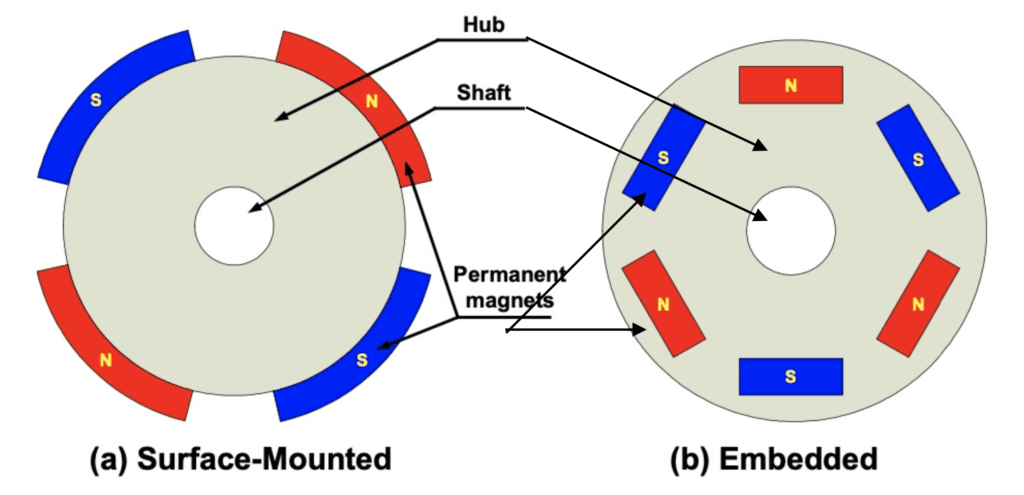
The most common types are neodymium rare earth magnets, ferrite ceramic magnets, and samarium cobalt magnets. Neodymium magnets dominate modern designs because they offer the strongest magnetic field per unit volume. This allows engineers to build smaller, lighter, and more powerful motors. Ferrite magnets provide a lower-cost alternative for applications where size and weight matter less. Samarium cobalt magnets serve in extreme high-temperature environments where other materials would fail.
3 Specifications of Motor Magnets
Selecting the right magnets requires understanding three critical specifications. Each parameter directly affects motor performance and reliability.
1. Magnetic Grade and Energy Product
The grade indicates the magnet’s strength. For neodymium magnets, grades range from N35 to N52, plus high-temperature variants. The number represents the maximum energy product in Mega-Gauss-Oersteds. Higher grades produce stronger magnetic fields in the motor’s air gap. This increases torque output and efficiency. However, higher grades cost more and are more brittle. Most electric vehicle traction motors use grades between N45SH and N52UH, balancing extreme strength with the ability to survive high operating temperatures.
2. Maximum Operating Temperature
Motors generate heat during operation. The magnets must maintain their strength at the motor’s maximum internal temperature. Standard neodymium magnets lose strength permanently above 80 degrees Celsius. High-temperature grades use suffixes to indicate their limits. M grade works up to 100 degrees Celsius. H grade reaches 120 degrees Celsius. SH, UH, and EH grades extend the range to 150, 180, and 200 degrees Celsius respectively. Selecting the wrong temperature rating causes the motor to lose power gradually and eventually fail completely.
3. Coating and Corrosion Resistance
Motor magnets operate in environments that may contain moisture, oil, or chemicals. The standard nickel-copper-nickel coating provides basic protection for clean, dry conditions. Epoxy coatings offer superior moisture resistance for outdoor motors and automotive applications. Some magnets receive specialized coatings like Everlube or PTFE for additional chemical resistance. In electric vehicle traction motors, the magnets are often encapsulated within the rotor assembly with specialized resins that protect against hot transmission oil.

How to Find Supplier for Motor Magnets
Finding a reliable magnet supplier requires careful evaluation. The quality of magnets directly determines motor performance and lifespan. Follow these steps to identify a trustworthy partner.
Step 1: Define Your Motor’s Magnetic Requirements
Document every technical requirement before contacting suppliers. Specify the required magnet grade, operating temperature range, and coating needs. Provide the exact magnet shape and dimensions. Arc segment magnets for rotors require precise radii and angular tolerances. Define the magnetization pattern needed. Many magnets require multiple poles on a single magnet ring or specific skew angles to reduce cogging torque. Complete specifications help suppliers quote accurately.
Step 2: Verify Production and Magnetizing Capabilities
Ask potential suppliers about their manufacturing equipment. Do they press and sinter magnets in-house? Can they machine magnets to tight tolerances without causing micro-cracks? Inquire about their magnetizing fixtures. Complex magnets often need custom magnetizing coils that create specific pole patterns. A supplier with in-house magnetizing fixture design capability can optimize the magnetization for your motor’s performance. Ask to see examples of similar magnets they have produced.
Step 3: Request Material Certifications and Test Data
Insist on complete material traceability. Each batch of magnets should come with a certificate showing actual magnetic properties. Key values include remanence, coercivity, and maximum energy product. For high-temperature grades, request demagnetization curves at the motor’s operating temperature. This data verifies that the magnets will maintain sufficient field strength when the motor runs hot. A reputable supplier provides this documentation without hesitation.
Step 4: Evaluate Quality Control for Dimensional Accuracy
Motor magnets must fit precisely into rotor or stator assemblies. Even small dimensional errors cause imbalance, vibration, and noise. Ask about the supplier’s inspection equipment and procedures. They should use coordinate measuring machines and optical comparators for dimensional verification. Request a sample First Article Inspection Report. For arc segment magnets, verify that the radii, chord lengths, and angular tolerances meet specifications. Consistent dimensional quality is essential for smooth motor assembly.
Step 5: Assess Experience with Your Motor Type
Different motor types have different magnet requirements. Brushless DC motors, permanent magnet synchronous motors, and stepper motors each use specific magnet configurations. Ask the supplier about their experience with your particular motor type. A supplier familiar with automotive traction motor magnets understands the stringent reliability and qualification requirements. One specializing in small consumer motor magnets knows how to optimize for cost while meeting performance targets.
Step 6: Compare Total Cost and Supply Chain Reliability
Request quotes based on your projected annual volumes. Motor magnets represent a significant portion of total motor cost. However, the cheapest option may cost more in the long run if quality issues cause field failures. Consider the supplier’s location and logistics capabilities. Rare earth supply chains face geopolitical complexities. A supplier with diversified sourcing and stable inventory management provides better long-term security for your motor production.
Common Magnet Shapes Used in Electric Motors
Motor magnets come in several distinct shapes, each optimized for different motor architectures and performance requirements.
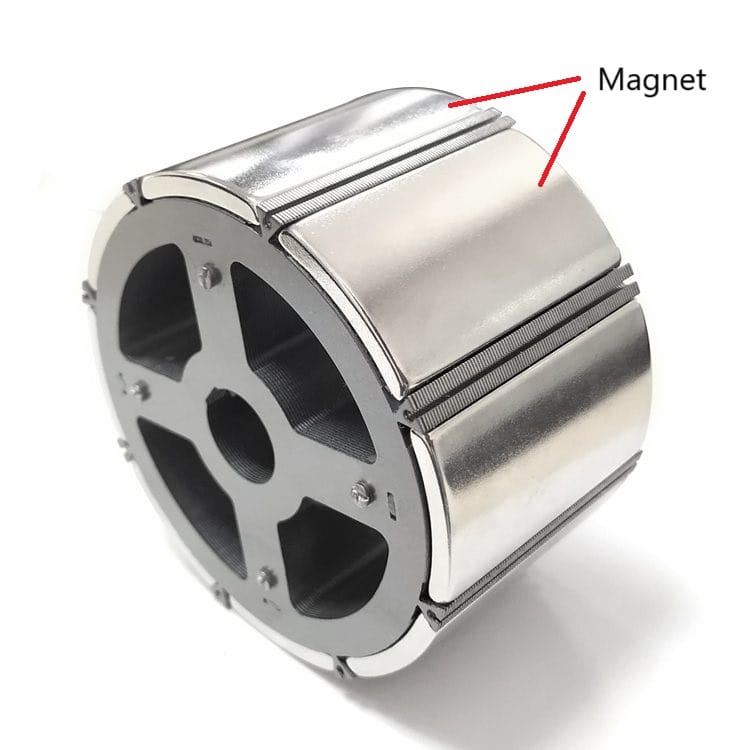
Arc segment magnets are the most common shape for brushless DC motors and permanent magnet synchronous motors. These curved pieces fit precisely onto the rotor surface, creating a uniform magnetic field around the motor’s circumference. Arc segments are magnetized radially, meaning the north pole faces outward from the rotor center. Multiple segments form a complete ring. The number of segments equals the number of magnetic poles in the motor design.
Ring magnets provide a one-piece alternative to multiple arc segments. A single ring is magnetized with multiple poles around its circumference. This approach simplifies rotor assembly by eliminating the need to glue individual segments. However, producing large ring magnets with precise multi-pole magnetization requires sophisticated equipment. Ring motor magnets are common in smaller motors where the diameter remains manageable for pressing and sintering as a single piece.
Rectangular bar magnets serve in linear motors and some axial flux motor designs. Instead of rotating, linear motors produce straight-line motion. Bar motor magnets are arranged in a row along the stator, creating a traveling magnetic field that pulls the moving part along. Axial flux motors arrange bar or wedge-shaped motor magnets on a flat disc rotor, with the magnetic flux flowing parallel to the motor shaft rather than radially.
FAQ: Your Motor Magnets Questions Answered
1. How do I know if my motor magnets are losing strength?
Several symptoms indicate weakening motor magnets. The motor draws higher current to produce the same torque. It runs hotter than normal. Maximum speed increases but torque decreases. In electric vehicles, driving range drops noticeably. You can measure the motor’s back EMF constant by spinning the shaft at a known speed and measuring the generated voltage. A lower back EMF than the original specification indicates the motor magnets have partially demagnetized.
2. Can motor magnets be replaced if they fail?
Yes, but it is often uneconomical for small consumer motors. For large industrial motors and electric vehicle traction motors, magnet replacement can be cost-effective. The process requires disassembling the motor, removing the old motor magnets, cleaning the rotor surface, and bonding new magnets in place. The rotor must then be rebalanced. After reassembly, the motor needs performance testing to verify proper operation. The replacement motor magnets must match the original specifications exactly.
3. What causes motor magnets to demagnetize prematurely?
The primary causes are excessive heat, strong opposing magnetic fields, and physical damage. Operating a motor above its rated temperature degrades the magnet’s metallurgical structure. A severe electrical fault can generate a momentary reverse field strong enough to partially demagnetize the motor magnets. Physical shock from dropping or vibration can crack the brittle magnet material. Corrosion from moisture penetrating damaged coatings also reduces magnetic strength over time.
Conclusion
Motor magnets are the silent powerhouse behind the electric revolution transforming transportation, industry, and consumer products. Understanding magnetic grade, temperature rating, and coating requirements ensures you select components that deliver reliable performance throughout the motor’s service life. Finding a qualified supplier through systematic evaluation of production capabilities, quality systems, and motor-specific experience protects your product quality and supply chain stability. From tiny drone motors to massive wind turbine generators, motor magnets continue driving technological progress forward.