Introduction
Whether you’re an engineer, hobbyist, or product designer, small neodymium magnets are one of the most versatile tools available today. Compact, incredibly strong, and surprisingly affordable — they show up in everything from consumer electronics to medical devices. This guide covers everything you need to know.
What Are Small Neodymium Magnets?
Small neodymium magnets are permanent magnets made from an alloy of neodymium, iron, and boron (NdFeB). They belong to the rare-earth magnet family and are widely considered the strongest type of permanent magnet available on the market today.
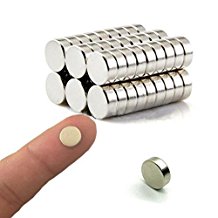
The “small” in the name refers to their physical size — these magnets are typically produced in compact forms such as discs, cylinders, cubes, rings, and spheres, often measuring just a few millimeters in diameter or thickness. Despite their tiny size, they generate a magnetic field far stronger than traditional ferrite or alnico magnets of the same dimensions.
Neodymium magnets are graded using a system that starts with “N” followed by a number — for example, N35, N42, N52. The higher the number, the stronger the magnet. Most of these compact rare-earth magnets used in everyday applications fall in the N35 to N52 range.
They are commonly coated with nickel, zinc, or epoxy to protect against corrosion, since the raw NdFeB alloy is brittle and susceptible to oxidation. This protective layer also gives them their characteristic silver or black appearance.
3 Key Benefits of Small Neodymium Magnets
1. Exceptional Strength-to-Size Ratio
The most remarkable quality of these compact rare-earth magnets is how much pulling force they pack into a tiny form factor. A neodymium disc magnet just 10mm in diameter and 3mm thick can hold several kilograms of weight. This makes them indispensable in applications where space is limited but strong magnetic force is required.
2. Long-Lasting Permanence
Unlike electromagnets that require a constant power supply, neodymium magnets retain their magnetic properties indefinitely under normal conditions. They lose less than 1% of their magnetization over 100 years when stored and used properly. This makes them a cost-effective, maintenance-free solution for long-term applications.
3. Versatility Across Materials and Shapes
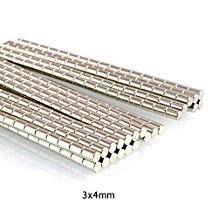
These magnets are available in a wide variety of shapes — discs, rings, blocks, spheres, arcs, and countersunk versions with mounting holes. They can attract or repel ferromagnetic materials and can be used in combination with plastic housings, adhesives, or mechanical fixtures. This versatility makes them easy to integrate into virtually any product or project design.
5 Popular Applications of Small Neodymium Magnets
1. Consumer Electronics
Smartphones, laptops, earbuds, and smartwatches all rely on these tiny yet powerful magnets for speakers, microphones, vibration motors, and magnetic charging connectors. Their compact size and high field strength are exactly what modern electronics demand.
2. Medical Devices
From MRI-compatible components to hearing aids and magnetic therapy devices, the medical industry depends on precision magnetic components. These rare-earth magnets are used in dental retainers, drug-delivery systems, and wearable health monitors because of their biocompatible coatings and consistent performance.
3. DIY Projects and Crafts
Hobbyists love these magnets for their flexibility. They’re used to build custom closures for boxes and bags, create magnetic knife holders, assemble model kits, and even make magnetic jewelry. The ease of purchase and availability in small quantities makes them ideal for creative projects.
4. Industrial Automation and Robotics
In manufacturing and robotics, these compact magnets are used in sensors, encoders, actuators, and end-of-arm tooling for pick-and-place machines. Their reliable field strength and small footprint allow engineers to design compact, high-performance mechanical systems.
5. Educational and Scientific Use
Schools, universities, and research labs use these magnets for demonstrations, experiments, and prototype development. They help students and researchers understand magnetic field behavior, motor design, and electromagnetic principles in a hands-on, accessible way.
How to Choose the Right Small Neodymium Magnets
With so many options available, selecting the right magnet for your application requires a few key considerations:
Grade (N-Rating)
Higher grades like N52 offer stronger pull force but are also more brittle and more expensive. For most hobby and general industrial applications, N35 to N42 provides an excellent balance of strength, durability, and cost. Reserve N52 for applications where maximum field strength in a minimal footprint is truly critical.
Shape and Dimensions
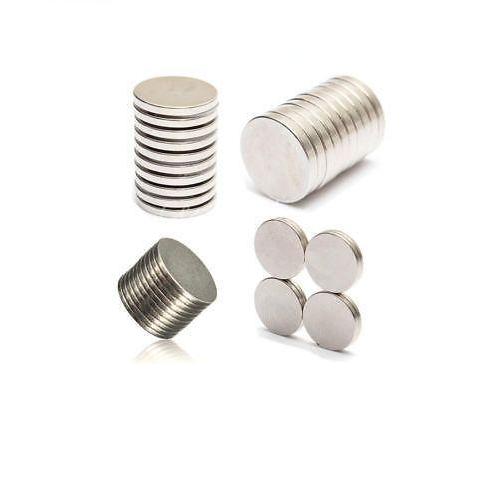
Match the magnet shape to your design needs. Disc and cylinder magnets are best for axial (face-to-face) attraction. Block magnets work well in flat-surface mounting applications. Ring magnets are ideal when you need to pass a shaft or bolt through the center. Always verify exact dimensions in millimeters before ordering.
Coating and Corrosion Resistance
If your application involves moisture, humidity, or chemical exposure, choose magnets with a nickel-copper-nickel (Ni-Cu-Ni) coating or an epoxy coating for added protection. Bare uncoated magnets corrode quickly and are only suitable for enclosed, dry environments.
Pull Force vs. Operating Temperature
Small Neodymium magnets lose strength at elevated temperatures. Standard grades begin to demagnetize above 80°C (176°F). If your application involves heat, look for high-temperature grades (such as SH, UH, or EH grades) that can operate up to 200°C.
Quantity and Budget
If you need large quantities of small neodymium magnets, buying in bulk significantly reduces the per-unit cost. Many suppliers offer price breaks at 100, 500, and 1,000+ piece thresholds. Always request a sample first to verify the magnet meets your specifications before committing to a large order.
Where to Buy Small Neodymium Magnets?
Finding a reliable supplier is just as important as choosing the right product. Here’s what to look for — and our top recommendation.
What to Look for in a Supplier:
- Wide product range covering multiple grades, shapes, and sizes
- Clear specifications including pull force, dimensions, and coating details
- Certifications such as ISO 9001 for quality management
- Custom manufacturing options for non-standard dimensions
- Responsive technical support and fast shipping
Our Top Recommendation: nbtechmagnet.com
For sourcing high-quality small neodymium magnets, we highly recommend nbtechmagnet.com. They offer an extensive catalog of NdFeB magnets in all standard shapes, grades from N35 to N52, and a variety of coatings to suit any environment. Whether you need a single sample pack for prototyping or a bulk order of thousands of pieces for production, NBTech Magnet has the capacity and expertise to deliver.
Their team provides full technical support, custom magnetization direction options, and competitive pricing with reliable international shipping. For both beginners and experienced engineers sourcing small neodymium magnets, this is a supplier worth bookmarking.
Frequently Asked Questions (FAQ)
Q1: Are small neodymium magnets safe to handle?
Yes, with the right precautions. Smaller magnets (under 10mm) are generally safe for adult handling, but they should be kept away from young children as they pose a swallowing hazard. When working with multiple magnets, keep them separated to avoid sudden snapping that can pinch skin or chip the magnets. Always store them away from pacemakers, credit cards, and electronic devices sensitive to magnetic fields.
Q2: Can small neodymium magnets lose their magnetism over time?
Under normal conditions, neodymium magnets are extremely stable and lose less than 1% of their magnetism per century. However, they can demagnetize faster if exposed to high temperatures above their rated limit, strong opposing magnetic fields, physical shock or impact, or corrosion from moisture. Proper storage in a cool, dry environment and using protective coatings will preserve their strength for decades.
Q3: What is the difference between N35 and N52 small neodymium magnets?
The number refers to the maximum energy product of the magnet, measured in MGOe (Mega-Gauss-Oersteds). N52 magnets have roughly 40–50% stronger pull force than N35 magnets of the same size. However, N52 grades are more brittle, harder to manufacture, and significantly more expensive. For most everyday uses — closures, sensors, hobby projects — N35 or N42 is the practical choice. N52 is best reserved for precision engineering where every millimeter of space counts.
Conclusion
Few components offer as much value in such a compact form as small neodymium magnets. Their extraordinary strength, long lifespan, and incredible versatility make them essential across industries — from consumer electronics and robotics to healthcare and education. By understanding grades, shapes, coatings, and temperature limits, you can select the perfect magnet for any application. And when it comes to sourcing quality products at competitive prices, nbtechmagnet.com is an excellent place to start.Please send us email sales@nbtechmagnet.com for a quatiton.