Understanding magnetism starts with seeing real-world permanent magnets examples around you. This beginner-friendly article walks you through common applications, explains why these magnets stay strong, and shows you how to spot them in everyday objects you use without a second thought.
What is Permanent Magnets Examples
Permanent magnets come in several distinct types, each with unique strengths and ideal uses. The permanent magnets examples are as following.
1).Neodymium magnets, also called rare-earth magnets, are the strongest commercially available type. They pack incredible power into a tiny size, making them perfect for compact electronics, earbuds, and powerful motor applications. Their main weakness is a low resistance to heat and rust, so they usually need protective coatings like nickel or epoxy.
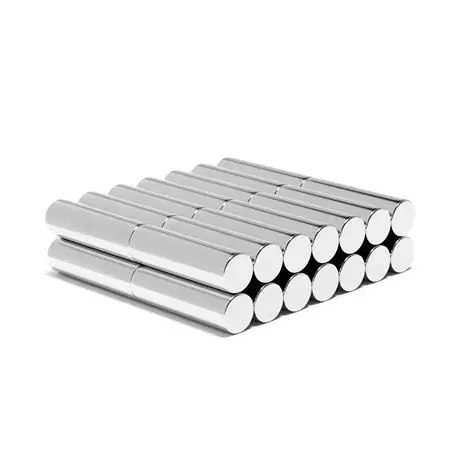
2).Samarium cobalt is another rare-earth magnet type that handles extreme heat far better than neodymium. While slightly weaker and more expensive, these magnets stay stable in temperatures exceeding 300°C, which is why aerospace and military equipment often rely on them. They also resist corrosion naturally, so no extra coating is required.
3).Alnico magnets are made from aluminum, nickel, and cobalt. They were the strongest magnets available before rare-earth types were developed. Today they remain popular in guitar pickups, sensors, and high-temperature industrial instruments because their magnetic output changes very predictably with temperature.
4).Ferrite or ceramic magnets are the most common and affordable type. You find them in refrigerator seals, loudspeakers, and children’s magnetic toys. They are weaker than rare-earth magnets but never rust, handle heat well, and cost very little to produce. For most everyday applications where extreme strength is unnecessary, ferrite remains the practical and budget-friendly choice.
Uses of Permanent Magnets
Finding permanent magnets examples in daily life is easy once you know where to look. In your kitchen, the rubber seal around your refrigerator door contains a flexible magnetic strip that keeps the door tightly shut. Your microwave oven uses a strong magnet inside the magnetron tube to generate the waves that heat your food, making it a powerful but hidden permanent magnets examples right on your countertop.
Moving to your living room, any stereo speaker or television contains permanent magnets that vibrate to produce sound. In your garage, the electric drill, cordless screwdriver, and even your car’s alternator all rely on permanent magnets to convert electrical energy into motion. Children’s magnetic building tiles are playful permanent magnets that teach geometry, while the credit card in your wallet uses a magnetic stripe to store your account data securely.
The industrial world provides heavy-duty permanent magnets that handle massive loads. Scrapyards use giant circular electromagnets, but many sorting systems and conveyor belts rely on large permanent magnetic drums to separate iron from other waste. Wind turbines represent advanced permanent magnets where massive neodymium magnets inside the generator convert wind rotation directly into electricity without needing a battery to start the magnetic field.
Medical technology offers life-saving permanent magnets examples that most patients never see. MRI machines use incredibly powerful superconducting magnets, but smaller diagnostic devices and implantable hearing aids depend on tiny permanent magnets. Even the electric toothbrush on your bathroom counter is among the practical permanent magnets ethat demonstrate how magnetic drive systems can seal a vibrating head without physical gears wearing out.
Do Permanent Magnets Lose Their Magnetism
A common question about all permanent magnets is whether they actually last forever. The honest answer is that permanent magnets do slowly weaken, but the process is so gradual that quality magnets will outlast your device. Given enough time, decades or even centuries, the aligned magnetic domains inside every one of these permanent magnets examples will naturally randomize and the field will fade.
Heat is the fastest killer of permanent magnets. Each grade of neodymium has a maximum operating temperature, and if you exceed it, the damage happens fast. Dropping or hitting permanent magnets examples with a hammer can also misalign their internal structure instantly. Other than extreme physical shock and high heat, storing a magnet next to a stronger opposing field can partially demagnetize it, so keep your loose magnetic toys separated from powerful industrial magnets.
Permanent Magnets examples and the Uses for Stator
Permanent magnets play a vital role in the stators of many modern electric motors and generators. To understand why this matters, let’s quickly define what a stator is. In any rotating electrical machine, the stator is the stationary part that stays fixed in place while the rotor spins inside or around it. When permanent magnets are mounted on the stator, they create a constant magnetic field that the rotor interacts with to produce smooth, efficient motion.
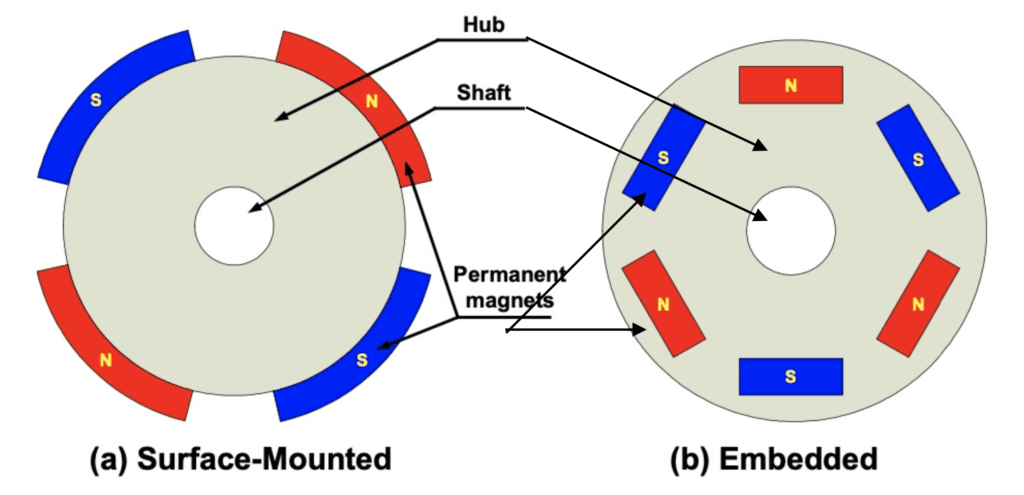
The most common application of permanent magnet stators appears in brushless DC motors, which power everything from computer cooling fans to electric bicycles. In these motors, the stator holds multiple permanent magnets arranged in a precise circular pattern. The rotor contains copper windings that receive electricity in a carefully timed sequence. As current flows through the windings, the rotor’s magnetic field pushes and pulls against the fixed magnets on the stator, creating rotation. This design eliminates the brushes and commutator found in older motor types, meaning less friction, less noise, and far longer operational life.
The material choice for stator magnets depends heavily on the application. Neodymium magnets are the most popular choice for stator use because their incredible strength allows designers to build smaller, lighter motors that still deliver impressive torque. You find neodymium stator magnets inside drone motors, power tool motors, and the traction motors of electric vehicles. Their high magnetic output means fewer magnets are needed to achieve the required performance, saving space and weight.
For applications involving extreme heat, samarium cobalt magnets are used in stators instead. Industrial servo motors operating in hot factories, aerospace actuators, and downhole drilling equipment all require stator magnets that will not lose strength when temperatures climb. Samarium cobalt handles heat beyond 300°C without permanent damage, though it costs significantly more than neodymium. The choice represents a classic engineering trade-off between maximum strength and thermal stability.
Ferrite or ceramic magnets also appear in stator designs where cost is the primary concern. Household appliances like washing machine drain pumps and inexpensive fans often use ferrite stator magnets. While they produce much weaker fields than rare-earth types, ferrite magnets cost a fraction of the price and will never corrode. For a basic appliance motor that runs intermittently and does not need extreme power density, ferrite stator magnets remain the economical workhorse.
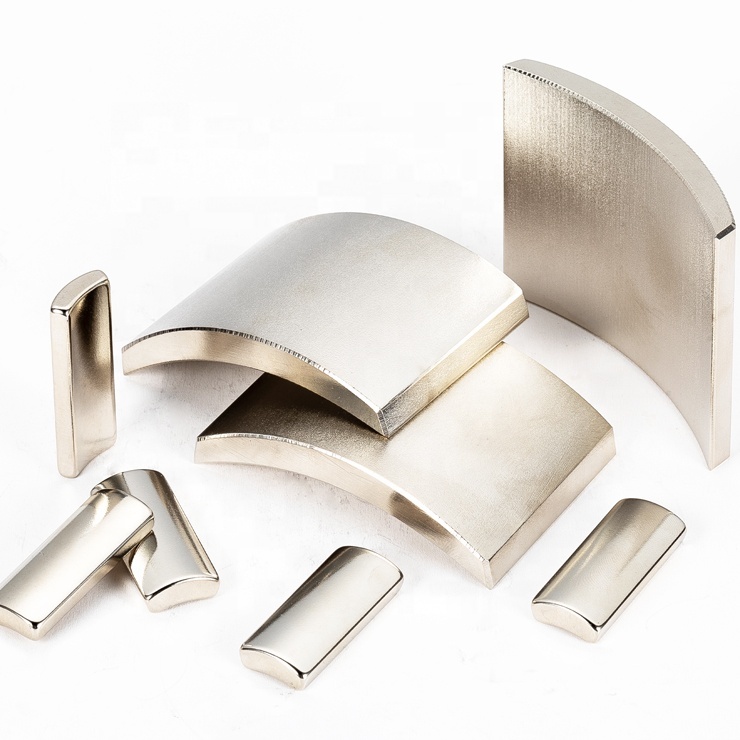
The physical shape of stator magnets is typically curved or arc-shaped. These arcs fit together to form a complete ring inside the stator housing, creating a uniform magnetic field around the entire circumference. The precise curve radius and thickness are engineered to match the rotor diameter and the air gap between the two components. A smaller air gap means a stronger interaction, but it also demands tighter manufacturing tolerances to prevent the rotor from scraping against the stator magnets during operation.
Mounting stator magnets securely is critical because any movement or loosening under vibration will cause motor failure. Most stator magnets are bonded into place with high-strength industrial epoxies formulated to withstand heat and mechanical shock. Some designs add mechanical retention features like lips, grooves, or spring clips as backup security. In high-reliability applications like automotive electric power steering, the bonding process is carefully validated through thermal cycling and vibration testing to guarantee the magnets stay put for the life of the vehicle.
The direction of magnetization in stator magnets also deserves attention. Depending on the motor design, stator magnets may be magnetized through their thickness, radially, or in complex multipole patterns on a single ring. A single magnet can even contain multiple alternating north and south poles on its inner face, which simplifies assembly and improves field consistency compared to using many individual magnets. This multipole magnetization technique is increasingly common in precision motors for robotics and medical devices, where smooth, cogging-free rotation is essential.
FAQ
1.Where can I find permanent magnets examples at home for free?
You can salvage free permanent magnets examples from broken electronics and old household items. Old computer hard drives contain extremely strong neodymium magnets inside the actuator arm. Worn-out electric toothbrush heads, broken microwave ovens, and discarded stereo speakers also house useful permanent magnets examples. Always wear gloves when disassembling hard drives, as the internal magnets can pinch your fingers badly when they snap together.
2.Can permanent magnets examples stick to all metals?
No, permanent magnets only stick strongly to ferromagnetic metals: iron, nickel, cobalt, and most steel alloys. They will not stick to aluminum, copper, brass, silver, gold, or most stainless steel types. You can test this at home with any of the permanent magnets examples you collect; a magnet will jump onto a steel fridge door but slide right off an aluminum window frame or a copper pipe.
3.Why do some permanent magnets examples have different shapes?
The shape of permanent magnets examples directly controls where the magnetic field concentrates and how you can mount them. Disc and cylinder shapes have poles on the flat faces and are ideal for holding and clamping. Ring-shaped permanent magnets examples allow a bolt or shaft to pass through the center. Block and arc shapes are optimized for motors and generators where a specific field pattern is required. Choosing the right geometry is just as important as choosing the right strength.
Conclusion
Real permanent magnets examples surround you constantly, from the morning electric toothbrush to the evening fridge door seal. By recognizing them in your home and experimenting with simple starter projects, you build practical knowledge that translates directly into smarter repairs and creative inventions. Start with the free magnets hidden in old electronics, respect their pinching power, and let these everyday examples guide your hands-on learning.