1. Introduction to Neodymium Magnet material
1.1 The Discovery and Historical Context
In 1982, General Motors scientist Masato Sagawa and Sumitomo Special Metals researchers independently synthesized a magnetic compound that would fundamentally reconfigure entire industries. This neodymium-iron-boron (NdFeB) alloy exhibited magnetic strength previously deemed unattainable in commercial materials. The timing proved auspicious. Personal computing, portable electronics, and advanced telecommunications were beginning to demand compact, potent magnetic components. Neodymium magnets filled that vacuum with remarkable efficacy.
Before this breakthrough, samarium-cobalt magnets represented the pinnacle of permanent magnetic performance. Yet samarium-cobalt carried prohibitive costs and supply constraints. Neodymium, while still a rare earth element, offered superior magnetic properties at a fraction of the expense. The ramifications were seismic.
1.2 Why Neodymium Magnet material Dominate Modern Industry
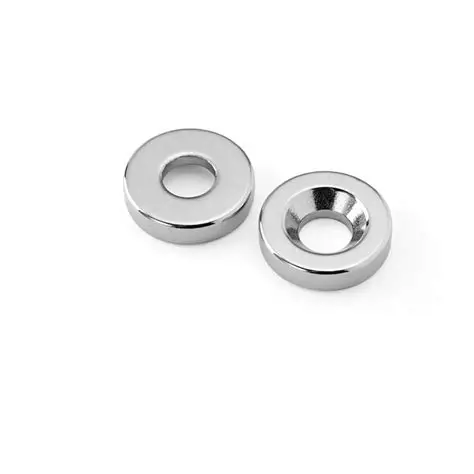
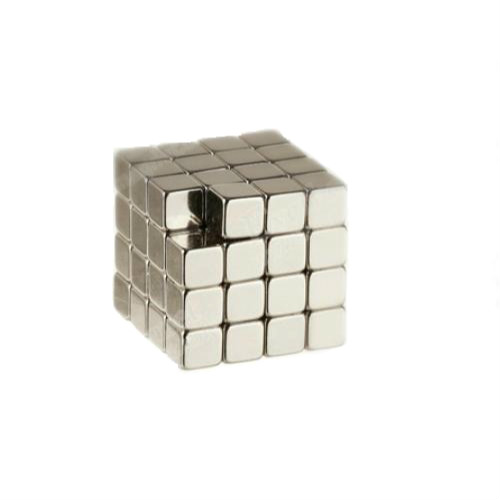
The ascendancy of neodymium magnet material stems from an unrivaled energy density. A neodymium magnet weighing mere grams can lift objects hundreds of times its own mass. This extraordinary strength-to-weight ratio enables miniaturization across countless technologies. Smartphone speakers, hard disk drives, magnetic resonance imaging machines, and wind turbine generators all owe their efficiency to these diminutive powerhouses.
No competing permanent magnet material approaches the maximum energy product of sintered NdFeB. Ferrite magnets, while inexpensive, deliver roughly one-tenth the magnetic strength. Samarium-cobalt performs admirably at elevated temperatures but cannot match neodymium’s raw power at ambient conditions. This confluence of performance and affordability has rendered neodymium magnet material virtually indispensable.
2. The Metallurgical Composition of Neodymium Magnet material
2.1 Neodymium, Iron, and Boron: The Core Triad
The canonical neodymium magnet comprises approximately 29 to 32 percent neodymium, 64 to 68 percent iron, and 1 to 2 percent boron by weight. This stoichiometry yields the tetragonal crystalline phase known as Nd₂Fe₁₄B. Within this lattice, neodymium atoms occupy specific sites that generate profound magnetocrystalline anisotropy. Iron atoms provide the bulk magnetic moment. Boron stabilizes the crystal structure, enabling the material to retain its magnetic orientation under demanding conditions.
The interplay among these elements is delicate. Deviations from optimal ratios precipitate secondary phases that degrade magnetic performance. Mastery of composition therefore constitutes the foundational discipline of neodymium magnet material production.
2.2 Dopants and Alloying Elements: Dysprosium, Praseodymium, and Terbium
Pure NdFeB exhibits a troubling susceptibility to thermal demagnetization. At temperatures exceeding roughly 80 degrees Celsius, coercivity plummets, rendering the magnet unreliable in demanding environments. Metallurgists counter this vulnerability by introducing heavy rare earth elements—principally dysprosium and terbium—into the alloy. These atoms substitute for neodymium at strategic lattice sites, dramatically enhancing the material’s resistance to demagnetization at elevated temperatures.
Praseodymium occasionally replaces a portion of neodymium, offering modest performance improvements and cost adjustments. Cobalt additions can further refine temperature stability. Each dopant introduces trade-offs: dysprosium and terbium are scarcer and more expensive than neodymium, escalating production costs considerably. The art of magnet formulation thus involves balancing performance specifications against economic realities.
2.3 The Role of Sintering and Binding in Material Structure
Neodymium magnet material exist in two primary forms: sintered and bonded. Sintered magnets, produced through powder metallurgy and high-temperature consolidation, achieve the highest magnetic strength. Their crystalline grains align precisely, maximizing the energy product. Bonded magnets, by contrast, embed magnetic powder within a polymer matrix. This approach sacrifices magnetic strength but permits intricate geometries and tighter dimensional tolerances.
The choice between sintered and bonded variants depends entirely on application requirements. Where maximum flux density is paramount—as in electric vehicle traction motors—sintered magnets prevail. Where complex shapes or extreme precision are needed—as in certain sensors and micro-motors—bonded magnets prove advantageous.
3. Manufacturing Processes and Production Techniques
3.1 Strip Casting and Hydrogen Decrepitation
Production commences with strip casting, wherein molten alloy is rapidly quenched between rotating rollers. This process yields thin ribbons with optimal microstructure, minimizing the formation of detrimental alpha-iron phases. The ribbons then undergo hydrogen decrepitation. Hydrogen gas embrittles the alloy, causing it to fracture along grain boundaries into coarse powder. This step exemplifies elegant industrial chemistry: a gas transforms a solid into manageable fragments without mechanical force.
3.2 Jet Milling and Powder Metallurgy
The coarse powder from hydrogen decrepitation is subsequently jet-milled to achieve particle sizes of approximately 3 to 5 micrometers. Each particle ideally comprises a single crystalline grain. This meticulous size reduction ensures that subsequent magnetic alignment—accomplished by applying a strong external field during compaction—yields maximal remanence.
The aligned powder is then compacted under pressure and subjected to isostatic pressing. The resulting green compacts possess sufficient structural integrity for handling, yet remain porous and mechanically weak.
3.3 Sintering, Annealing, and Precision Machining
Sintering occurs in vacuum or inert atmosphere at temperatures between 1,000 and 1,100 degrees Celsius. During this stage, particles fuse, density approaches theoretical maxima, and the material acquires its characteristic hardness and brittleness. A post-sintering annealing treatment refines grain boundaries and optimizes coercivity.
Given the extreme hardness of sintered NdFeB, machining demands diamond tooling. Manufacturers slice, grind, and coat magnets to exacting specifications. Protective coatings—nickel-copper-nickel, epoxy, or aluminum—guard against corrosion, a persistent nemesis of neodymium-rich alloys.
4. Magnetic Properties and Performance Characteristics
4.1 Coercivity, Remanence, and Energy Product
Three parameters define a permanent magnet’s utility. Remanence (Br) measures the magnetic flux density remaining after magnetization. Coercivity (Hc) quantifies resistance to demagnetization. The maximum energy product (BHmax) represents the material’s ultimate figure of merit, indicating the maximum magnetic energy stored per unit volume. Neodymium magnets routinely achieve BHmax values exceeding 50 MGOe, dwarfing ferrite’s modest 4 MGOe.
These properties are not fixed constants. They vary with temperature, composition, and manufacturing precision. A magnet optimized for ambient conditions may falter catastrophically at 150 degrees Celsius. Conversely, grades engineered for thermal resilience often sacrifice some ambient performance.
4.2 Temperature Sensitivity and the Curie Point
The Curie temperature of NdFeB hovers around 310 to 340 degrees Celsius. Beyond this threshold, thermal agitation overwhelms magnetic ordering, and the material becomes paramagnetic. More practically relevant is the maximum operating temperature, typically between 80 and 230 degrees Celsius depending on grade.
Engineers must therefore specify magnet grades with thermal margins appropriate to their applications. Underestimating temperature effects invites premature failure. Overestimating them inflates costs unnecessarily through excessive dysprosium content.
4.3 Corrosion Vulnerability and Protective Coatings
Neodymium’s reactivity with oxygen and moisture renders unprotected magnets prone to rapid degradation. Even ambient humidity can initiate oxidation, culminating in pulverization. Consequently, virtually all commercial neodymium magnet material receive protective coatings.
Nickel plating, often applied over an intermediate copper layer, provides robust barrier protection. Epoxy coatings offer superior chemical resistance for harsh environments. Aluminum coatings serve specialized applications requiring lightweight or non-magnetic finishes. Coating integrity is paramount; a single pinhole can seed catastrophic corrosion.
5. Applications Across Industries
5.1 Consumer Electronics and Miniaturized Devices
Every smartphone contains multiple neodymium magnet material . They drive speaker diaphragms, enable haptic feedback, secure magnetic cases, and facilitate wireless charging alignment. Without these magnets, devices would be bulkier, quieter, and less responsive.
Headphones, laptop speakers, and camera autofocus mechanisms similarly depend on NdFeB components. The consumer electronics sector’s relentless pursuit of thinness and performance would be impossible without neodymium magnet material .
5.2 Electric Vehicles, Wind Turbines, and Green Energy
The electrification of transportation hinges on powerful, efficient motors. Neodymium magnet material enable traction motors with exceptional power density, extending vehicle range and reducing weight. A single electric vehicle may contain several kilograms of neodymium magnets.
Wind turbines, particularly direct-drive designs, rely on massive neodymium magnet material arrays. These magnets eliminate the need for gearboxes, improving reliability and reducing maintenance. As renewable energy capacity expands, demand for neodymium magnets grows apace.
5.3 Medical Imaging, Aerospace, and Defense Systems
Magnetic resonance imaging (MRI) machines employ superconducting magnets for primary fields, but neodymium magnet material serve in gradient coils and ancillary systems. Their precision and reliability prove invaluable in diagnostic medicine.
Aerospace applications exploit neodymium magnets in flight control actuators, satellite components, and radar systems. Defense technologies—from missile guidance to submarine propulsion—similarly leverage these materials. The strategic importance of neodymium magnet material thus extends far beyond commercial considerations.
6. Geopolitical, Economic, and Ethical Dimensions
6.1 Supply Chain Concentration and Rare Earth Politics
China dominates global rare earth production and processing, controlling approximately 60 percent of mining and 85 percent of refining capacity. This concentration confers immense geopolitical leverage. Export restrictions, tariffs, or supply disruptions can reverberate through global supply chains, affecting industries from automotive to defense.
Western nations have responded by investing in domestic rare earth projects and stockpiling strategies. Yet establishing competitive alternative supply chains requires years of investment and regulatory navigation.
6.2 Environmental Impact of Mining and Refining
Rare earth mining carries substantial environmental burdens. Open-pit operations scar landscapes. Refining processes generate toxic waste, including radioactive byproducts from associated thorium and uranium. Improper disposal has caused documented contamination in several regions.
These externalities complicate the narrative of neodymium magnet material as green technology enablers. Sustainable sourcing initiatives aim to mitigate harm, but progress remains uneven.
6.3 Recycling Initiatives and Substitution Research
Recycling neodymium magnet material offers a promising avenue for reducing primary production demand. Techniques including hydrogen decrepitation, chemical extraction, and pyrometallurgical processing can recover rare earth elements from end-of-life products. Yet collection logistics and economic viability pose persistent challenges.
Substitution research explores alternative materials—iron nitride, manganese bismuth, and others—that might replicate neodymium’s performance without rare earth dependencies. None have yet approached commercial viability at scale.
7. The Future of Neodymium Magnet Material Technology
7.1 Advances in Grain Boundary Diffusion
Grain boundary diffusion enables manufacturers to concentrate dysprosium at grain surfaces rather than throughout the bulk material. This approach dramatically reduces heavy rare earth content while maintaining thermal stability. The technique represents a significant cost and resource efficiency breakthrough.
Continued refinement of grain boundary engineering promises further gains. Nanostructured grain boundaries, precision doping profiles, and advanced sintering regimens may unlock performance previously deemed impossible.
7.2 Sustainable Sourcing and Circular Economies
The long-term viability of neodymium magnets depends on transitioning toward circular economic models. Design for disassembly, standardized magnet formats, and robust recycling infrastructure could transform end-of-life products into valuable feedstock.
Consumer awareness and regulatory pressure increasingly compel manufacturers to document provenance and environmental impact. Certification schemes and blockchain-based tracking systems may emerge as standard practice. The neodymium magnet material industry stands at an inflection point, balancing unprecedented demand against imperative sustainability obligations.
Magnets for Motors: A Practical and Great Guide for Engineers