Renewable energy depends on reliable components that perform for decades in harsh conditions. Wind turbine magnets convert mechanical rotation into clean electricity efficiently without gearboxes in modern designs. This guide explains everything you need to know about these essential components.
What is Wind Turbine Magnets
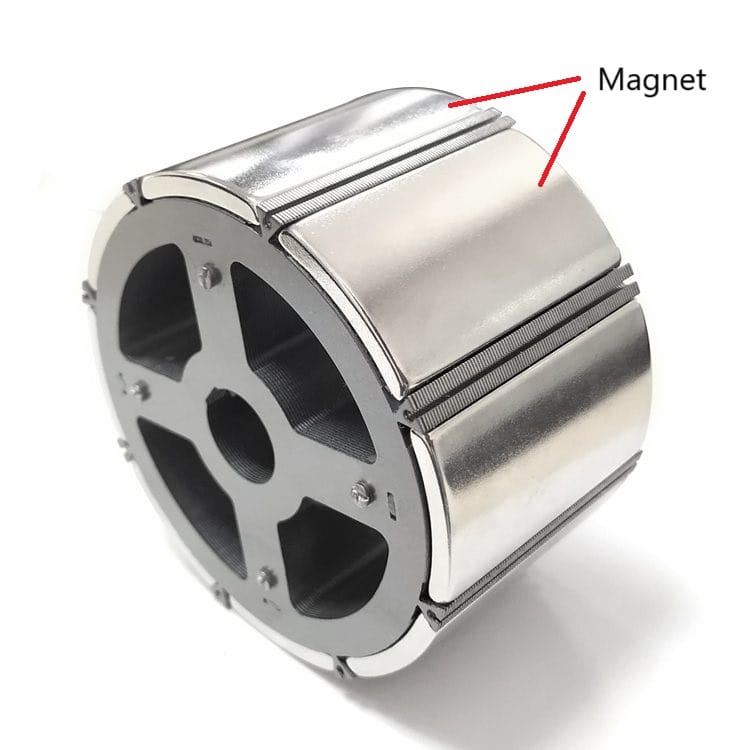
Wind turbine magnets are powerful permanent magnets used inside the generators of wind turbines. They are typically made from neodymium-iron-boron, the strongest commercially available magnetic material. These magnets are arranged in large rings around the generator rotor. As the wind turns the blades, the rotor spins, and the magnetic field sweeps past copper coils, generating electricity.
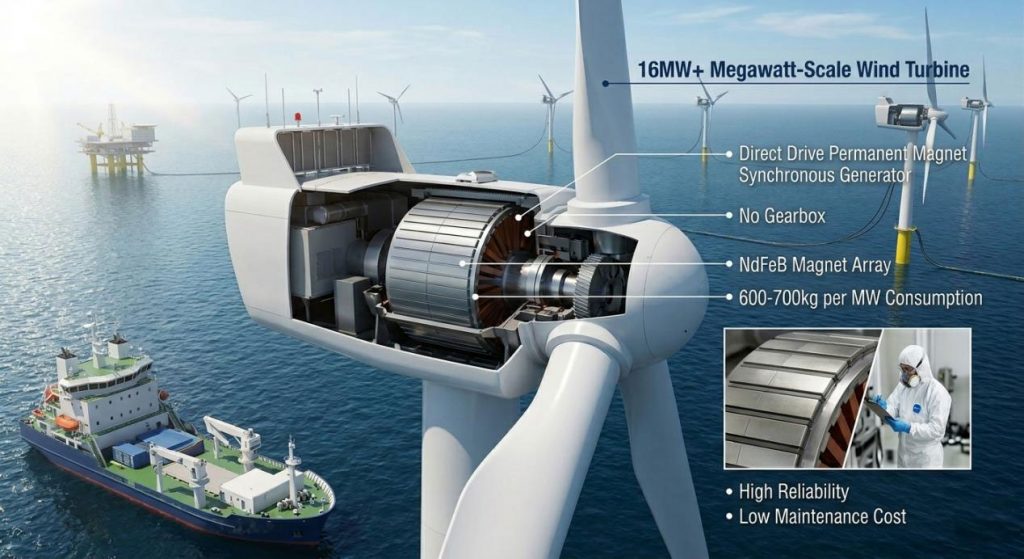
The most common design using these magnets is the direct-drive generator. Traditional wind turbines use a gearbox to increase rotation speed before generating power. Direct-drive systems eliminate the gearbox entirely. Instead, they use a large ring of wind turbine magnets rotating slowly but powerfully. This design reduces mechanical complexity, lowers maintenance requirements, and improves reliability. Modern offshore wind farms increasingly rely on direct-drive generators using hundreds of large neodymium magnets.
Why Direct-Drive Generators Prefer Permanent Magnets
The shift toward direct-drive systems has transformed how wind turbine magnets are used. Understanding the advantages explains why permanent magnet generators are becoming the industry standard.
Gearboxes are the most failure-prone component in traditional wind turbines. They require regular oil changes, bearing replacements, and often fail before the turbine’s design life ends. Direct-drive generators using wind turbine magnets eliminate this weak point entirely. The rotor connects directly to the generator, with no mechanical speed multiplication needed. This simplicity means fewer moving parts, less maintenance, and higher availability for power generation.
Efficiency improves with permanent magnet generators. Traditional induction generators require electrical current to create their magnetic field. This excitation current consumes energy that could otherwise go to the grid. Wind turbine magnets provide the magnetic field passively without consuming power. The generator produces more electricity from the same wind input. This efficiency advantage is especially valuable in low wind conditions.
Size and weight considerations favor permanent magnet designs. Direct-drive generators using wind turbine magnets are larger in diameter but lighter overall than geared systems. Removing the gearbox eliminates hundreds of kilograms of weight. The larger generator diameter actually helps with cooling and produces power at lower rotation speeds. Offshore installations benefit from lighter nacelles that reduce tower and foundation requirements.
Reliability matters for offshore installations. Maintenance access is difficult and expensive at sea. Direct-drive generators with wind turbine magnets need less servicing than geared alternatives. The permanent magnets require no maintenance whatsoever. This reliability reduces operational costs and increases energy production over the turbine’s lifetime.
Material Selection and Grades for Wind Turbine Magnets
Selecting the right material and grade is critical for wind turbine performance. These magnets must withstand harsh conditions for decades.
Neodymium-iron-boron is the standard material for wind turbine magnets. Its exceptional magnetic strength allows compact, powerful generator designs. No other commercially available magnet material matches its energy density. The grade selection typically falls between N45 and N52 for maximum performance. Higher grades provide more magnetic flux, enabling smaller and lighter generators.
High-temperature grades are essential for wind turbine applications. The magnets inside a generator experience elevated temperatures during operation. Even with cooling systems, internal temperatures can exceed 80 degrees Celsius. Standard neodymium grades lose strength above this temperature. Wind turbine magnets use grades like N45SH or N48SH that maintain performance up to 150 degrees Celsius.
Dysprosium additions improve temperature stability. This heavy rare earth element increases intrinsic coercivity, making magnets resistant to demagnetization at high temperatures. However, dysprosium is expensive and supply-constrained. Some manufacturers now use grain boundary diffusion technology to achieve similar performance with less dysprosium. This innovation helps control the cost of wind turbine magnets.
Coating selection protects against harsh environments. Offshore wind turbines face salt spray, humidity, and temperature extremes. Epoxy coatings provide excellent moisture and corrosion resistance. Some wind turbine magnets receive multi-layer coatings with additional protection against salt and chemicals. The coating must remain intact for the turbine’s 25-year design life.
Manufacturing Challenges for Large Wind Turbine Magnets
Producing magnets for wind turbines presents unique technical challenges. These are not small components manufactured in huge quantities. Each wind turbine magnet is a large, precisely shaped piece requiring careful production.
Size creates manufacturing complexity. Individual wind turbine magnets can weigh several kilograms each. A single generator may use hundreds of these large magnets. Pressing such large pieces requires specialized equipment with high tonnage capacity. Uniform density throughout a large magnet is difficult to achieve but essential for consistent magnetic performance.
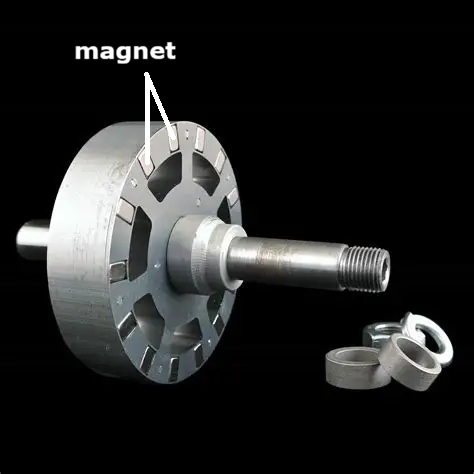
Dimensional accuracy is critical for generator assembly. Wind turbine magnets must fit precisely into rotor slots or mounting structures. Even small dimensional variations create imbalance and vibration. Precision grinding achieves the required tolerances on large curved surfaces. Manufacturers invest in specialized grinding equipment capable of handling these large components.
Magnetization of large pieces requires powerful equipment. The magnetizing field must fully saturate the material to achieve rated performance. Large wind turbine magnets need magnetizing fixtures with substantial energy storage capacity. The magnetization process must be uniform across the entire piece.
Quality testing verifies performance. Each wind turbine magnet undergoes magnetic field measurement, dimensional inspection, and coating quality checks. Manufacturers provide detailed test reports with every batch. This documentation is essential for generator manufacturers who must warranty their products for decades.
Transportation presents additional challenges. Wind turbine magnets are powerful and must be shipped with special packaging. The magnetic fields require shielding for safe transport. Careful handling prevents chipping and damage during transit from factory to turbine assembly site.
The Role of Rare Earth Supply Chains in Wind Turbine Magnet Production
The production of wind turbine magnets depends heavily on a stable rare earth supply chain. Neodymium, praseodymium, and dysprosium are essential raw materials. Understanding this supply chain helps explain pricing trends and supply security concerns facing the wind energy industry.
China currently dominates rare earth mining and processing, controlling over 80 percent of global supply. This concentration creates both advantages and risks for wind turbine manufacturers. On one hand, Chinese producers offer massive capacity and competitive pricing. On the other hand, export restrictions or geopolitical tensions could disrupt supply. Many Western governments now view rare earth independence as a strategic priority.
Mining is only the first step. Rare earth ores must undergo complex separation processes to isolate individual elements. This processing requires specialized facilities and generates significant waste. Environmental regulations in China have tightened in recent years, increasing production costs. These costs eventually reach wind turbine magnets through higher raw material prices.
Dysprosium supply is particularly concerning. This heavy rare earth element improves high-temperature performance but is scarcer than neodymium. Wind turbine magnets typically require dysprosium additions to maintain strength at operating temperatures. Price spikes in dysprosium directly impact wind turbine magnet costs.
Recycling offers a partial solution. End-of-life magnets contain recoverable rare earth elements. Several companies now operate recycling facilities that extract neodymium from old motors, hard drives, and wind turbine magnets. This secondary supply reduces dependence on newly mined materials. However, current recycling capacity meets only a small fraction of demand.
Diversification efforts are accelerating. Australia, the United States, and European countries are developing new rare earth mining and processing facilities. These projects aim to create alternative supply sources for wind magnets. Full independence from Chinese supply will take years but improves long-term supply security.
FAQ: Your Wind Turbine Magnets Questions Answered
1. How many wind turbine magnets are in a single turbine?
A direct-drive wind turbine typically uses 500 to 1,000 individual magnets depending on generator size. These magnets are arranged in rings around the rotor circumference. A 5-megawatt offshore turbine may use over 700 large magnets. Each magnet weighs between 1 and 5 kilograms. The total magnet weight in a large turbine can exceed 3 tonnes.
2. How long do wind turbine magnets last?
Wind turbine magnets are designed to last the complete 25-year service life of the turbine without replacement. Neodymium magnets lose less than 1 percent of their strength per decade under normal conditions. Proper coating protection prevents corrosion damage. Temperature-resistant grades maintain performance despite continuous operation. Regular generator inspections verify magnet condition as part of routine maintenance.
3. Can wind turbine magnets be recycled at end of life?
Yes, recycling programs are developing for wind turbine magnets. The neodymium and other rare earth elements retain their value. Recycling processes extract these materials from end-of-life generators. Some manufacturers now design turbines with easier magnet removal for recycling. As the first generation of permanent magnet turbines reaches retirement, recycling infrastructure continues to expand.
Conclusion
Wind turbine magnets are essential components powering the global transition to clean energy. Their role in direct-drive generators eliminates gearbox failures while improving efficiency and reliability. Careful material selection with high-temperature grades ensures decades of consistent performance. Despite manufacturing challenges, these powerful magnets enable the large-scale deployment of modern wind power. As renewable energy continues to grow, wind turbine magnets will remain at the heart of this transformation.