Finding the right magnetic components at a fair cost can feel overwhelming with so many options available. The bar magnet price varies based on material, size, grade, and quantity. This guide explains what drives costs and how to make informed purchasing decisions.
What is Bar Magnet
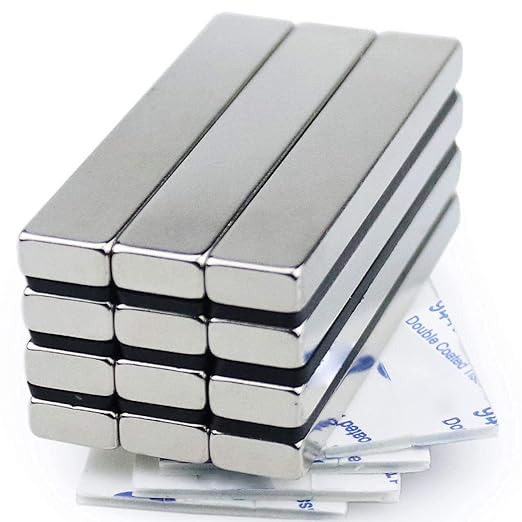
A bar magnet is a rectangular or square-shaped permanent magnet with a distinct north pole on one end and south pole on the other. The elongated shape creates a magnetic field that extends significantly from the pole faces. This directional field makes bar magnets ideal for applications requiring linear magnetic force, such as door catches, tool holders, and magnetic separation equipment.
Bar magnets are typically made from neodymium for maximum strength, ferrite for economy, or samarium cobalt for high-temperature performance. The rectangular geometry provides a large flat surface area for mounting and excellent resistance to sliding or shear forces. Unlike disc magnets that concentrate their field on the faces, bar magnets spread their magnetic flux along their length. This characteristic makes them valuable for holding, lifting, and sensing applications where a linear magnetic field is advantageous. Understanding the bar magnet price requires knowing these material and performance factors.
Material Types That Affect Bar Magnet Price
The choice of material is the single largest factor influencing the bar magnet price. Each material offers different balances of performance, durability, and cost.
Neodymium bar magnets command the highest cost among common magnet materials. They contain rare earth elements that are expensive to extract and process. Within the neodymium family, higher grades are more expensive. An N52 grade may carry a price 30 to 50 percent higher than an N35 of the same dimensions. High-temperature grades with dysprosium or terbium additions cost even more. Despite the premium, neodymium often proves most economical for applications requiring maximum strength in limited space.
Ferrite bar magnets offer the lowest bar magnet price per unit volume. These ceramic magnets cost roughly one-tenth to one-twentieth of equivalent-sized neodymium magnets. The raw materials are abundant and inexpensive. Manufacturing processes are mature and efficient. However, ferrite produces much weaker magnetic fields. A larger ferrite magnet is needed to achieve the same holding force as a smaller neodymium version. For applications where space and weight are not critical, the low cost makes ferrite an attractive choice.
Samarium cobalt bar magnets exceed even neodymium in price. The raw materials, particularly cobalt, are expensive and subject to market volatility. Production volumes are lower than neodymium, so economies of scale are less favorable. The bar magnet price for samarium cobalt reflects its specialized nature. These magnets serve demanding aerospace, defense, and high-temperature industrial applications where performance requirements justify the premium.
Alnico bar magnets occupy a middle price range. Their cost falls between ferrite and neodymium. Alnico offers excellent temperature stability up to 500 degrees Celsius but has lower coercivity than rare earth magnets. They suit specialized sensor and instrument applications where temperature stability matters more than maximum strength.
Size, Grade, and Quantity Factors That Influence Bar Magnet Price
Beyond material choice, several other factors significantly affect the bar magnet price. Understanding these helps you optimize your purchasing decisions.
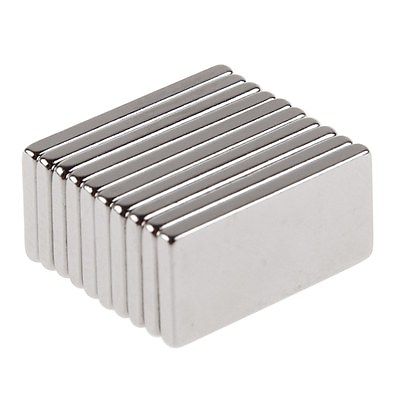
Size directly impacts material usage and therefore cost. Larger magnets contain more material and are more expensive. The pricing increases roughly proportionally with volume, though not linearly. Very small magnets may carry a premium due to handling and manufacturing complexity. Very large magnets require specialized pressing equipment and longer sintering cycles. The most economical sizes fall in the middle range where standard production equipment operates efficiently.
The magnetic grade determines performance and cost for neodymium magnets. N35 is the most economical grade with good general-purpose strength. N42 offers a balanced combination of strength and durability. N52 delivers maximum power but commands the highest price. The bar magnet price increases roughly 10 to 20 percent per grade step. A larger N35 magnet often achieves the same holding force as a smaller N52 at a lower overall cost. Evaluate whether the highest grade truly justifies the premium.
Quantity significantly affects unit pricing. Prototype quantities of a few pieces carry the highest per-unit cost. Pricing becomes competitive at 1,000 pieces and improves substantially at 10,000 pieces. Custom sizes requiring new tooling have higher minimum order quantities for economical pricing. Standard stock sizes offer competitive pricing at lower quantities. Suppliers offer tiered pricing with discounts at volume breakpoints. The bar magnet price improves when manufacturers can plan efficient production runs.
Coating requirements add cost but are essential for durability. Standard nickel-copper-nickel plating is the most economical finish. Epoxy coating adds moderate cost for superior moisture resistance. Gold plating, parylene coating, and specialized finishes increase the final price substantially. Choose the coating level that matches your environmental conditions without over-specifying. For clean indoor applications, standard nickel plating is usually sufficient.
Tolerances affect processing cost. As-pressed dimensions cost the least. Ground or machined surfaces for precise tolerances increase the bar magnet price. Tight tolerances require additional processing steps and more frequent quality inspection. Specify only the precision your application genuinely needs. Over-tolerancing non-critical dimensions wastes money.
Magnetization direction can affect cost. Simple axial magnetization through the thickness is the most economical. Diametric magnetization across the width may require specialized fixtures. Multi-pole magnetization patterns add further cost. The final price reflects the complexity of the magnetizing process and any specialized equipment required.
Market Factors and Supply Chain Influences on Bar Magnet Price
The global rare earth market significantly impacts neodymium magnet pricing. Understanding these dynamics helps you anticipate and manage costs effectively.
Rare earth element prices fluctuate based on supply and demand dynamics. China produces over 80 percent of global rare earth supply and influences world pricing through export policies and production quotas. When China restricts exports or reduces production, the bar magnet price for neodymium products rises globally. Trade policies, tariffs, and geopolitical tensions add further uncertainty to rare earth pricing.
Dysprosium and terbium are heavy rare earth elements used in high-temperature magnet grades. These elements are rarer and more expensive than neodymium. Their prices can spike dramatically during supply shortages. High-temperature grade magnets become significantly more expensive when heavy rare earth prices rise. Some manufacturers are developing dysprosium-free technologies to reduce this dependency and stabilize the bar magnet price.
Energy costs affect manufacturing economics. The sintering process requires sustained high temperatures and controlled atmospheres. Electricity and natural gas prices influence production costs. Logistics costs for shipping heavy magnetic products also contribute to the delivered bar magnet price. Ocean freight is more economical but slower. Air freight is faster but expensive and restricted for strong magnetic fields.
Currency exchange rates affect international purchasing. Most rare earth magnets are produced in China and priced in US dollars. Fluctuations between the dollar and your local currency can significantly affect the landed bar magnet price. Long-term supply agreements may include currency adjustment mechanisms to manage this volatility.
FAQ: Your Bar Magnet Price Questions Answered
1. Why does the bar magnet price vary so much between different suppliers?
Price variation stems from several factors. Material grade authenticity is a major concern. Some suppliers quote lower prices by substituting lower grades or thinner coatings. Manufacturing efficiency and automation level affect production cost. Geographic location influences labor and energy costs. Quality control investment varies between suppliers. The lowest bar magnet price may indicate corners cut somewhere in the process.
2. How can I verify I am getting the correct grade for the bar magnet price I pay?
Request material test reports showing actual remanence and maximum energy product values. Genuine N52 neodymium has remanence of approximately 1.43 to 1.48 Tesla. Measure pull force against a clean steel plate and compare with theoretical calculations. For critical applications, send samples to an independent laboratory for hysteresisgraph testing. The cost of verification is small compared to the cost of failed components.
3. What quantity gives the most competitive bar magnet price?
Prototype quantities of 10 to 100 pieces carry the highest per-unit cost. Pricing becomes competitive at 1,000 pieces and improves significantly at 10,000 pieces. Custom sizes with new tooling require minimums of 5,000 to 10,000 pieces for economical pricing. Standard stock sizes offer competitive bar magnet price at lower quantities. Discuss your volume trajectory with suppliers to find the right balance between inventory and unit cost.
Conclusion
Understanding the factors that influence the bar magnet price empowers you to make smarter purchasing decisions. Material type, size, grade, quantity, and coating all play important roles in determining cost. By defining requirements clearly, requesting multiple quotes, and considering total cost of ownership, you can secure competitive pricing without compromising quality. Whether you need a few prototype samples or production volumes in the thousands, the right approach to pricing ensures your magnetic components deliver value at every stage of your project. A well-informed buyer achieves the optimal balance between the bar magnet price and the performance their application demands.