Standard magnets often fail when a project demands unique shapes or extreme performance. Custom rare earth neodymium magnets offer a tailored solution that fits your exact design while delivering the strongest magnetic force available commercially. This guide will help you understand and source these precision components.
What is Custom Rare Earth Neodymium Magnets
Custom neodymium magnets are permanent magnets made from an alloy of neodymium, iron, and boron, manufactured to a client’s specific size, shape, and magnetic orientation rather than bought off the shelf. The term “rare earth” refers to the neodymium element, which belongs to the lanthanide series on the periodic table. Despite the name, neodymium is relatively abundant, but its exceptional magnetic properties are truly rare.
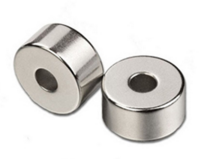
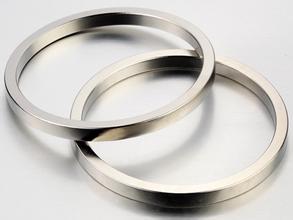
These magnets are not limited to standard discs or blocks. A custom order allows you to specify exact dimensions, unusual geometries like arcs or rings, and specific magnetization directions. The manufacturer presses the powder in a precision die built exactly for your part. This produces a near-net-shape component that fits seamlessly into your assembly without requiring you to redesign your product around a catalog magnet.
3 Specifications of Custom Rare Earth Neodymium Magnets
When ordering custom neodymium magnets, you must specify three critical parameters. Missing any one of these will result in a part that fails in the field.
1. Grade and Magnetic Performance
The grade is indicated by a letter “N” followed by a number, such as N35, N42, or N52. The number represents the maximum energy product in Mega-Gauss-Oersteds. An N52 grade is the strongest commercially available, but it is also the most brittle and temperature-sensitive. You must balance strength against durability. For high-temperature environments, grades with suffixes like “M” or “H” resist demagnetization up to 120 degrees Celsius or more. Selecting the correct grade ensures your custom neodymium magnets perform reliably over their entire service life.
2. Coating and Surface Protection
Bare neodymium oxidizes rapidly in air and rusts instantly in moisture. A protective coating is mandatory. The standard choice is nickel-copper-nickel plating, which gives a shiny silver finish and good general-purpose protection. For outdoor or marine environments, epoxy coating provides superior corrosion resistance. For medical or food-grade applications, a parylene coating offers a thin, biocompatible barrier. The coating thickness must be factored into the dimensional tolerance stack-up of your custom rare earth neodymium magnets.
3. Magnetization Direction and Pole Orientation
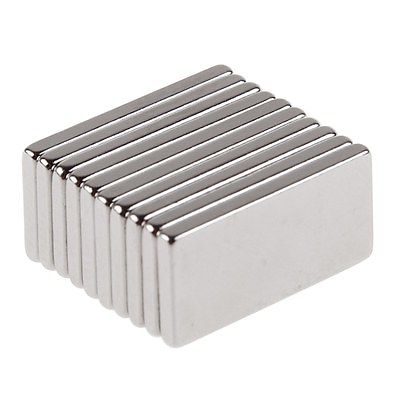
This specification defines where the north and south poles are located on your part. A rectangular block can be magnetized through its thickness, through its length, or even with multiple poles on a single face using a specialized magnetizing fixture. For custom neodymium magnets, you must provide a clear arrow or callout on the technical drawing indicating the desired polarity. Incorrect magnetization direction is a common and costly mistake that renders the entire batch unusable.
How to Choose the Right Custom Rare Earth Neodymium Magnets
Selecting the right supplier and specifications requires a methodical approach. Follow these steps to ensure your custom order meets all functional requirements.
Step 1: Define the Application Environment
Start by documenting every condition the magnet will face. What is the maximum operating temperature? Will the magnet be submerged in water, exposed to chemicals, or placed in a vacuum? Is the magnet in a static holding application or a dynamic motor with rapidly alternating fields? The answers directly dictate the grade, coating, and shape of your custom neodymium magnets. A magnet inside a car engine bay needs a high-temperature “H” grade and an epoxy coating, while a magnet in an indoor sensor can use a standard N42 grade with nickel plating.
Step 2: Determine the Required Pull Force and Geometry
Calculate the exact holding force needed, then add a safety factor of three. Remember that pull force ratings assume perfect contact with a thick, flat steel plate. Any air gap, paint, or surface roughness dramatically reduces the effective force. Work with the manufacturer’s engineering team to optimize the geometry. Sometimes a slightly thicker magnet or a different pole orientation can double the performance of your custom rare earth neodymium magnets without changing the diameter or footprint.
Step 3: Request a Prototype Run and First Article Inspection
Never commit to full production without testing physical samples. A reputable manufacturer will produce a small prototype batch using your approved tooling. Inspect these samples thoroughly. Measure the dimensions, test the pull force with the actual mating surface from your product, and run environmental tests if possible. For custom rare earth neodymium magnets, the prototype phase is your opportunity to catch issues like chipping at sharp corners or insufficient coating thickness before the full order is produced.
Step 4: Verify Quality Certifications and Material Sourcing
Ask the supplier for material certifications and proof of ethical sourcing. The rare earth supply chain faces scrutiny regarding environmental and labor practices. A responsible manufacturer will provide full traceability from mine to finished magnet. Check for ISO 9001 certification as a baseline. If your industry is automotive or aerospace, verify IATF 16949 or AS9100 certifications. High-quality custom rare earth neodymium magnets come with a documented quality history, not just a shipping label.
Applications of Custom Rare Earth Neodymium Magnets
The versatility of custom rare earth neodymium magnets makes them essential across a wide range of industries. Their tailored shapes and unmatched strength enable innovations that standard magnets simply cannot support.
In the automotive sector, these magnets power the traction motors of electric and hybrid vehicles. Large arc-shaped magnet segments fit perfectly into the rotor assembly, creating a powerful rotating field. Sensor magnets with specific pole patterns provide precise position feedback for throttle pedals, steering angle sensors, and ABS brake systems. The high-temperature grades ensure reliable operation even when mounted directly on an engine block.
Medical devices rely heavily on custom rare earth neodymium magnets. MRI-compatible surgical tools use carefully shielded magnet assemblies. Implantable devices like cochlear implants use tiny, biocompatible coated magnets to hold external processors in place. Dental prosthetics incorporate miniature magnets for secure denture retention. Each application demands a unique shape and coating combination.
In consumer electronics, the haptic feedback motor in your smartphone uses a precision magnet assembly. High-end headphones use custom rare earth neodymium magnets with optimized magnetic circuits to deliver superior sound quality with minimal distortion. Wireless charging pads use arrays of magnets to align the transmitter and receiver coils perfectly, improving efficiency.
Renewable energy applications are growing rapidly. Direct-drive wind turbine generators eliminate mechanical gearboxes by using massive rings of custom rare earth neodymium magnets. These magnets are arranged in a precise Halbach array to focus the magnetic field onto the coils. The result is a simpler, more reliable generator that requires less maintenance over decades of operation in harsh offshore environments.
Industrial automation uses these magnets in magnetic couplings, which transmit torque through a sealed barrier without any physical shaft penetration. This is ideal for pumping hazardous fluids where any leak would be catastrophic. Custom rare earth neodymium magnets also form the heart of magnetic workholding chucks for CNC machines, holding parts securely during machining.
FAQ: Your Custom Rare Earth Neodymium Magnets Questions Answered
1. How long does it take to manufacture a custom order?
The timeline depends on complexity and whether new tooling is required. For a simple custom shape using an existing die, samples may ship in two to three weeks. If a new pressing die must be designed and fabricated, expect four to eight weeks for the first prototypes. Full production quantities follow within two to four weeks after prototype approval. Always discuss lead times upfront with the manufacturer and build buffer into your project schedule.
2. What is the minimum order quantity for custom magnets?
Minimum order quantities vary by manufacturer and part complexity. Because tooling costs are the primary investment, many suppliers have a minimum order value rather than a strict piece count. A typical minimum might be 1,000 to 5,000 pieces for small, simple shapes. For very large or complex custom rare earth neodymium magnets, the minimum may be a few hundred pieces. Prototype runs of 50 to 100 pieces are often available at a higher per-unit cost. Discuss your expected annual volume so the manufacturer can offer the best pricing structure.
3. Can I magnetize custom magnets myself after installation?
While technically possible with a powerful magnetizing coil, it is rarely recommended. The magnetizing field required to fully saturate neodymium exceeds 30,000 Oersteds, which requires specialized capacitor-discharge equipment. Incomplete magnetization leaves the part weaker than specified. Most manufacturers deliver custom rare earth neodymium magnets fully charged and ready to use. If your assembly process requires non-magnetized parts for safety, work with the supplier to arrange magnetizing at your facility using their recommended procedures and equipment.
Conclusion
Investing in custom rare earth neodymium magnets unlocks design possibilities that off-the-shelf components can never match. By precisely specifying the grade, coating, and magnetization direction, you receive a component that integrates perfectly into your product while delivering maximum performance. Whether for an electric vehicle motor, a life-saving medical implant, or a high-end audio system, these tailored magnets represent the pinnacle of modern magnetic engineering.