Introduction
If you need a reliable and strong holding solution, pot magnets are one of the best options available. Compact, versatile, and easy to use, they are found in homes, workshops, and industrial settings alike. This guide covers everything you need to know about them.
What Are Pot Magnets?
Pot magnets are permanent magnets enclosed inside a steel housing, also called a “pot” or “cup.” The steel shell focuses and concentrates the magnetic force toward one flat face, which dramatically increases the holding strength compared to a bare magnet of the same size.

The magnet inside is typically made from neodymium, ferrite, or samarium cobalt. The steel cup protects the magnet from cracking or chipping, reduces magnetic field leakage on the sides, and makes the assembly simple to mount, attach, or remove as needed. The result is a compact, durable, and highly effective holding device.
Because the magnetic force is directed through one face only, these magnets grip steel surfaces with exceptional force relative to their size. A small neodymium version, for example, can hold several times its own weight.
Types of Pot Magnets
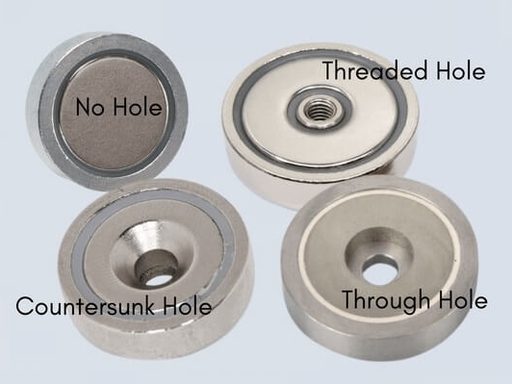
They come in several designs, each suited to different uses. Here is a quick overview of the most common types.
| Type | Key Feature | Best For |
|---|---|---|
| Plain / Blind Hole | Flat face with a threaded or smooth hole on the back | Mounting to steel surfaces |
| Countersunk | Recessed hole for a flush screw | Permanent fixture installations |
| Through Hole | Center hole passes all the way through | Bolt-through applications |
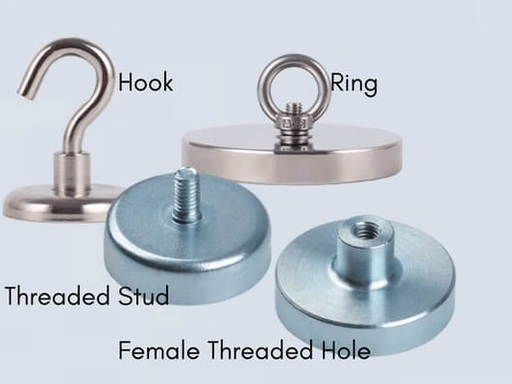
| Hook Pot Magnet | Swivel or fixed hook on top | Hanging tools, signs, and cables |
| Eyebolt Pot Magnet | Threaded eyebolt for attachment | Lifting and retrieval tasks |
| Rubber-Coated | Protective rubber layer on the face | Protecting delicate or painted surfaces |
Each type shares the same core design principle but offers a different mounting or attachment method. Choosing the right type depends on your surface, load requirement, and whether the installation is temporary or permanent.
3 Key Specifications of Pot Magnets
Before purchasing, understanding these three specifications will help you choose the right magnet for the job.
1. Holding Force
Holding force, measured in kilograms (kg) or pounds (lb), tells you the maximum weight the magnet can support on a flat, clean steel surface. This rating assumes direct, flush contact with no gaps. In real-world conditions — angled surfaces, paint, rust, or dirt — the actual holding force may drop to 50–70% of the rated value. Always choose a magnet with a higher rating than your actual load requires to ensure a safe margin.
2. Diameter and Height
The diameter and height are measured in mm or inches. A larger diameter generally means a greater holding force because more magnetic surface area is in contact with the steel. Height is important when clearance is limited. Common sizes range from 13 mm to over 75 mm in diameter, giving you a wide range of options for tight or open spaces.
3. Core Magnet Material
The internal magnet material directly affects both performance and price.
- Ferrite (ceramic): The most affordable option. Lower holding force, but highly resistant to corrosion and heat. Good for outdoor use.
- Neodymium (NdFeB): The strongest option for its size. Ideal when maximum holding force in a compact form is needed. Slightly more prone to corrosion without a coating.
- Samarium Cobalt (SmCo): High performance at elevated temperatures. Used in demanding industrial environments where heat resistance is critical.
Where Are Pot Magnets Used?
They have a broad range of practical applications across many industries and everyday situations.
Home and Office: People use them to hang tools in garages, organize cables, mount whiteboards, or attach decorative items to steel surfaces without drilling holes. They are also popular for keeping cabinet doors and workshop drawers securely closed.
Retail and Displays: Shops use hook-type versions to hang signage, product displays, and promotional banners on steel shelving or grid panels. They are easy to reposition, making them ideal for changing layouts or seasonal promotions.
Construction and Engineering: Workers use them to temporarily hold jigs, fixtures, and components in place during fabrication or assembly. Countersunk and through-hole types allow secure bolted connections that can still be removed when needed.
Automotive: Mechanics attach lights, sensors, and covers to vehicle frames during repairs. Rubber-coated versions protect car bodywork from scratches while maintaining a firm grip throughout the job.
Marine and Outdoor: Ferrite-based versions handle moisture and salt air well. They are used on boats for cable management, hatch closures, and equipment mounting where reliability in wet conditions is essential.
FAQ
Q1: Can pot magnets be used outdoors?
Yes. Ferrite-based pot magnets are naturally resistant to moisture and corrosion, making them a solid choice for outdoor use. Neodymium versions can also be used outdoors if they have a protective coating such as nickel or rubber, but should be checked regularly for signs of corrosion.
Q2: How do I remove a pot magnet from a steel surface?
Sliding the magnet sideways across the surface is much easier than pulling it straight off. The lateral shear force required is significantly less than the direct pull-off force. For very strong magnets, a thin plastic wedge or flat tool slid between the magnet and the surface makes removal quick, safe, and reduces the risk of pinching injuries.
Q3: Will pot magnets damage electronics or credit cards?
Yes, they can. Keep pot magnets away from credit cards, hard drives, hearing aids, and pacemakers. The focused magnetic field extends from the active face, so store them with the magnetic face pointed away from sensitive items and electronics.
Conclusion
Pot magnets are one of the most practical and versatile magnets available. Their steel housing amplifies holding power, protects the inner magnet, and makes them easy to mount in dozens of ways. Whether you need to hang tools in a garage, secure retail displays, or lift heavy steel components in an industrial setting, there is a specific type and size designed for the task. Understanding holding force, diameter, and core material gives you the confidence to choose the right one every time. Use this guide as your reference before your next purchase.