If you’ve ever tested a small neodymium disc on a steel plate, you know it can be tricky — it slides, it chips, or the holding force feels much weaker than the magnet’s rated pull force.
That’s where pot magnets (also called cup magnets, rubber steel magnets, or mounting magnets) come in.
As a China-based rare earth magnet supplier, we often get this question from overseas buyers:
“Why would I use a pot magnet instead of a bare N52 block?”
Let’s break it down with real-world holding force data, mechanical protection, and cost logic.
1. What Exactly Is a Pot Magnet?
A pot magnet is a permanent magnet (usually ferrite or neodymium) encased in a steel pot or cup. The steel cup concentrates the magnetic flux onto one face, while shielding the other sides.
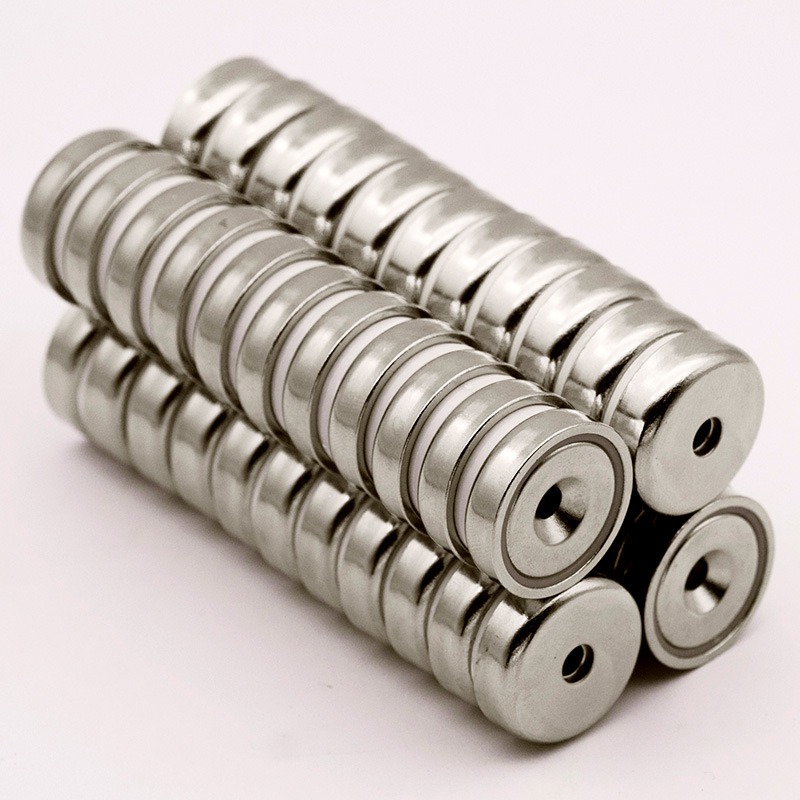
This design creates a “magnetic circuit” that:
- Maximizes holding force on ferromagnetic surfaces (steel, iron)
- Minimizes stray magnetic fields (safer for nearby electronics)
- Protects the magnet from impact and corrosion
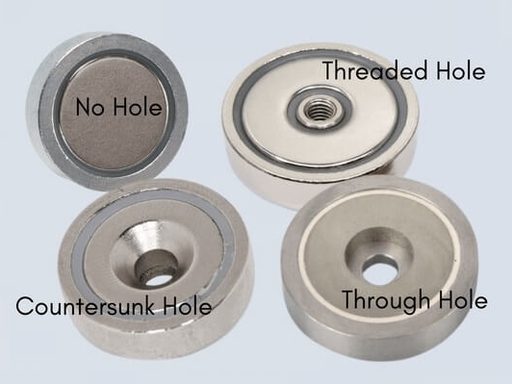
Common shapes: round, rectangular, with or without a mounting hole (threaded or countersunk).
2. Holding Force Comparison: Pot Magnets vs. Bare Neodymium
Let’s take a D25x7mm neodymium pot magnets vs. a bare N45 disc magnet of similar volume.
| Magnet Type | Pull Force on 10mm Steel Plate | Best for | Risk |
|---|---|---|---|
| Bare N45 Disc (25x7mm) | ~25 kg (rated) | Air gap / through-hole | Chipping, sliding, corrosion |
| Neodymium Pot Magnet (D25x7mm) | 38–45 kg (actual) | Steel surface mounting | None (steel cup protects) |
Why does the pot magnet hold more?
The steel cup redirects the magnetic field from the back and sides toward the contact face. On a bare magnet, much of the flux is wasted on the back side.
In plain language:
A pot magnet of the same size often holds 1.5–2x stronger on a clean steel surface than a bare magnet with the same grade and volume.
3. When Should You Choose Pot Magnets? (Real Industrial Cases)
We see the pot magnet used in three main scenarios by global buyers:
✅ 1. Mounting & Fixturing (Most Common)
- Holding sensors, signs, LED lights, or tooling on metal machinery
- Quick-release assembly without drilling holes
✅ 2. Lifting & Holding (Light to Medium Duty)
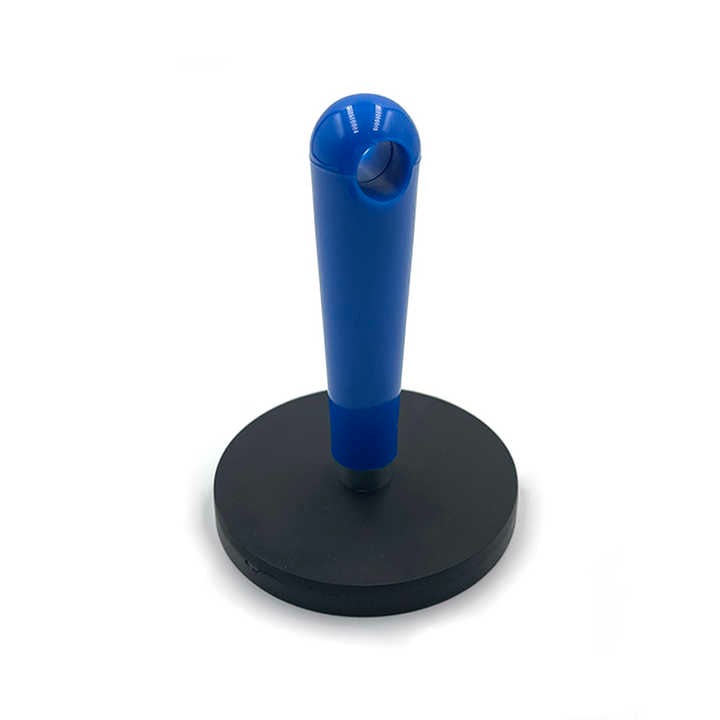
- Magnetic sweepers, lifting magnets for steel plates
- Holding dies or molds in presses
✅ 3. Welding & Positioning
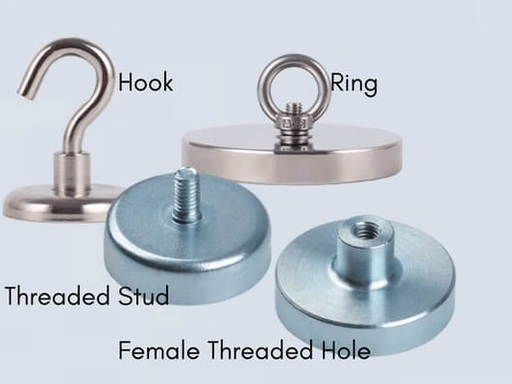
- Ground clamps for welding (threaded pot magnet)
- Temporary holding of steel parts for alignment
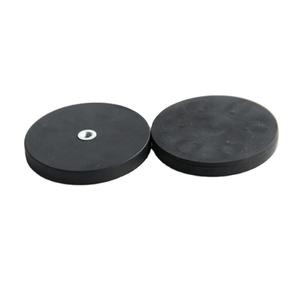
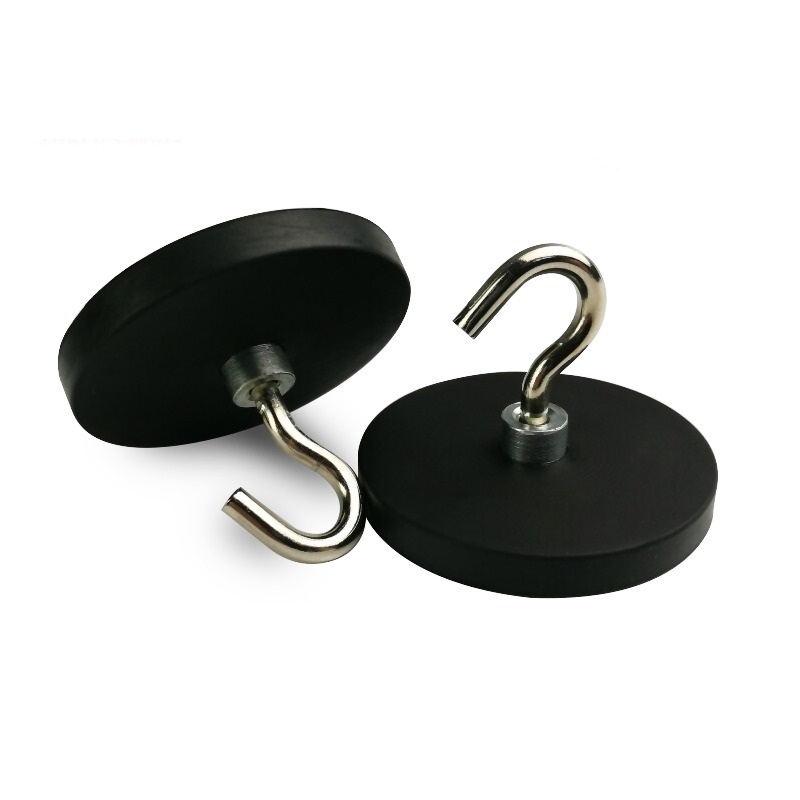
Pro tip for buyers: If your application involves sliding or shear force (not just vertical pull), choose a pot magnet with a rubber face — it increases friction dramatically.
4. Coating & Corrosion Resistance: Why Steel Cup Matters
Bare neodymium magnets are extremely prone to rust — even Ni-Cu-Ni coating can fail after scratches.
A pot magnet’s steel cup acts as a physical barrier. For harsh environments (outdoor, marine, chemical), we offer:
| Coating Type | Protection Level | Typical Use |
|---|---|---|
| Zinc-plated steel cup | Basic | Indoor, dry conditions |
| Epoxy-coated cup | High | Outdoor, humidity |
| Stainless steel cup (304/316) | Very high | Marine, food processing |
Many European buyers now request the 304 stainless steel pot magnetfor food-contact or wash-down areas.
5. Cost Consideration: Pot Magnets vs. Custom Assembly
If you need a threaded mounting hole or a rubber outer layer, you can either:
- Buy a standard pot magnet (lowest cost, ready to ship)
- Encapsulate a bare magnet in a custom steel housing (higher cost, longer lead time)
For 80% of industrial mounting applications, a standard off-the-shelf pot magnet from a China supplier is the most cost-effective solution — often 50–70% cheaper than custom-molded assemblies.
6. How to Specify Pot Magnets for Your RFQ
When you email a Chinese supplier (like us), include these parameters for a fast & accurate quote:
- Magnetic material: Neodymium (strongest) or Ferrite (cheapest, corrosion-resistant)
- Outer diameter & height (e.g., D32x10mm)
- Hole type: Countersunk / threaded blind hole / through-hole with stud
- Steel cup material: Mild steel / stainless steel 304 / stainless steel 316
- Holding force requirement (in kg or lb)
- Operating temperature (standard ≤80°C, high-temp SH/ UH grades available)
Sample spec: “D40x11mm neodymium pot magnet, countersunk hole, N35 grade, 80kg pull force, zinc-plated cup, max temp 80°C.”
Summary Table: Pot Magnets vs. Bare Magnet Decision Guide
| Factor | Pot Magnet | Bare Neodymium Magnet |
|---|---|---|
| Holding force on steel | ✅ Higher (flux focused) | ❌ Lower (flux wasted on back) |
| Protection against chipping | ✅ Fully enclosed | ❌ Very fragile |
| Corrosion resistance | ✅ Steel cup + coating | ❌ Coating only |
| Mounting flexibility | ✅ Threaded hole / countersink | ❌ Requires gluing or housing |
| Cost per holding force | ✅ Very efficient | ❌ More expensive to mount safely |
Final Recommendation for Global Buyers
If you are mounting magnets directly onto a steel surface — for fixtures, signs, sensors, jigs, or light lifting — choose a pot magnet.
If you need a magnet to work through an air gap (e.g., inside a plastic housing, or attracting from a distance), choose a bare neodymium magnet.
Need Pot Magnets for Your Next Project?
We are a direct manufacturer of sintered neodymium magnets based in China, supplying pot magnets, mounting magnets, and custom magnetic assemblies to buyers in Europe, North America, and Southeast Asia.
✅ No minimum order quantity for standard sizes
✅ Fast 15–25 day production
✅ Full material certs (NdFeB grade, coating test, pull force test)
✅ Free technical drawing support
👉 Contact us for a pot magnet sample or send your RFQ to: sales@nbtechmagnet.com