Spherical magnets behave differently from every other shape you can buy. Neodymium magnet balls roll, self-align, and snap into geometric patterns that flat magnets simply cannot match. This guide explains what they are, how they work, and where they belong.
What Are Neodymium Magnet Balls
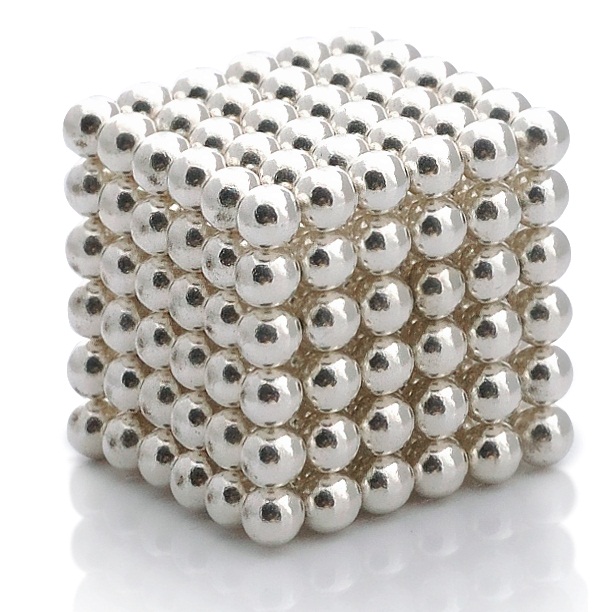
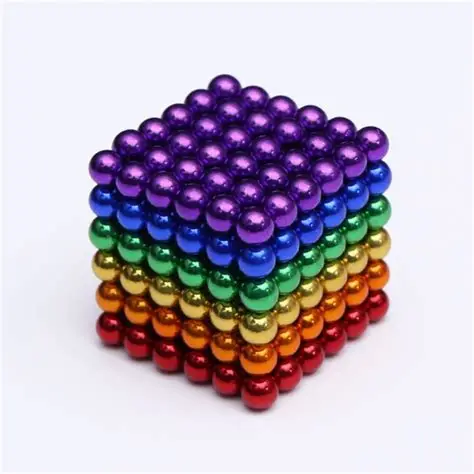
Neodymium magnet balls are spherical permanent magnets made from neodymium-iron-boron, the strongest magnetic material available commercially. They are produced in diameters ranging from about 3 millimeters up to 25 millimeters. Most have a nickel-copper-nickel coating that gives them a shiny, polished appearance.
The sphere is the key detail. A sphere has no flat faces, so the magnetic field radiates outward from two opposite poles on its surface. This creates a dipole field that extends in every direction rather than concentrating on a flat face. When you place two balls near each other, they rotate instantly to align pole to pole. That self-aligning behavior is what makes them fascinating to handle and useful in certain mechanical designs.
How Spherical Magnets Behave Differently
Understanding the physics explains both the appeal and the limitations.
A sphere’s field lines emerge from one pole, arc through space, and return to the opposite pole on the other side of the ball. Because the surface curves in every direction, the field is strongest right at the poles and weakest around the equator. This creates an uneven field pattern compared to a disc magnet, where the field is fairly uniform across the flat face.
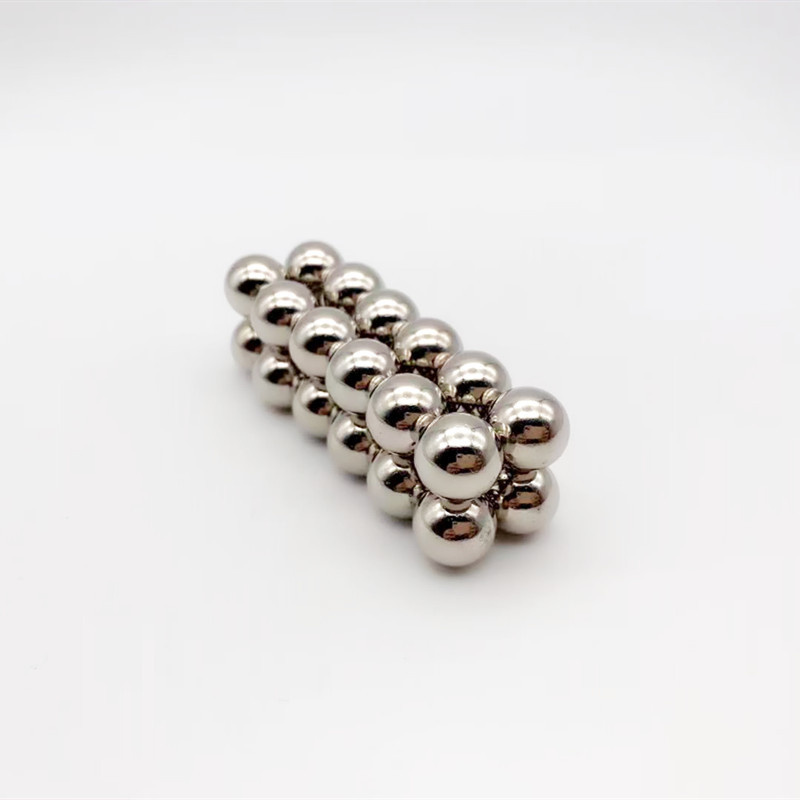
When multiple balls come together, they arrange themselves into the lowest energy configuration. Two balls form a straight line. Three form a triangle. Larger groups assemble into rings, chains, and complex three-dimensional shapes. This self-assembly happens because each sphere rotates freely until the magnetic forces balance.
The rolling behavior is another unique trait. A neodymium magnet ball rolls toward a steel object while rotating to keep its poles optimally aligned. That combination of translation and rotation is difficult to achieve with any other magnet shape.
Magnetization Patterns in Spherical Magnets
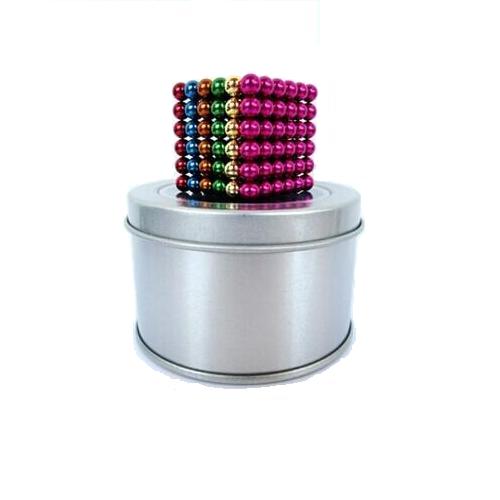
Most neodymium magnet balls are magnetized with a single north pole and a single south pole on opposite sides. This is the standard configuration and the one used for building and assembly.
Some specialty balls use multi-pole magnetization, where the surface carries several alternating poles. These behave differently when rolled and are used in specific sensor and demonstration applications. They are less common and more expensive.
Because the poles are on a curved surface, the orientation is not fixed relative to any edge or face. A ball can rotate freely, which means it always finds its own alignment. This is helpful in self-aligning couplings but makes it difficult to position a ball with a specific pole facing a specific direction.
Grades and Coatings
Neodymium magnet balls come in the same grade range as other neodymium products, from N35 up to N52. Higher grades produce stronger fields, which makes assemblies hold together more firmly. For large builds, higher grades help maintain structural integrity. For small desk toys, N35 is usually sufficient.
Coating is standard and important. Bare neodymium corrodes quickly, and a sphere has a large surface area relative to its volume. Nickel plating is the most common finish and provides adequate protection for indoor use. Some balls come with colored coatings for identification or decoration.
Dimensional accuracy matters more for spheres than for flat magnets. A ball that is slightly out of round will not roll smoothly and will not align as cleanly in a large assembly.
Safe Uses for Neodymium Magnet Balls
There are legitimate applications where spherical magnets are the right choice.
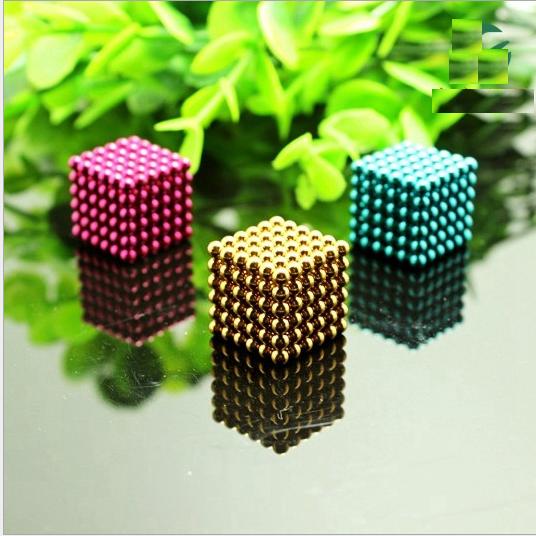
Educational demonstrations use them to show magnetic field patterns, self-assembly, and dipole behavior. Students can observe how spheres align and how structures form, which makes abstract physics concepts tangible.
Desk toys and stress relief products use spheres because they feel satisfying to manipulate. The rolling and snapping action provides tactile feedback that flat magnets cannot provide. Many adults keep a set on their desk purely for the sensory experience.
Mechanical alignment in some fixtures uses spheres as self-aligning elements. Because a sphere finds its own magnetic orientation, it can compensate for slight misalignment between mating parts.
Prototype and design work sometimes uses spheres to explore magnetic circuit concepts before committing to custom tooling.
The Serious Safety Problem of Neodymium Magnet Balls
This is where the conversation changes. Neodymium magnet balls are among the most dangerous small magnets sold to consumers.
If a person swallows a single ball, it may pass through without incident. If two or more are swallowed, they can attract each other across loops of intestine, trapping tissue between them and cutting off blood supply. The result is perforation, tissue death, and potentially fatal infection. This requires emergency surgery and cannot wait.
Small neodymium magnet balls have caused serious injuries and deaths, particularly in children who mistake them for candy or small toys. Many countries have restricted or banned the sale of small high-powered magnet sets for this reason.
If you suspect someone has swallowed two or more magnet balls, go to an emergency room immediately and tell the medical team that magnets are involved. Do not wait for symptoms to appear.
Keep these magnets away from children entirely. If you own a set, store it in a locked container or a high cabinet. Count the balls when you use them and count them again when you put them away. A single missing ball is a serious concern.
They are also a pinch hazard. Two balls snapping together can catch skin between them, causing blood blisters and bruising. Keep them away from fingers, ears, noses, and mouths.
How Neodymium Magnet Balls Are Used in Science Education
Despite the serious safety concerns, neodymium magnet balls have legitimate value in controlled educational settings. When used with proper supervision and strict handling rules, they make abstract physics concepts visible and tangible.
The most common classroom demonstration involves magnetic field visualization. Students can place a single ball under a sheet of paper and sprinkle iron filings on top. The filings reveal the dipole field pattern radiating from the poles. Because a sphere has no flat faces, the pattern is symmetrical in every direction, which makes it easier to grasp than the field around a bar magnet.
Self-assembly demonstrations are another favorite. Students place a handful of balls in a shallow tray and watch them arrange into chains, triangles, and rings without any guidance. This illustrates the principle that physical systems settle into their lowest energy state. Teachers often ask students to predict the shapes before the balls settle, which turns the demonstration into an active learning exercise.
Magnetic domain concepts become concrete when students observe how the balls rotate to align with each other. That rotation is a visible analog of domain alignment inside a magnetic material, something that is otherwise invisible.
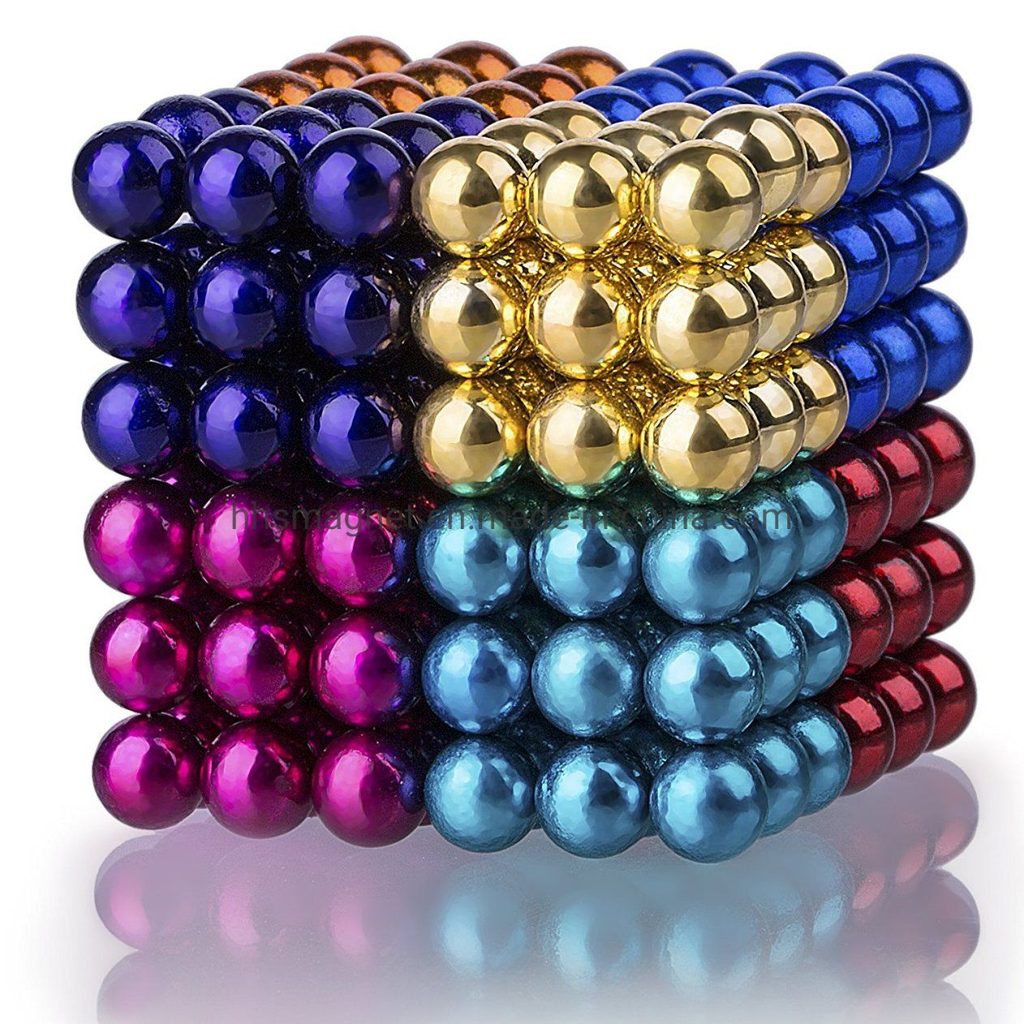
Lattice and crystal structure models use magnet balls as building units. Because the spheres attract equally in all directions, students can build three-dimensional structures that resemble atomic arrangements in crystals. This is far more engaging than a diagram on a whiteboard.
Teachers should note strict safety requirements. Neodymium magnet balls are not suitable for young children, and many schools prohibit them below a certain age. If they are used, they should be counted before and after every session, stored in a locked container, and handled only under direct supervision. Used responsibly, they turn magnetism from an abstract topic into something students can see and touch.
How Neodymium Magnet Balls Are Manufactured
Producing a spherical neodymium magnet is harder than making a disc or a block, and the difficulty explains why spheres cost more per unit of volume. The process starts the same way as any sintered neodymium magnet, but the shaping and finishing stages diverge.
The alloy is melted, cooled, crushed, and milled into fine powder with controlled particle size. A lubricant is added to help the powder flow. For spherical magnets, the powder must be especially uniform because any inconsistency shows up as an out-of-round finished part.
Pressing is where the difference becomes obvious. A sphere cannot be formed by a simple two-punch die, because the shape has no flat surfaces to press against. Manufacturers use specialized tooling with multiple punch segments or isostatic pressing to achieve uniform density. Density gradients cause a sphere to distort during sintering, so this step demands tight process control.
Sintering follows at roughly 1000 to 1100 degrees Celsius in a controlled atmosphere furnace. The part shrinks by about 15 to 20 percent, and the shrinkage must be uniform in all directions. If the green compact had uneven density, the resulting ball will be egg-shaped rather than round.
Grinding is the most demanding stage. A sphere must be ground on all surfaces to achieve true roundness. Manufacturers use specialized spherical grinding equipment that rotates the part continuously while abrasive surfaces remove material evenly. Achieving tight roundness tolerances takes time, which adds cost.
Coating comes next, applied by electroplating or tumbling. Uniform coating thickness on a curved surface is harder to achieve than on flat faces, and uneven plating creates high spots that affect rolling behavior.
Magnetization finishes the process. The ball passes through a magnetizing coil that sets a single dipole across the sphere. Multi-pole spherical magnets require more complex fixtures. Every finished ball is inspected for roundness, coating quality, and magnetic strength before packing.
Handling and Storage
If you own neodymium magnet balls, a few habits keep them usable and safe.
Store them in a sturdy container with dividers. Loose neodymium magnet balls in a bag clump together and become difficult to separate. A compartmented box keeps them organized and reduces the chance of losing one.
Separate stuck balls by sliding them apart rather than pulling. Rolling them apart in your hand is often the easiest method.
Keep them away from electronics, credit cards, and mechanical watches. The magnetic field can erase magnetic strips and interfere with sensitive devices.
Keep them well away from pacemakers and other implanted medical devices. The field from a cluster of balls is strong and concentrated.
Inspect for coating damage periodically. A chipped coating exposes bare neodymium, which will corrode and create a rough, sharp surface.
FAQ: Your Neodymium Magnet Balls Questions Answered
1. Are neodymium magnet balls safe for children?
No. Small high-powered magnetic balls are among the most dangerous toys for children. Swallowing two or more can cause life-threatening intestinal injuries requiring emergency surgery. Many countries have banned or restricted their sale to minors. Keep them completely out of reach of children and pets.
2. Why do neodymium magnet balls form shapes on their own?
Each sphere rotates freely until its magnetic poles align with those of its neighbors. This self-assembly happens because the system seeks the lowest energy state. The result is chains, rings, and three-dimensional structures that form without any external guidance.
3. Can I use neodymium magnet balls in a mechanical assembly?
Only if the design accounts for their free rotation. A sphere cannot be fixed with a specific pole facing a specific direction, because it will rotate to align with nearby magnetic fields. For assemblies requiring fixed pole orientation, discs or blocks are better choices.
Conclusion
Neodymium magnet balls are fascinating objects with genuine educational and tactile value. Their spherical geometry produces self-aligning behavior and unique field patterns that flat magnets cannot replicate. But they are also the most dangerous small magnets sold to consumers, responsible for serious injuries when swallowed. If you choose to own them, treat them as a serious safety hazard rather than a toy. Store them securely, count them diligently, and keep them away from children entirely.
How to Choose Great High Performance Magnets Without Overpaying?