Not every project needs the strongest magnet on the shelf, but some absolutely do. High performance magnets solve problems that ordinary magnets cannot, and knowing when to use them saves both money and headaches. This guide explains what they are, how they differ, and how to specify them correctly.
What Are High Performance Magnets
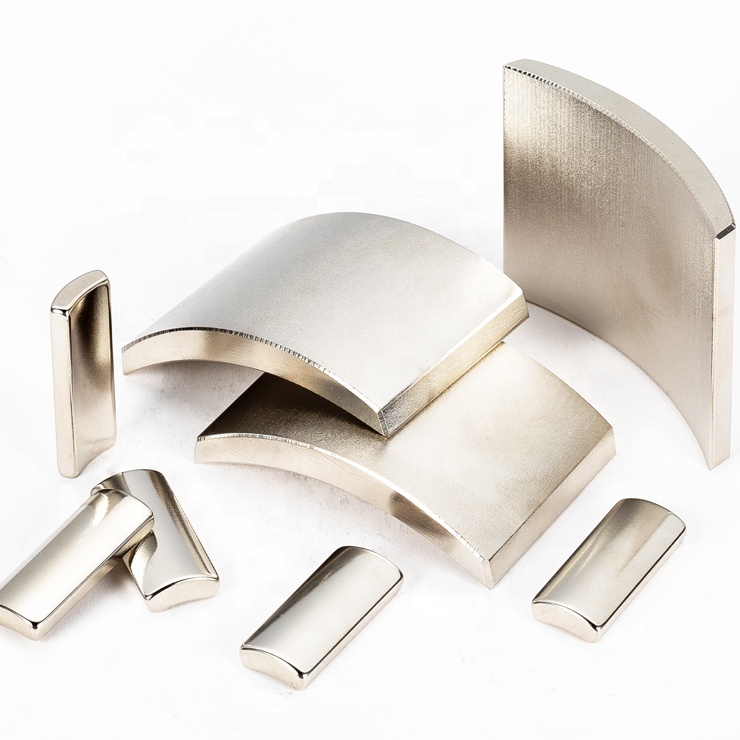
High performance magnets are permanent magnets engineered to deliver maximum magnetic strength in a given volume. In practice, that usually means neodymium-iron-boron, and often the higher grades within that family. Samarium cobalt also qualifies for applications where heat or corrosion resistance matters more than raw strength.
The term is relative, not absolute. A ferrite magnet that performs well in a refrigerator door seal is not high performance in the context of a traction motor. A grade N52 neodymium disc that lifts fifty times its own weight is. What separates them is the amount of magnetic energy stored per unit of volume, measured as the maximum energy product.
High performance magnets matter most when space is tight. If you have room for a large ferrite magnet, you may not need a premium grade at all. If your assembly is measured in millimeters, the stronger material is often the only option.
What Makes a Magnet High Performance
Several factors combine to produce top-tier magnetic performance. Understanding them helps you evaluate what you are actually paying for.
The alloy composition is the foundation. Neodymium, iron, and boron form the base, with small additions of dysprosium, terbium, cobalt, copper, or gallium to tune specific properties. Heavy rare earth additions raise coercivity, which improves heat resistance at the cost of higher price.
Crystal alignment is the second factor. During pressing, an external magnetic field aligns the powder particles so their crystal axes point the same direction. This alignment, called anisotropy, is what allows a magnet to achieve high remanence. Without it, the same alloy would produce a much weaker magnet.
Density is the third. Sintering must reach near-full density to eliminate porosity that would otherwise reduce magnetic output. High performance magnets typically reach 95 to 99 percent of theoretical density. Lower density means lower strength, regardless of how good the alloy is.
Coercivity is the fourth, and it is the one buyers overlook most often. Remanence describes how strong the field is. Coercivity describes how well the magnet resists losing that field under heat or opposing magnetic forces. A magnet with high remanence but low coercivity will perform well on a test bench and fail in a hot motor.

Grades of high performance magnets and What They Mean
Neodymium grades run from N35 to N52. The number represents the maximum energy product in Mega-Gauss-Oersteds. Higher numbers mean more magnetic energy per unit volume.
N35 through N42 cover most general applications. N45 through N48 serve demanding industrial and automotive work. N50 and N52 sit at the top and are reserved for applications where every millimeter counts.
Temperature suffixes matter just as much as the grade number. M grade handles 100 degrees Celsius. H reaches 120. SH reaches 150. UH reaches 180. EH reaches 200. Each step adds heavy rare earth content and cost. The common mistake is to chase a higher grade number while ignoring the temperature suffix, then watch the magnet fail in a warm enclosure.
For high performance magnets, the grade and suffix should be specified together. N48SH tells a supplier far more than N48 alone.
Where High Performance Magnets Are Used
These high performance magnets appear in applications where failure is expensive and space is limited.
Electric vehicle traction motors rely on high-grade neodymium segments with SH or UH ratings. The motor runs hot, spins fast, and must deliver consistent torque for the life of the vehicle.
Wind turbine generators use large volumes of high performance magnets in direct-drive designs. These must maintain strength for decades in outdoor conditions with temperature swings and humidity.
Medical devices, including surgical motors and implantable components, use high-grade magnets with biocompatible coatings. Precision and reliability outweigh cost in these applications.
Aerospace and defense systems use samarium cobalt and high-temperature neodymium for actuators, sensors, and guidance systems. The operating environments are extreme, and the cost of failure is unacceptable.
Consumer electronics squeeze high performance magnets into speakers, vibration motors, and camera autofocus systems. Size constraints make weaker materials impractical.
Industrial automation uses them in servo motors and magnetic couplings where precise torque control matters.
What Reduces Performance in Real Use
A magnet’s catalog rating describes ideal conditions. Real installations rarely match them.
Air gaps are the biggest factor. Even a thin layer of paint, adhesive, or coating between the magnet and the target surface reduces holding force significantly. In precision magnetic circuits, a gap of half a millimeter can cut performance by half.
Temperature is the second. Strength drops as temperature rises, and pushing past the rated maximum causes permanent loss. High performance magnets are not immune to this. They simply tolerate more heat before the drop becomes severe.
Demagnetizing fields are the third. Motors, solenoids, and other current-carrying coils generate opposing fields that can partially erase a magnet. High coercivity grades resist this, which is why coercivity matters more than grade in dynamic applications.
Mechanical damage is the fourth. Chipped coating exposes bare material to corrosion. Cracks reduce effective magnetic volume and can cause the magnet to break apart under vibration.
How Coercivity Determines High Performance Magnets Reliability
Coercivity is the specification that separates a magnet that works on a test bench from one that survives years in a real machine. Buyers who focus only on grade often learn this lesson the hard way.
Remanence measures how strong the magnetic field is at room temperature with nothing opposing it. Coercivity measures how much resistance the magnet has against being demagnetized. A magnet can have excellent remanence and poor coercivity, which means it starts strong and fades fast under heat or in the presence of an opposing field.
In real applications, both forces exist. Motors generate heat from resistive losses and friction. They also generate opposing magnetic fields from the current flowing through the windings. A magnet with low coercivity sitting inside a running motor is under constant attack from both directions.
This is why the temperature suffix carries so much weight. An N42SH and a plain N42 have the same nominal remanence, but the SH version has been formulated with dysprosium or terbium to raise intrinsic coercivity. It maintains its field at 150 degrees Celsius where the standard version would already be demagnetizing irreversibly.
Intrinsic coercivity is measured in kiloOersteds. A standard N grade might show 12 kOe. An H grade reaches roughly 17 kOe. SH climbs past 20 kOe, and UH and EH go higher still. Each step reflects more heavy rare earth content and more cost.
For buyers, the practical advice is simple. Ask for the coercivity value, not just the grade. Ask for the demagnetization curve at your operating temperature. A supplier who provides both is equipped for serious work. A supplier who only quotes grade numbers is selling a commodity, not an engineered component.
For high performance magnets, coercivity is often the difference between a design that lasts and one that fails in the field.
How Temperature Ratings Affect High Performance Magnets Selection
Temperature is the specification that most often decides whether a high performance magnet succeeds or fails. Understanding how heat interacts with magnetic materials helps you specify correctly the first time.
All magnets lose some strength as they heat up. Part of that loss is reversible, meaning the magnet recovers its full strength when it cools back down. Part of it is irreversible. The boundary between the two is set by the magnet’s coercivity and how far past its rated limit it operates. A brief excursion slightly above the limit usually causes minor permanent loss. Sustained operation above the limit causes severe and permanent damage.
This is why temperature grades exist. A standard N grade handles up to roughly 80 degrees Celsius. M grade reaches 100. H reaches 120. SH reaches 150. UH reaches 180. EH reaches 200. Each step adds dysprosium or terbium, which raises intrinsic coercivity and cost.
The trap buyers fall into is measuring the wrong temperature. They check the outside of a motor housing or the ambient air in a room and assume that is what the magnet experiences. In reality, magnets sit close to heat sources. Inside a running motor, magnet temperature can run 30 to 50 degrees higher than the exterior. In a sealed enclosure with no airflow, heat builds over time until it reaches equilibrium at a much higher point than expected.
The practical approach is to model or measure the actual magnet temperature under worst-case continuous load, then add at least 20 degrees of margin. Specify the lowest temperature grade that covers that figure.
Also request the demagnetization curve at your operating temperature. A grade rated for 150 degrees Celsius should still show meaningful coercivity at that point. If the supplier cannot provide that data, they cannot guarantee performance in your application. High performance magnets are only high performance when they hold their field under real conditions.
How to Specify and Verify high performance magnets
Getting the right high performance magnets means writing a complete specification and verifying it.
State the grade and temperature suffix together. Provide the demagnetization curve at your operating temperature. Specify dimensions with tolerances, and clarify whether dimensions are before or after coating. Confirm the magnetization direction with a diagram. Note the coating type and thickness. Include the maximum operating temperature the magnet will see.
Then verify. Ask for material test reports showing actual remanence and energy product values. Measure pull force or field strength on samples. Test at operating temperature if the application runs hot. For critical work, send samples to an independent laboratory for hysteresisgraph testing.
Comparing quotes without verifying specifications is how buyers end up with magnets that look correct on paper but underperform in the field.
How Magnet Size and Shape Affect High Performance Magnet Choice?
Size and shape influence performance as much as grade does. Two magnets made from the same alloy can behave very differently depending on their geometry.
Larger magnets contain more magnetic material, so they produce more total flux. But strength per unit volume does not increase with size. In fact, very thick magnets often show diminishing returns because the material at the center contributes less to the external field. This is why a thin, wide disc frequently outperforms a thick, narrow one for holding applications.
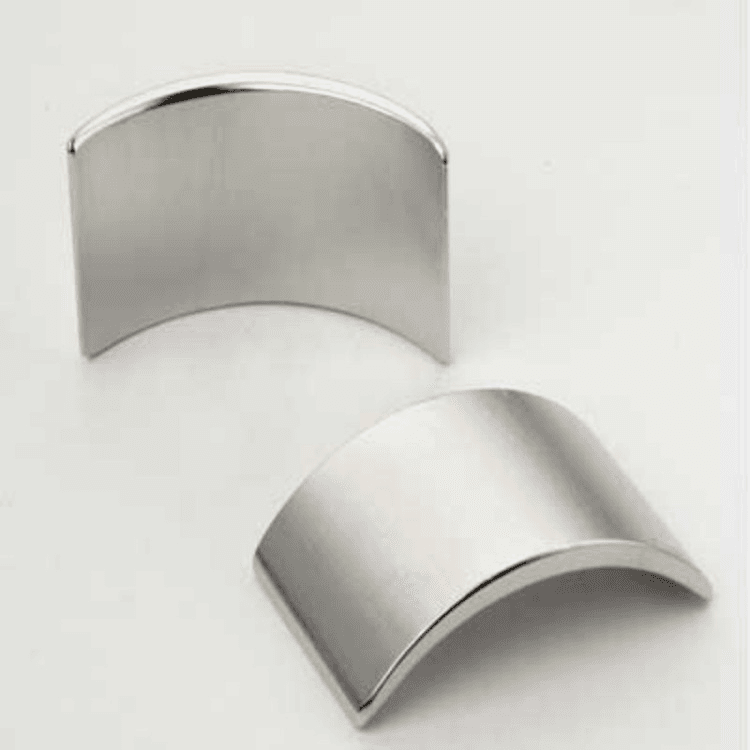
Shape determines where the field concentrates. Discs focus flux on two flat faces, which suits holding against flat steel. Bars spread the field along their length, which resists sliding better. Arc segments follow a curved surface and maintain a uniform air gap in motors. Rings distribute flux around a circumference for sensors and speakers.
Aspect ratio matters for reach. Short, wide magnets produce a strong field close to the surface that falls off quickly. Long, narrow magnets project a weaker but longer-reaching field. Sensor and reed switch applications depend on this distinction.
The practical takeaway is to match geometry to function rather than defaulting to the largest magnet available. For high performance magnets, the right shape often outperforms a stronger grade in the wrong form factor.
FAQ: Your High Performance Magnets Questions Answered
1. Is N52 always the best choice?
No. N52 offers the highest energy product, but it is also more brittle, more expensive, and more temperature-sensitive than lower grades. In many applications, a larger N42 magnet achieves the same result at lower cost and with better durability. Choose N52 only when size or weight constraints demand it.
2. How do I know if a magnet is genuinely high performance?
Request a material test report showing measured remanence, coercivity, and maximum energy product. Compare the values against published standards for the claimed grade. If a quote is far below others for the same grade and dimensions, suspect mislabeling. Independent testing provides certainty.
3. Can high performance magnets be used outdoors?
Yes, with the right coating. Neodymium corrodes quickly when exposed to moisture without protection. Epoxy or parylene coatings provide the durability needed for outdoor and marine environments. Also confirm the temperature rating, since dark surfaces in direct sun can get hot enough to affect standard grades.
Conclusion
High performance magnets are not simply stronger versions of ordinary magnets. They are engineered to deliver specific combinations of strength, coercivity, and thermal stability that general-purpose magnets cannot match. Choosing the right one means specifying grade, temperature suffix, coercivity, dimensions, coating, and magnetization direction together. Verify what you receive with test data and samples. Do that, and you get a magnet that performs exactly as expected in the conditions that matter.