Introduction
Technology would not be the same without rare earth permanent magnets. They power electric vehicles, wind turbines, smartphones, and medical scanners. If you work in engineering, manufacturing, or product design, understanding these magnets is essential. This guide covers everything you need — from types to supplier selection.
What Are Rare Earth Permanent Magnets?
Rare earth permanent magnets are strong, long-lasting magnets made from alloys of rare earth elements — a group of 17 metallic elements found in the periodic table, including neodymium, samarium, dysprosium, and praseodymium. Unlike ordinary ferrite or alnico magnets, rare earth versions produce a much more intense magnetic field relative to their physical size.
The term “permanent” refers to the fact that these magnets retain their magnetism indefinitely under normal operating conditions. They do not require an electric current to sustain their magnetic field, which makes them highly efficient and maintenance-free in a wide range of applications.
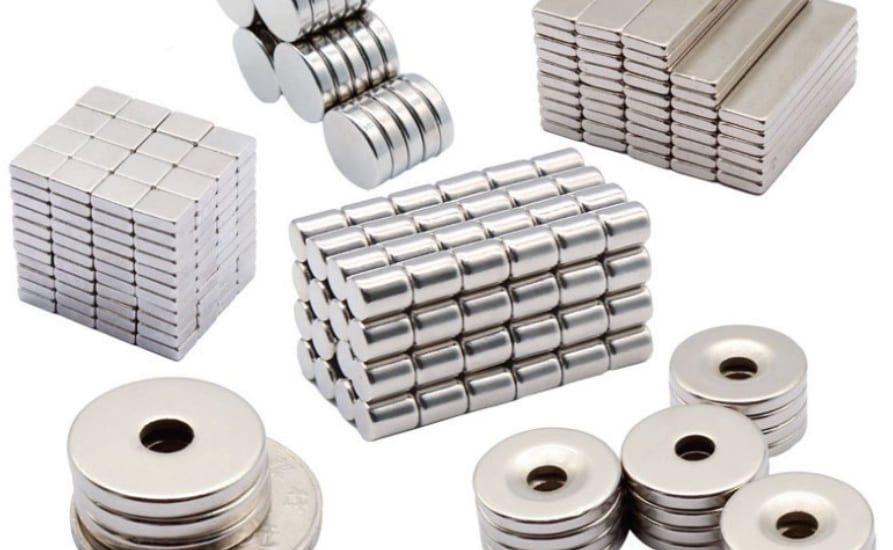
These magnets were first developed in the 1970s and have since become foundational to modern technology. Their extraordinary energy density — measured in mega-gauss-oersteds (MGOe) — far exceeds that of conventional magnets. A neodymium magnet, for example, can have an energy product of up to 52 MGOe, compared to just 3–5 MGOe for a standard ceramic ferrite magnet.
The key properties that define these magnets include high remanence (the magnetic field retained after magnetization), high coercivity (resistance to demagnetization), and a high maximum energy product (BHmax). Together, these properties make them the most powerful type of permanent magnet available today.
Types of Rare Earth Permanent Magnets
Not all rare earth permanent magnets are the same. There are two primary categories, each with distinct compositions, strengths, and ideal applications:
1. Neodymium Iron Boron (NdFeB) Magnets
NdFeB magnets are the strongest type of rare earth permanent magnets commercially available. They are composed of neodymium, iron, and boron and are capable of achieving energy products up to N52 grade. Their magnetic strength makes them the go-to choice for applications that demand maximum force in a minimal footprint.
NdFeB magnets are produced in two forms:
- Sintered NdFeB — Made by pressing and sintering powdered alloy. This is the most common form and delivers the highest magnetic performance. Used widely in motors, generators, and hard disk drives.
- Bonded NdFeB — Made by mixing NdFeB powder with a binder resin and molding it. This method allows more complex shapes and near-net-form production. Performance is lower than sintered grades but sufficient for many applications.
The primary limitation of NdFeB magnets is their sensitivity to heat and corrosion. Standard grades begin to lose magnetic strength above 80°C, and the raw alloy corrodes rapidly without a protective coating such as nickel, zinc, or epoxy. High-temperature grades (SH, UH, EH) are available for demanding environments up to 200°C.
2. Samarium Cobalt (SmCo) Magnets
SmCo magnets are the second major family in this category. They are composed of samarium and cobalt and offer outstanding resistance to high temperatures and corrosion — properties that NdFeB magnets cannot match without specialty grades.
SmCo magnets operate reliably at temperatures up to 300°C and have excellent chemical stability, making them ideal for aerospace, defense, and oil and gas applications. They are also highly resistant to demagnetization, even in harsh environments. The trade-off is cost — samarium and cobalt are significantly more expensive than neodymium and iron, which makes SmCo magnets a premium choice reserved for the most demanding applications.
SmCo magnets come in two alloy compositions: SmCo5 and Sm2Co17. The latter offers higher energy product and better temperature performance, making it the more commonly specified grade in engineering applications today.
Uses of Rare Earth Permanent Magnets
Rare earth permanent magnets are embedded in the devices and systems that define modern life. Here are the most significant application areas:
Electric Vehicles and Hybrid Cars The traction motors in electric and hybrid vehicles rely heavily on rare earth permanent magnets. NdFeB magnets are used in the motor’s rotor to generate the rotating magnetic field that drives the wheels. A single electric vehicle can contain 1–3 kg of neodymium magnets. As EV adoption accelerates globally, demand for these magnets is growing at an unprecedented rate.

Wind Energy Direct-drive wind turbines use large NdFeB magnets in their generators. These turbines are more efficient and require less maintenance than geared systems. A single large offshore turbine can contain up to 2 tonnes of rare earth magnets, making wind energy one of the largest single consumers of NdFeB production worldwide.
Consumer Electronics Smartphones, laptops, earphones, speakers, cameras, and hard disk drives all rely on these compact magnets. The miniaturization of electronics would not be possible without the high magnetic density these materials provide.
Medical Imaging MRI (Magnetic Resonance Imaging) machines use powerful superconducting magnets for imaging, but smaller rare earth magnets play critical supporting roles in patient positioning systems, medical pumps, and specialized surgical instruments that require precise, reliable magnetic fields.
Industrial Motors and Actuators Servo motors, linear actuators, and precision drive systems in robotics, CNC machinery, and automated manufacturing lines depend on the high torque density and efficiency these materials enable. Their compact size allows machine designers to reduce motor weight and increase system efficiency simultaneously.
Defense and Aerospace Guidance systems, radar units, satellite components, and aircraft actuators are among the defense applications where SmCo magnets perform best. Their thermal stability, radiation resistance, and corrosion resistance make them uniquely suited to extreme operational environments.
Important Notices When Using Rare Earth Permanent Magnets
Before specifying or handling these magnets, be aware of the following critical points:
Strong Magnetic Fields Are Dangerous Rare earth permanent magnets — especially large NdFeB grades — produce extremely powerful magnetic fields. They can snap together with enough force to crush fingers, shatter the magnets themselves, and cause serious injury. Always handle large magnets with protective gloves and non-magnetic spacers. Keep them well away from pacemakers, implanted medical devices, credit cards, and data storage media.
Temperature Limits Must Be Respected Exceeding the rated operating temperature of a magnet — even briefly — can cause irreversible partial demagnetization. Always confirm the maximum operating temperature of the grade you are using and design your system with an appropriate thermal margin. Use SmCo grades for sustained high-temperature exposure above 150°C.
Corrosion Protection Is Essential for NdFeB Uncoated NdFeB magnets will corrode in humid or chemically aggressive environments, eventually crumbling and losing magnetic strength. Always specify a protective coating — nickel, epoxy, zinc, or gold — appropriate for your operating environment. Inspect coatings regularly in harsh conditions.
Demagnetization by Opposing Fields Placing these powerful magnets in close proximity to strong opposing magnetic fields can partially or fully demagnetize them. Design magnetic assemblies carefully to avoid exposure to fields that exceed the magnet’s coercive force rating.
Regulatory and Export Controls Rare earth materials — particularly those used in defense-grade magnets — are subject to export controls in multiple countries. Verify applicable regulations before importing or exporting these materials across international borders.
How to Choose a Supplier of Rare Earth Permanent Magnets
Selecting the right supplier is critical to the success of your product or project. Follow this framework to evaluate your options:
Verify Material Grade and Certification Ask for documentation confirming the exact magnet grade (e.g., N42, N52, SmCo28, Sm2Co17-30) and request magnetic property test reports. Reputable suppliers of rare earth permanent magnets provide batch-level certificates of conformance and can produce third-party test validation on request.
Assess Manufacturing Capability Confirm whether the supplier manufactures in-house or acts as a reseller. Direct manufacturers offer better quality control, faster issue resolution, and more flexibility on custom specifications. Ask about their production process, press tonnage, sintering equipment, and coating line capabilities.
Check for ISO and Industry Certifications ISO 9001 is the minimum acceptable certification. For automotive supply chains, IATF 16949 is required. For defense and aerospace applications, AS9100D applies. Suppliers serving the medical industry should hold ISO 13485. These certifications signal that quality management systems are in place and subject to independent audit.
Evaluate Customization and Engineering Support The best suppliers of rare earth permanent magnets offer more than a catalog — they provide engineering consultation to help you select the right grade, dimensions, magnetization direction, and coating for your specific application. This support is especially valuable for new product development or when transitioning from one magnet type to another.
Compare Lead Times, MOQ, and Pricing Transparency Ask for standard lead times, minimum order quantities, and clear pricing structures. Hidden tooling fees or vague delivery timelines are red flags. Reliable suppliers provide transparent quotations and can accommodate both small prototype orders and large-volume production runs.
Request Samples Before Committing Always test samples under your actual application conditions before placing a production order. Check dimensions, coating quality, pull force, and thermal performance. Trustworthy suppliers of rare earth permanent magnets will provide sample quantities readily and support your qualification process with documentation.
Frequently Asked Questions (FAQ)
Q1: What is the difference between NdFeB and SmCo magnets?
NdFeB magnets offer higher maximum energy product — making them the strongest rare earth permanent magnets available — but they are more susceptible to corrosion and high temperatures. SmCo magnets are less powerful by energy product but excel in high-temperature environments (up to 300°C) and offer superior corrosion resistance without coatings. Choose NdFeB for maximum strength in benign environments; choose SmCo when temperature or corrosion resistance is the priority.
Q2: How long do these magnets last?
Under normal operating conditions — within rated temperature, away from strong demagnetizing fields, and with intact protective coatings — rare earth permanent magnets can retain more than 99% of their magnetic strength for decades. Studies suggest a loss rate of less than 1% per century in ideal storage. In practice, degradation is most often caused by thermal shock, mechanical damage, corrosion, or exposure to opposing magnetic fields rather than natural aging.
Q3: Are rare earth magnets recyclable?
Yes, but the recycling infrastructure is still developing. NdFeB magnets contain valuable neodymium, dysprosium, and praseodymium that can be recovered and reused. Several countries — particularly in Europe and Japan — are investing in rare earth magnet recycling programs to reduce dependence on primary mining. If you work with large quantities of end-of-life magnets, contact a specialist rare earth recycler to explore recovery options and potential cost offsets.
Conclusion
Few materials have shaped modern technology as profoundly as rare earth permanent magnets. From the electric vehicle in your driveway to the MRI scanner in your hospital, they are quietly powering the world around us. Understanding their types, properties, applications, and limitations gives you a significant advantage in engineering, procurement, and product design. Choose your supplier carefully, respect the safety requirements, and work with a partner who offers both technical expertise and consistent quality. The right magnet — properly specified and sourced — will deliver outstanding performance for the lifetime of your product.
6 Essential Facts About High Temperature Resistant Neodymium Magnets for Tough Jobs