Magnets surround us every day, yet their invisible force feels like pure magic. If you have ever stopped to ask how do permanent magnets work, the answer lies in a fascinating blend of quantum physics and practical engineering. This guide will demystify the science and show you exactly why these tools are so essential.
What is a Permanent Magnet
A permanent magnet is a solid material that generates a continuous magnetic field without requiring any external electrical power. Unlike electromagnets that need a battery, a permanent magnet stays magnetized for decades. Common examples include the flexible seals on refrigerator doors, the tiny drivers in earbuds, and the sturdy latches on toolboxes.
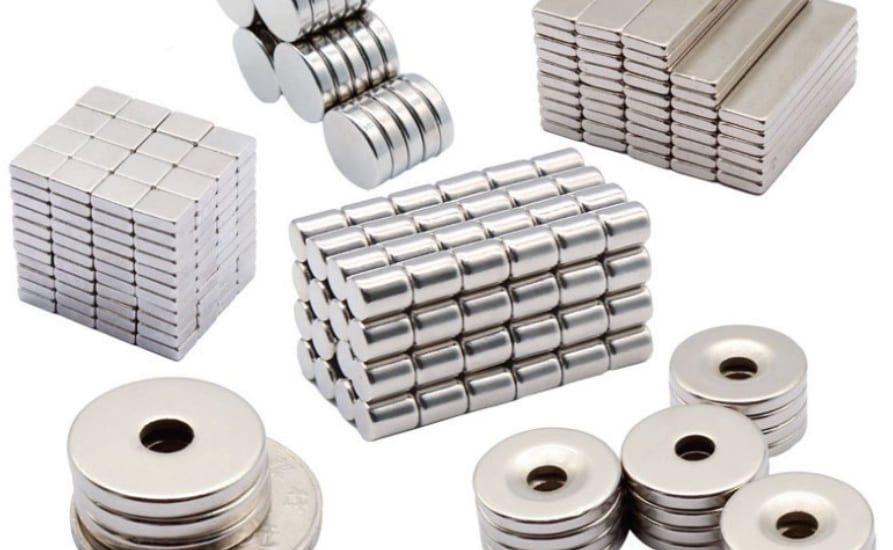
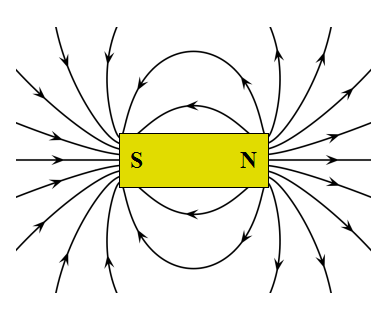
The defining characteristic of a permanent magnet is its ability to attract ferromagnetic objects like iron, nickel, and cobalt. It has two distinct poles: a north pole and a south pole. Opposite poles attract each other strongly, while identical poles repel. This persistent field makes permanent magnets indispensable for sensors, motors, and holding devices across every modern industry.
3 Specifications of Permanent Magnets
To select the right magnet for a project, you must understand three critical performance specifications. These numbers tell you exactly how a magnet will behave in the real world.
1. Remanence (Br) – The Residual Flux Density
Remanence measures how strong the magnetic field remains after the external magnetizing force is removed. It is expressed in Gauss or Tesla. A magnet with high remanence, like N52 neodymium with a Br around 1.48 Tesla, has a dense, powerful field. This spec tells you the raw magnetic output strength. However, a high Br alone does not guarantee the magnet will stay magnetized under tough conditions. You also need to consider the next specification.
2. Coercivity (Hc) – The Resistance to Demagnetization
Coercivity measures how hard it is to demagnetize the magnet once it is charged. Think of it as magnetic toughness. A magnet with high coercivity fights off external demagnetizing fields, heat, and physical shock. Neodymium magnets possess intrinsic coercivity values often exceeding 10,000 Oersteds. In contrast, a simple steel paperclip has almost zero coercivity and loses its induced magnetism instantly. For applications inside hot electric motors, high coercivity is essential to prevent the magnet from dying prematurely.
3. Maximum Energy Product (BHmax) – The Power Density
This is the single number that summarizes a magnet’s overall power. Measured in Mega-Gauss-Oersteds, BHmax represents the maximum amount of magnetic energy stored in the material. A higher BHmax means you can use a smaller, lighter magnet to do the same job. Neodymium magnets dominate this category, with grades reaching up to 52 MGOe. Ferrite magnets, while much cheaper and corrosion-resistant, typically achieve only 3 to 5 MGOe. Engineers use BHmax to balance size, weight, and cost in compact designs.
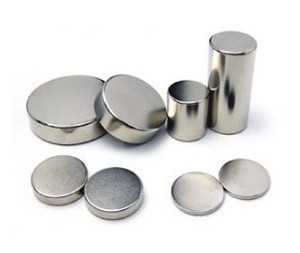
How Do Permanent Magnets Work
To answer how do permanent magnets work, we must travel deep inside the material. Every atom in the universe has electrons orbiting its nucleus. These electrons also spin on their own axis, creating a tiny atomic magnetic field. In most materials like wood or plastic, electrons pair up with opposite spins, canceling out the magnetic effect completely. The material shows no external magnetic field.
However, in ferromagnetic materials like iron, nickel, and cobalt, certain electrons remain unpaired. Their spins align parallel to each other within microscopic regions called magnetic domains. Each domain is a tiny magnet, roughly 0.1 millimeters wide. In an unmagnetized bar of steel, these domains point randomly in every direction. The net magnetic field sums to zero because the domains cancel each other out. This is the natural, chaotic state of the metal.
Now we reach the heart of how do permanent magnets work. When you expose the steel to a powerful external magnetic field, the domain walls begin to move. Domains aligned with the external field grow larger by consuming neighboring misaligned domains. The entire material reaches a state of saturation where all usable domains point in the same direction. The material itself now generates a net magnetic field. This alignment is the fundamental mechanism that answers how do permanent magnets work.
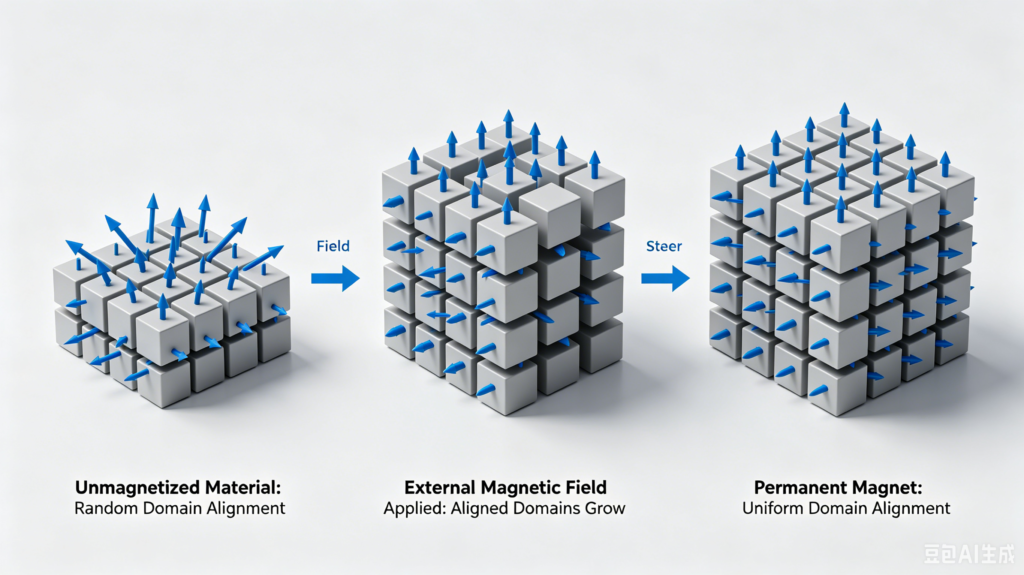
But alignment alone is not enough for a permanent magnet. The question becomes: why do the domains stay aligned? The answer is coercivity. In a permanent magnet material, metallurgical defects, grain boundaries, and carefully added alloying elements act as pins. These obstacles trap the domain walls in their new position. Even when the external magnetizing field is removed, the domain walls cannot spring back to their random arrangement. They are physically locked in place.
This pinning effect is what separates a permanent magnet from a temporary one. Pure annealed iron has very few pinning sites, so the domains easily slide back into randomness. It becomes a temporary magnet. A neodymium magnet contains a complex microstructure of neodymium-rich phases at the grain boundaries that pin the walls fiercely. This gives the material its high intrinsic coercivity.
Understanding how do permanent magnets work also involves temperature. The alignment relies on a quantum mechanical exchange interaction between neighboring atoms. When you heat the magnet, the atoms vibrate more violently. Eventually, thermal energy overcomes the exchange energy, and the domains collapse into randomness. This critical temperature is the Curie point. For neodymium, it is around 310 degrees Celsius, but useful strength drops much sooner.
Finally, consider how do permanent magnets work in a circuit. A magnet by itself creates a stray field looping from north to south through the air. When you attach the magnet to a steel plate, the steel provides a low-reluctance path for the flux. The field concentrates in the steel, creating a strong, closed circuit. The holding force depends on eliminating the air gap. Even a thin sheet of paper between the magnet and the steel dramatically reduces the pull because flux lines must jump across the air, weakening the entire circuit.
Applications of Permanent Magnets
Understanding how do permanent magnets work opens the door to countless practical applications. These components are silent, maintenance-free, and require zero energy input once manufactured. Their uses span from the simple to the highly complex.
In consumer electronics, permanent magnets drive the miniature speakers in your headphones and the vibration motor in your phone. The voice coil interacts with a fixed permanent magnetic field to push a diaphragm, producing sound. In data storage, the spindle motor of a traditional hard disk drive relies on powerful permanent magnets to spin the platters at thousands of revolutions per minute.
Transportation is another massive application. Electric vehicles use large arrays of permanent magnets in their traction motors. These motors convert electrical energy into rotational motion using the strong fixed field of neodymium magnets interacting with copper windings. Without permanent magnets, the motor would be larger, heavier, and less efficient.
In the industrial sector, permanent magnetic lifters handle heavy steel plates without any clamps or chains. A simple lever rotates an internal magnet array to shunt or unshunt the field, turning the holding force on and off mechanically. This is a direct, practical expression of understanding how do permanent magnets work in a sealed, safe unit.
Medical technology depends heavily on permanent magnets as well. Magnetic Resonance Imaging machines use enormous superconducting magnets, but smaller permanent magnets appear in dental implant tools and surgical navigation systems. They also secure dentures and hearing aids comfortably and reliably.
Renewable energy generation is a growing field. Direct-drive wind turbines eliminate the gearbox by using a large ring of permanent magnets on the rotor. As the blades turn, the magnetic field sweeps past stationary copper coils, generating electricity. This design reduces mechanical complexity and increases reliability, especially in offshore installations.
Even in the home, understanding how do permanent magnets work helps you design better organization solutions. Magnetic knife strips hold blades securely. Magnetic door catches keep cabinets closed. Shower door seals use flexible magnetic strips to prevent water leakage. These simple applications all rely on the same domain alignment physics.
The future holds even more promise. Researchers are developing magnetocaloric refrigeration systems that use the temperature change of a magnetizing material to pump heat. This solid-state cooling eliminates refrigerant gases. Permanent magnets in magnetic gears transfer torque without physical tooth contact, reducing noise and eliminating lubrication requirements.
FAQ: How do Permanent Magnets Work Questions Answered
1. How do permanent magnets work without a battery or power source?
A permanent magnet does not consume stored energy to attract objects. The magnetic field is a fundamental property of aligned electron spins, similar to how gravity is a fundamental property of mass. Aligning the domains during manufacturing lowered the magnet’s internal potential energy into a stable state. It requires zero energy to maintain this alignment. You feel resistance when pulling a magnet off a refrigerator because you are doing mechanical work against the field, not because the magnet is draining a battery.
2. Can a permanent magnet ever run out of magnetism?
Under ideal conditions, a modern neodymium permanent magnet loses less than 1% of its flux per decade. However, several factors accelerate demagnetization. Excessive heat near the Curie temperature randomizes the domains instantly. Strong opposing external magnetic fields can flip domains backward. Corrosion from moisture penetrating the protective coating physically eats away the magnetic material. Repeated hard impacts or hammering can also jar domain walls loose. Properly stored with a keeper bar and protected from heat and moisture, a permanent magnet will outlast the device it is installed in.
3. Why are some permanent magnets stronger than others?
The strength difference comes down to two factors: remanence and coercivity, driven by chemical composition. Neodymium-iron-boron magnets have a tetragonal crystal structure with exceptionally high magnetocrystalline anisotropy. This means the crystal itself resists being magnetized in any direction other than its easy axis. Combined with the high magnetic moment of the neodymium atoms, this produces the strongest commercially available permanent magnets. Ferrite magnets use iron oxide combined with barium or strontium. They have much lower remanence and anisotropy, making them weaker but also far cheaper and corrosion-proof.
Conclusion
The question of how do permanent magnets work leads us from spinning electrons to domain wall pinning and finally to the magnetic circuits that hold our world together. A permanent magnet is not a mystical object but a precisely engineered crystal structure locked in a state of quantum alignment. Understanding remanence, coercivity, and energy product allows engineers to select the perfect magnet for any task. From electric vehicle motors to the humble refrigerator door, the silent, persistent force of permanent magnets continues to shape modern technology in powerful and reliable ways.